
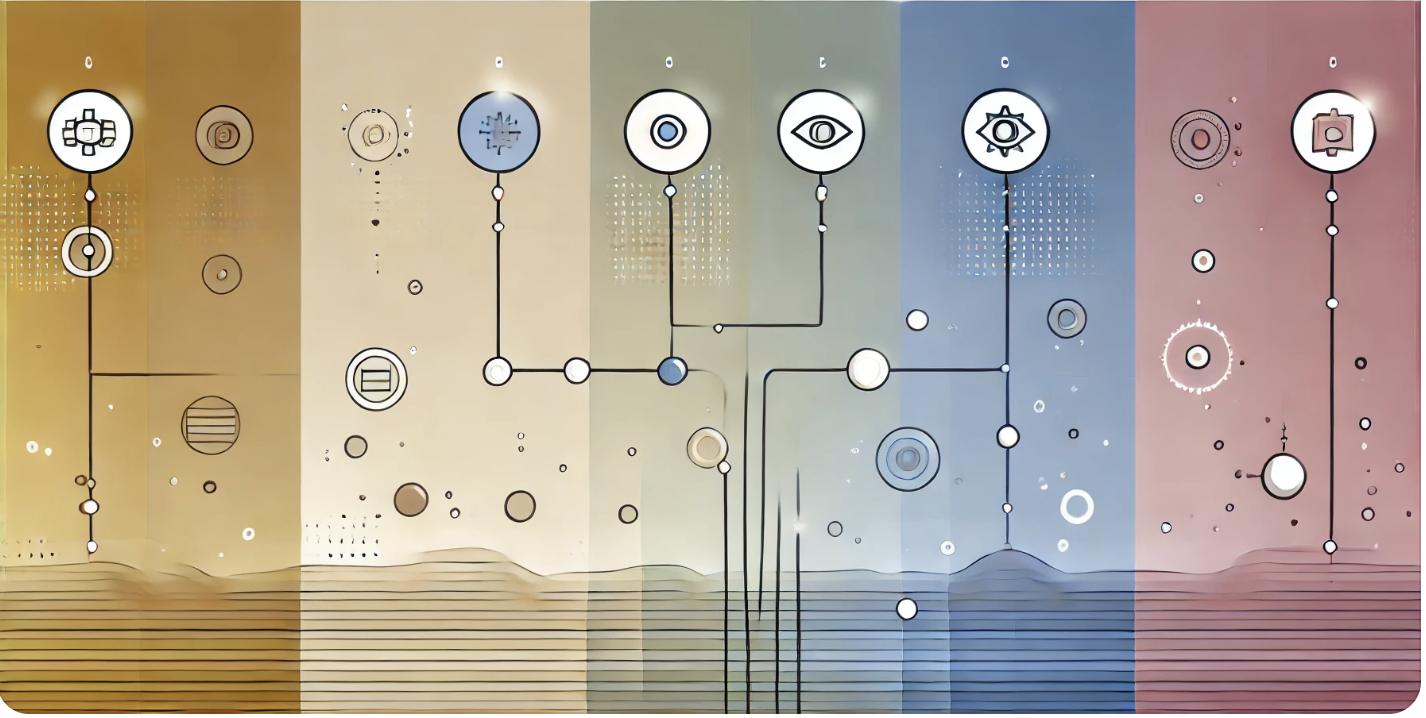
- OpenAI unveiled a new classification system to track its progress toward building AI systems capable of surpassing human abilities.
- The classification ranges from AIs that can hold conversations to ones that can manage organizations.
- OpenAI spokesperson told Bloomberg the goal of creating this system is to enhance public understanding of AI development and its associated safety.
OpenAI, the leading artificial intelligence research lab, has unveiled a new classification system to track its progress toward building AI systems capable of surpassing human abilities. This five-level framework, disclosed to employees during a recent staff meeting, aims to enhance public understanding of AI development and its associated safety implications, according to a spokesperson from the company, as reported by Bloomberg.
5 Levels of AI
The classification ranges from Level 1, which includes current AI models that can engage in conversational language, to Level 5, where AI could perform the work of an entire organization.
Here is a look at OpenAI’s AI levels, which they hope can both guide progress on developing AI capabilities while maintaining transparency about its progress.
Level 1: Chatbots and Conversational AI
At the first level, AI systems are designed to interact with users through natural language processing, much like the chatbots and virtual assistants available today. These models, including OpenAI’s own ChatGPT, excel at generating human-like text and holding coherent conversations. According to Bloomberg, OpenAI believes it is firmly at this level but is on the brink of progressing to the next stage.
Level 2: Reasoners
The second AI level, termed “Reasoners,” represents AI systems that can solve basic problems at the level of a human with a doctorate-level education, without relying on external tools. OpenAI executives highlighted that their research involving the GPT-4 model demonstrates emerging capabilities that approximate human-like reasoning. While these abilities are still under evaluation, they signify a crucial step towards more autonomous AI, Bloomberg reported.
Level 3: Agents
The third tier, known as “agents,” envisions AI that can autonomously take actions on behalf of users over extended periods. These systems would not just provide responses but could execute tasks and make decisions over several days, acting as true extensions of human intent. This level marks a significant leap from static interaction to dynamic operation, paving the way for more complex and integrated AI applications.
Level 4: Innovators
Level 4, or “Innovators,” describes AI capable of generating new ideas and aiding in invention. This stage would involve AI contributing to scientific discoveries, technological advances and creative processes. By fostering innovation, AI at this level could revolutionize industries and accelerate progress across multiple domains.
Level 5: Organizations
The pinnacle of OpenAI’s classification, Level 5, envisages AI that can perform the work of an entire organization. Such systems would possess the ability to manage and execute a wide range of tasks, effectively operating as self-sufficient entities. Achieving this level would signify the realization of artificial general intelligence (AGI), where AI surpasses human performance in most tasks, according to the piece in Bloomberg.
The Path to AGI
OpenAI has been obvious – and vocal – about its ambition to develop AGI, a concept where AI systems outperform humans in a broad spectrum of activities. While AGI remains theoretical and does not yet exist, OpenAI CEO Sam Altman has expressed optimism that it could be realized within this decade.
The debate over the criteria for AGI is ongoing among AI researchers. The debate on whether it can be achieved by large language models (LLMs), such as ChatGPT, is far, far from over. Yann LeCun, Meta’s chief AI scientist, leads the opposition in this. He argues that “there is no such thing as AGI” because “human intelligence is nowhere near general, according to The Next Web.
A November 2023 paper by Google DeepMind – available on ArXiv – proposed a similar five-level framework, including stages like “expert” and “superhuman,” reflecting the varied perspectives within the field. OpenAI’s tiered system, reminiscent of automation levels in self-driving cars, serves as a benchmark for gauging AI progress, according to Bloomberg.
Future Directions of AI Levels
The five-level framework developed by OpenAI’s executives and senior leaders is a work in progress, the news service reports. The company plans to gather feedback from employees, investors and its board to refine the classification. This iterative approach would help ensure that the system evolves in line with technological advances and stakeholder insights.