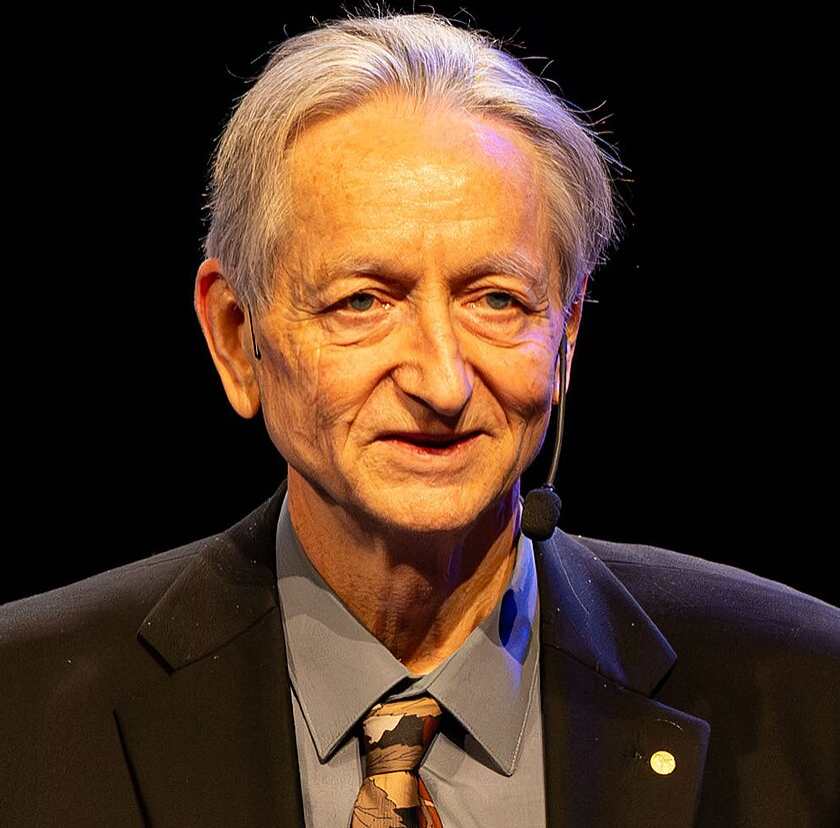
In a recent interview, Geoffrey Hinton, often referred to as one of the “godfathers of AI,” talked about the rapid evolution of artificial intelligence (AI), its global implications and the moral responsibility of those who develop it. Hinton’s thoughts offer a sobering yet pragmatic lens through which to view the challenges ahead.
When asked about the rise of AI in China, Hinton observed: “I don’t think they’re quite caught up yet. They’re very close though… They’ve got better STEM education than the US, so they’ve got more people who are better educated. I think they’re going to catch up.” Despite geopolitical tensions and embargoes on advanced technologies, Hinton suggested these measures might only delay progress rather than prevent it.
Hinton also addressed the growing debate over restricting AI development. Comparing AI advancements to past efforts to classify areas of physics. He stated that it would be impossible to completely restrict the spread of new ideas, explaining that such ideas emerge within a shared zeitgeist. He argued that unless the entire zeitgeist could be eliminated, it would be unfeasible to keep new concepts both innovative and secret.
The conversation turned to decentralized AI and its risks. Hinton drew a chilling parallel, saying: “If you release the weights of [a large foundation model], you can now fine-tune it to all sorts of bad things. So I think it’s crazy to release the weights of these big models… The cat’s out of the bag. But it was a crazy move.”
Despite these concerns, Hinton remains optimistic about AI’s potential to benefit humanity.
“AI is very good for lots of things that will benefit humanity a whole lot, like better healthcare, fighting climate change [and] better materials… I don’t think the development is going to be stopped,” he said. However, he stressed the urgency of ensuring safety in AI’s growth, saying: “We should focus our efforts on trying to develop it safely. That’s very different from trying to slow down the development.”
As for the societal disruptions AI may cause, particularly in the job market, Hinton admitted an AI system is going to make a much better paralegal than a person and that it’s going to cause the rich to get richer and poor people to get poorer.
Hinton’s reflections capture the profound duality of AI: its immense promise and its potential perils. His call for ethical vigilance and proactive measures resonates as a critical directive for both researchers and policymakers navigating this transformative era.
Featured image: Arthur Petron, Wikipedia