
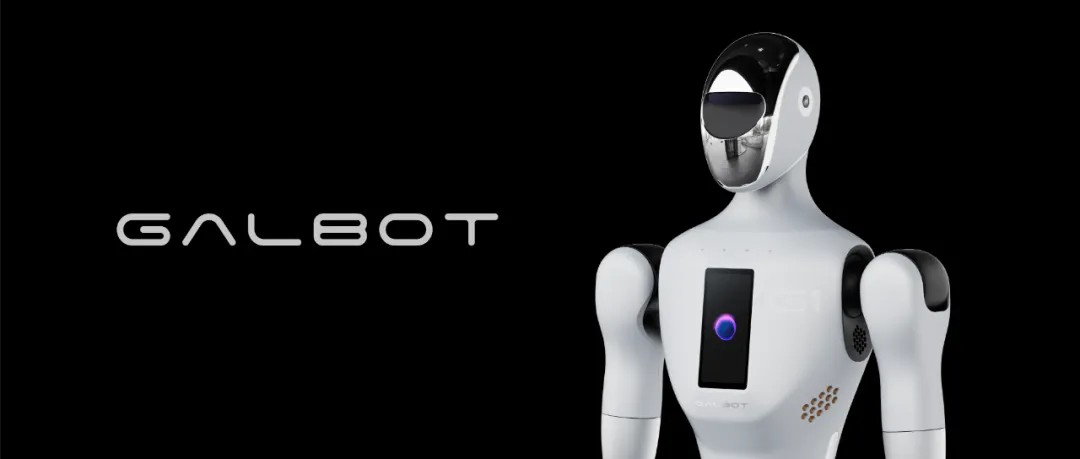
- Chinese robotics firm Galbot raised $151 million in a new funding round led by CATL and Puquan Capital, bringing total investment to over $330 million since 2023.
- The company, founded by Prof. He Wang, develops embodied AI systems that allow robots to perceive and interact with their environments, with applications in retail, automotive, and industrial settings.
- Galbot also formed a joint venture with Bosch Group’s Boyuan Capital to commercialize embodied AI robots globally, focusing on high-precision manufacturing tasks and advancing intelligent automation across sectors.
Chinese robotics startup Galbot has raised $151 million in a fresh funding round led by battery giant CATL and Puquan Capital, pushing its total fundraising to more than $330 million over the past two years. The company, which specializes in embodied artificial intelligence, has also announced a partnership between Bosch Group’s investment arm Boyuan Capital.
Galbot was founded in May 2023 by Professor He Wang of Peking University, a Stanford-trained scientist, and is focused on embodied AI—a branch of artificial intelligence that allows robots to perceive and interact with the world in a human-like way.
Other investors in this round include the China Development Bank, its Science and Technology Innovation Fund, the Beijing Robot Industry Fund, and Qiming Venture Partners. The mix of national, local, and private capital underlines what the company called “a national strategy” to develop embodied intelligence as a core industrial capability.
Adapting without New Training
Galbot has built its momentum on a series of major breakthroughs in robot learning. Its flagship product, GraspVLA, launched in January 2025, is billed as the world’s first end-to-end embodied AI model trained on billions of simulated movements. The company says the model can generalize to new physical tasks with no additional training, a feature known as “zero-shot learning.” In simpler terms, it lets robots adapt to new environments without extra instruction.

Its GroceryVLA model, designed for retail use, allows robots to pick up any type of item—whether a soft bag of chips or a glass jar—without changing settings or retraining. It responds in real-time to messy, unpredictable shelf conditions, the company noted.
NVIDIA highlighted Galbot in November of last year on its devloper blog, noting Galbot was using NVIDIA Isaac Sim, NVIDIA pointed out that Galbot developed DexGraspNet, a comprehensive dataset for humanoid robots, which includes 1.32 million ShadowHand grasps on 5,355 objects across more than 133 categories, providing a vast and diverse range of grasps. .
In March, the company began field-testing its dual-arm, wheeled robot known as Galbot in unmanned retail stores in Beijing. The robot handles inventory, shelf restocking, and packaging for thousands of items. Galaxy General claims a single Galbot can manage an entire 50-square-meter store, and setup for a new location takes just one day. Ten stores are already running, with a hundred expected by year-end.
A New Partnership
It’s also looking beyond shopping aisles. On June 17, the company formed a joint venture with Boyuan Capital, the investment arm of Bosch Group, and signed a three-way agreement with Bosch China. The venture, named Boyin Innovation Alliance, will focus on industrial use cases for embodied robots, particularly in automotive and factory automation.
“Embodied AI holds transformative potential to redefine manufacturing processes. We’re already witnessing its remarkable capabilities across diverse production stages. Through this powerful synergy between Boyuan Capital and Galbot, we anticipate delivering commercially viable, scalable robotics solutions with real industry impact,” said Dr. Ingo Ramesohl, Managing Partner of Bosch Ventures.
Galbot also released a navigation model, TrackVLA, capable of following people or pets in crowded, unfamiliar environments. The system relies solely on visual perception and voice commands, and can resume tracking even after losing sight of a target—skills needed for dynamic settings like malls or hospitals.
The company’s approach combines two kinds of training: simulated data to teach basic motor skills, and real-world data to fine-tune performance. It says this method allows its robots to learn quickly and behave reliably in unstructured environments. Galbot’s long-term vision is to create robots that move, perceive, and make decisions with a level of autonomy closer to that of humans.
“The future of manufacturing lies in intelligent, adaptive systems that can learn from real-world data,” said Professor He Wang, founder of Galbot. “Through this collaboration with Bosch and Boyuan Capital, we’re building an end-to-end value chain that will deliver globally competitive Embodied AI solutions for smart manufacturing.”