Insider Brief
- Researchers at Chung-Ang University have created a paper-based soft robot inspired by caterpillars that uses heat-driven bending to achieve efficient crawling, published in Advanced Functional Materials.
- The system combines cellulose paper with liquid crystal elastomers and asymmetrically plated copper electrodes, generating resistance-based temperature gradients that mimic natural caterpillar motion.
- Lightweight and low-energy, the robots could be scaled for tasks such as environmental monitoring and navigating hazardous or confined spaces, offering a sustainable path for soft robotics development.
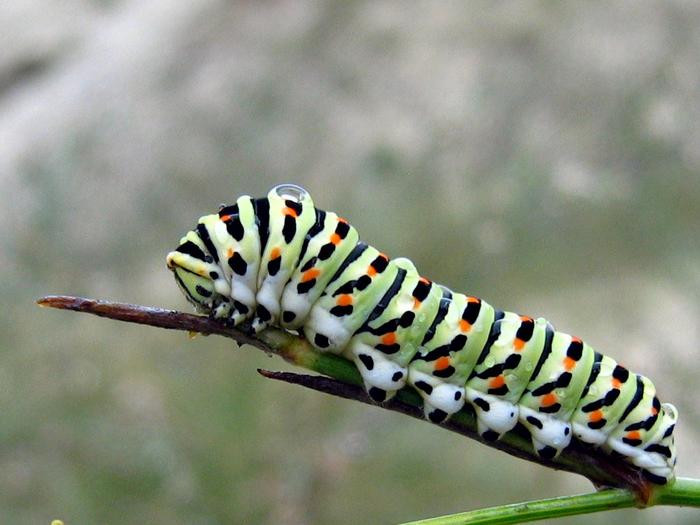
Researchers at South Korea’s Chung-Ang University have developed a paper-based soft robot inspired by caterpillars that uses heat to generate efficient crawling movements.
The work, published in Advanced Functional Materials, was led by Professor Suk Tai Chang and Assistant Professor Changyeon Lee from the Department of Chemical Engineering. According to the university, the study addresses a key challenge in soft robotics: creating asymmetric motion for crawling without relying on complex heating systems.
“Our motivation for this work comes from the fascinating world of nature, specifically the crawling motion of caterpillars,” noted Chang “We were intrigued by how such a simple organism could achieve highly efficient locomotion through sequential bending and stretching.”
According to CAU, the method involves using cellulose-based paper as a substrate, chosen for its eco-friendly properties and mechanical flexibility. Researchers applied copper electrodes asymmetrically through a plating process that changes electrode width, producing different levels of electrical resistance across the material. When powered, these resistance gradients created controlled temperature differences that allowed the attached liquid crystal elastomers to bend unevenly, mimicking the motion of a caterpillar.
The approach eliminates the need for intricate circuit designs or isotropic heating patterns, which have long complicated efforts to produce energy-efficient crawling robots. Researchers noted the integration of a bilayer system combining paper and liquid crystal elastomers enabled precise, directional movement at low voltages, demonstrating the potential for practical use.
Tests showed the robot was lightweight, thin, and capable of sustained crawling, making it suitable for applications such as environmental monitoring or navigating confined or hazardous areas. The researchers said the technique offers a scalable way to build soft robots from abundant materials while maintaining low energy demands.
“In this way, we successfully achieved asymmetric bending motion, which is a difficult feat for conventional soft robots,” Chang. said. “By precisely controlling the temperature gradient on the paper-based electrode, we were able to induce differential bending, which mimics the natural crawling motion of a caterpillar. This novel mechanism enables directional and controlled movement for soft robots.”