
Insider Brief
- Intel introduced the Robotics AI Suite alongside architectural details for its U.S.-manufactured Core Ultra series 3 (“Panther Lake”), pitching a standardized toolkit to cut deployment time, cost, and risk for multi‑skill, edge‑deployed robots.
- The suite bundles reference apps, qualified AI hardware configs, acceleration libraries, benchmarking tools, and microservices—integrated with Core Ultra, OpenVINO, and the Open Edge Platform—to evaluate and harden perception, motion, manipulation, and imitation‑learning workloads.
- Aimed at the lab‑to‑field bottleneck, Intel targets interoperability (ROS 2‑aligned multi‑sensor pipelines), the skills gap (reusable modules), and security/management (qualified system recipes, fleet controls), with early access now and GA planned for December 2025.
Intel is rolling out a software-and-silicon play aimed at the next phase of robotics, where machines juggle multiple skills, adapt to changing conditions, and work alongside people. In a blog post and product brief, the company introduced the Intel® Robotics AI Suite, positioning it as a standardized toolkit to cut deployment time, reduce cost, and smooth scale‑up of advanced robots at the edge.
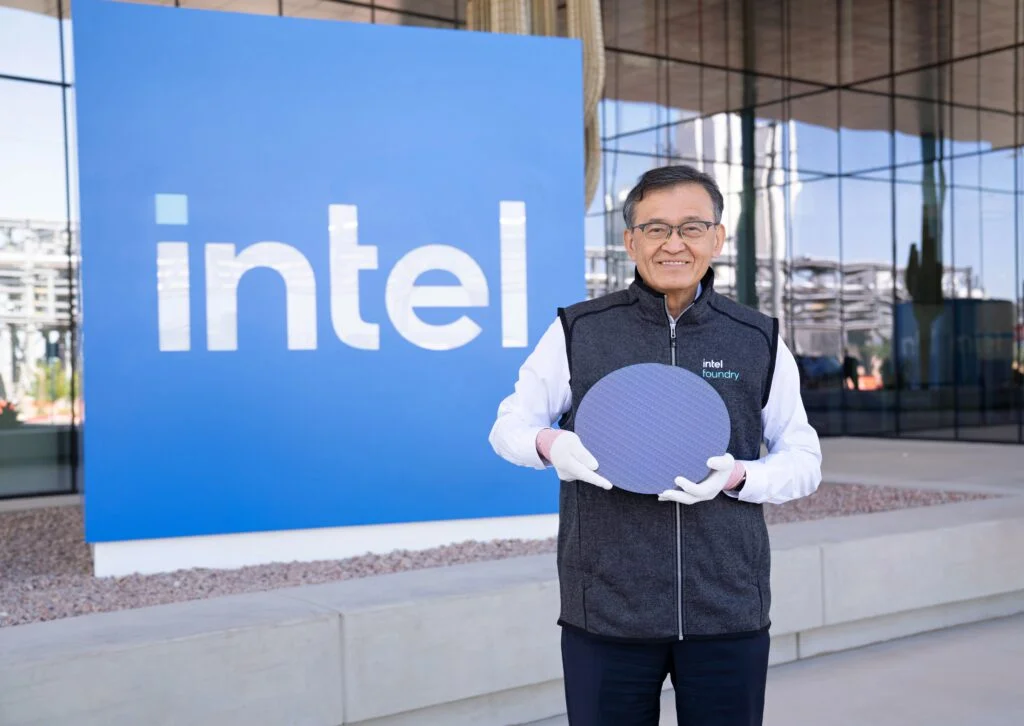
Coinciding with the unveiling of architectural details for its American-made, next‑generation Intel Core Ultra series 3 processors (code‑named Panther Lake), Intel frames the release as a pragmatic response to two realities: robots are moving beyond single‑task automation, and most organizations lack the interoperability, talent, and security foundations to deploy them at scale.
What’s New
The Robotics AI Suite packages reference applications, qualified AI hardware configurations, acceleration libraries, benchmarking utilities, and containerized microservices under a single umbrella. According to Intel, the suite is designed to let integrators evaluate and harden “physical AI” workloads—perception, motion, manipulation, and imitation learning—before committing capital to custom hardware or one‑off R&D. The offering is built to work hand‑in‑glove with Intel® Core™ Ultra processors and to interoperate with the company’s OpenVINO™ runtime and Open Edge Platform so teams can profile models, pick components, and plan capacity with predictable economics.
What Problem it Solves
The industry’s most persistent bottleneck is moving from lab demos to reliable, maintainable systems in warehouses, factories, hospitals, and public spaces. Intel argues that fragmentation across sensors, compute, and software stacks slows progress and complicates security at the edge. The suite focuses on three pain points:
- Interoperability: reference apps and pipelines for multi‑camera, multi‑sensor perception and spatial understanding, aligned with ROS 2 and open interfaces.
- Skills gap: reusable modules for detection, task and motion planning, and vision‑language models so teams can add features without assembling a bespoke stack from scratch.
- Security and manageability: qualified system recipes and benchmarking to hit repeatable performance targets, paired with edge management to keep fleets patched and compliant.
Inside the Suite
Intel groups the content into components that map to a typical robotics build:
- Reference applications demonstrate perception, locomotion, manipulation, and imitation learning in production‑like flows to accelerate prototyping.
- Streaming analytics pipelines ingest time‑synchronized sensor and multi‑camera feeds to enable spatial intelligence and scene understanding.
- Advanced algorithms cover object detection, task planning, and whole‑body motion planning, tuned for Intel CPUs and integrated accelerators.
- Vision‑language models are optimized for video‑plus‑text context, enabling instruction following and on‑the‑fly task adaptation.
- Performance tools profile models, assess latency/throughput trade‑offs, and right‑size CPU/GPU/accelerator mixes before hardware purchase.
The company says integrators can test candidate models, measure power and latency, and lock in hardware SKUs with less risk. Builders that do not know which algorithm family or compute profile makes economic sense can use the suite with OpenVINO and the Open Edge Platform to compare options head‑to‑head under realistic loads.
Modern robots split compute between two domains: real‑time control for safe, precise actuation, and perception for vision and AI reasoning. Intel’s roadmap attempts to collapse those domains onto a single processor class. Core™ Ultra (series 2) pairs high‑performance CPU cores with integrated AI acceleration so designers can run deterministic control loops alongside perception and planning on one part. Intel complements this with Time Coordinated Computing (TCC), which prioritizes real‑time tasks’ access to cache, memory, and networking resources, a requirement for multi‑robot systems operating across distributed edge nodes.
Intel says it continues to lean on an open, partner‑heavy approach. The company highlights collaborations with ODMs, OEMs, and ISVs to deliver x86‑based robots that balance cost and performance over long service lives. Contributions to the suite include integrations for Intel® RealSense™ depth cameras, sensor fusion modules for precise perception, ROS 2 extensions for locomotion, and best‑known hardware configurations qualified on Intel silicon. Intel says releases will land quarterly on GitHub, giving builders a cadence for updates while aligning to a predictable silicon roadmap.
The Robotics AI Suite arrives in early‑access form as a fully functional software kit intended for production‑quality builds, with additional content slated for a general‑availability release in December 2025. Intel says quarterly updates will add reference apps, partner integrations, and validated system recipes.
Image credit: Intel