
Insider Brief
- University of Glasgow scientists have developed PLM-interact, a new AI model that significantly improves the prediction of protein-protein interactions and virus-host behavior, surpassing tools like Google DeepMind’s AlphaFold3.
- Trained on over 421,000 protein pairs using the DiRAC supercomputing system originally built for physics simulations, the model uses a language-modeling approach to understand the structured “grammar” of biomolecular communication.
- Funded by the EU’s Horizon 2020 and UK research councils, PLM-interact shows promise in identifying disease-related mutations, supporting faster drug discovery, and potentially predicting pandemic-scale viral threats.
A team at the University of Glasgow has developed a new AI model that improves how scientists can predict interactions between proteins, a development that could reshape understanding of disease development and virus behavior.
According to the university, the research, funded by the European Union’s Horizon 2020 program, the UK’s Medical Research Council, with support from Cancer Research UK, Prostate Cancer UK and the Biotechnology and Biological Sciences Research Council, introduces a model called PLM-interact, adapted a large-scale language model (LLM) usually used by astronomers and physicts to operate like a translator for proteins
The model is called PLM-interact and researchers say it outperforms current tools in identifying both human protein interactions and how viruses engage with human proteins.
PLM-interact was trained on more than 421,000 human protein pairings and supported by Tursa, a GPU-based high-performance computing system originally designed to simulate aspects of the universe. With access to this resource through the UK’s DiRAC supercomputing facility, the team trained a 650-million-parameter model optimized for biological inference, the university noted.
“It’s great to think that DiRAC, which was developed to help scientists understand the laws of nature from the smallest subatomic particles to the largest scales in the Universe, has helped us build this new model to explore the inner space of protein interactions instead,” noted Dr. Ke Yuan, one of the paper’s corresponding authors.
By outperforming models like Google DeepMind’s AlphaFold3 in predicting protein-to-protein interactions (PPIs), PLM-interact demonstrates that applying deep learning to structured biological data can yield actionable insights. In tests, PLM-interact correctly predicted five essential protein interactions, whereas AlphaFold3 detected only one. The model was also able to identify the effects of mutations, including those responsible for certain genetic disorders and cancers, making it a potential tool for biomedical research and drug development.
Unlike previous models that struggle with highly structured biological rules, PLM-interact emphasizes what researchers call the “token layer”—the rules and dependencies within a biological system that resemble grammar in language. This shift enables more accurate and scalable interpretation of protein behavior, without relying on experimental methods that are slow and expensive.
The model was also tested on 22,000+ interactions between human and virus proteins, again outperforming competitors, resarchers said. The team believes PLM-interact could eventually help identify emerging viruses with pandemic potential by anticipating how virus proteins bind with those in human cells — a method that could support faster development of diagnostics and therapies.
“The urgency to understand virus-host interactions during COVID-19 pandemic is a good illustration of why a tool like PLM-interact could be invaluable in the future,” said corresponding authoer Professor David L Robertson, head of CVR Bioinformatics at the University of Glasgow. “He said: “Being able to quickly and accurately gain insight into how viruses interact with our proteins could help us better understand virus emergence and disease risks, which in turn can help speed up the development of new treatments and therapies.
The university noted the research is part of a broader strategy to use AI to accelerate basic biological discovery and was led by Yuan of the School of Cancer Sciences and Cancer Research UK Scotland Institute), Robertson of the Centre for Virus Research, and Prof. Craig Macdonald of the School of Computing Science), All three are based at the University of Glasgow.
The study, published in Nature Communications, is another example in what is a growing trend: applying AI systems originally built for general-purpose computation or language tasks to specialized, domain-specific problems in biology. In this case, computing infrastructure built to simulate the cosmos is now being used to decode microscopic biological systems. With further development and support, the team plans to expand PLM-interact’s capabilities and apply it to additional disease areas, including virology and cancer biology.
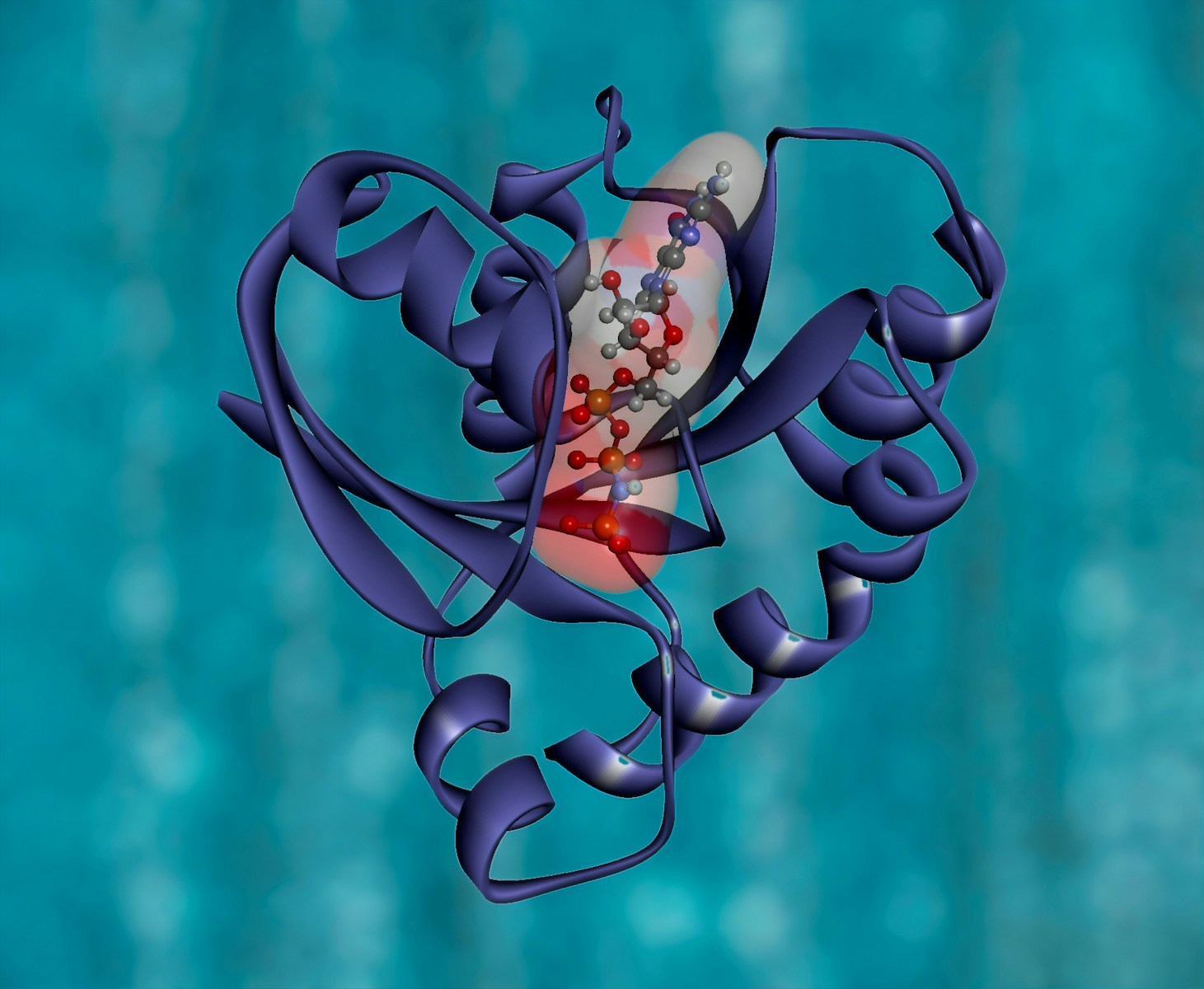
Image credit: National Cancer Insitute