Insider Brief
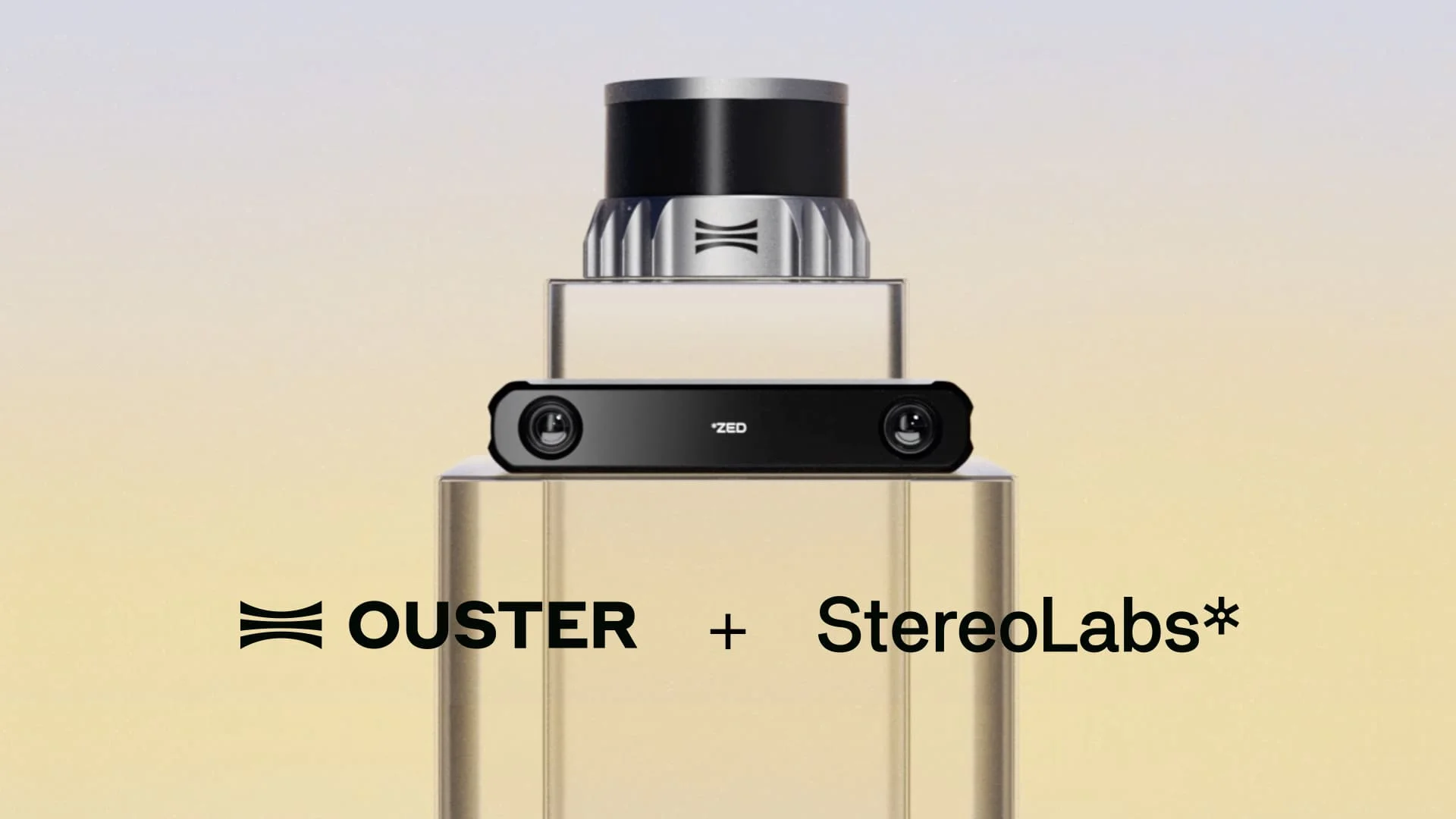
- Ouster has completed its acquisition of StereoLabs, combining digital lidar, stereo cameras, AI compute, and perception software into a unified sensing and perception platform aimed at Physical AI applications.
- The deal expands Ouster’s software and vision capabilities, bringing more than 90,000 deployed StereoLabs cameras, a large developer base, and deeper sensor-fusion support for robotics, industrial automation, and smart infrastructure.
- StereoLabs adds an EBITDA-positive business with roughly $16 million in 2025 revenue, with Ouster paying about $35 million in cash and stock as it pushes toward scale and profitability.
Ouster has closed its acquisition of StereoLabs, moving to combine lidar, vision, and perception software into a single platform aimed at developers building autonomous systems, according to the company.
According to the company, Ouster paid about $35 million in cash and issued 1.8 million shares, with a portion of the equity vesting over four years. StereoLabs will operate as a wholly owned subsidiary, with its results consolidated beginning in the first quarter of fiscal 2026.
The deal, completed Feb. 4, brings StereoLabs’ stereo camera hardware and AI vision software into Ouster’s portfolio of digital lidar and perception tools.
Why is Ouster acquiring StereoLabs?
The short answer is sensor fusion. Ouster said that autonomy is increasingly constrained not by individual sensors, but by how well different sensing modalities work together. By owning both lidar and vision, along with the software that fuses them, the company is aiming to reduce complexity for customers and increase total market in robotics, industrial automation systems and smart infrastructure.
“This acquisition builds on Ouster’s momentum and positions us as the foundational end-to-end sensing and perception platform for Physical AI,” Ouster CEO Angus Pacala said in the announcement. “StereoLabs is a world-class perception company recognized for its market-leading stereo cameras and AI vision software, making it a natural fit for Ouster’s next stage of growth. With seamless sensor fusion, we are addressing the unprecedented pull for both lidar and vision as industries transition from simple automation towards Physical AI.
StereoLabs, founded in 2010, has shipped more than 90,000 ZED stereo cameras to over 10,000 customers, with a large developer community using its perception software in production systems. Ouster said the StereoLabs team will remain in place and continue supporting existing products and customers.
From Ouster’s perspective, the acquisition extends its software capabilities while broadening its reach. Vision data can add dense spatial context and object detail, while lidar provides precise range and depth. Combining the two is intended to improve navigation, safety and manipulation tasks, particularly in environments that are difficult to model in advance.
The transaction also adds a profitable business line. Ouster said StereoLabs generated roughly $16 million in unaudited revenue in 2025 and was EBITDA positive, supporting Ouster’s stated path toward profitability.
Ouster said the acquisition positions it as a single-source supplier for sensing and perception, at a time when customers are looking to simplify system design and accelerate deployment as autonomy moves from pilots into scaled, real-world use.
“The future of autonomy isn’t about choosing between vision or lidar, it’s about unifying them,” StereoLabs CEO Cecile Schmollgruber said. “By combining StereoLabs’ AI vision with Ouster’s digital lidar, we are creating the world’s most capable perception platform to directly address customers’ primary sensor fusion requirements and enable machines to sense, think, act, and learn in the physical world.”
Image credit: Ouster