
Insider Brief
- Xwatch Safety Solutions, part of Hexagon, and RodRadar introduced an integrated excavator system that embeds ground-penetrating radar in the bucket and automatically halts hydraulic movement when underground utilities are detected, aiming to prevent strikes in real time.
- The system links RodRadar’s Live Dig Radar detections directly to Xwatch’s safety-grade hydraulic controls, moving beyond operator warnings to automatic stop functionality while retaining manual override capability.
- According to Xwatch, more than 400,000 underground utility strikes occur annually in the U.S., costing about $30 billion per year, with nearly half attributed to utilities that were not located or mislocated, underscoring the push toward automated prevention standards.
Xwatch Safety Solutions, part of Hexagon, and RodRadar have introduced what they describe as the first safety-grade excavator system designed to automatically prevent underground utility strikes.
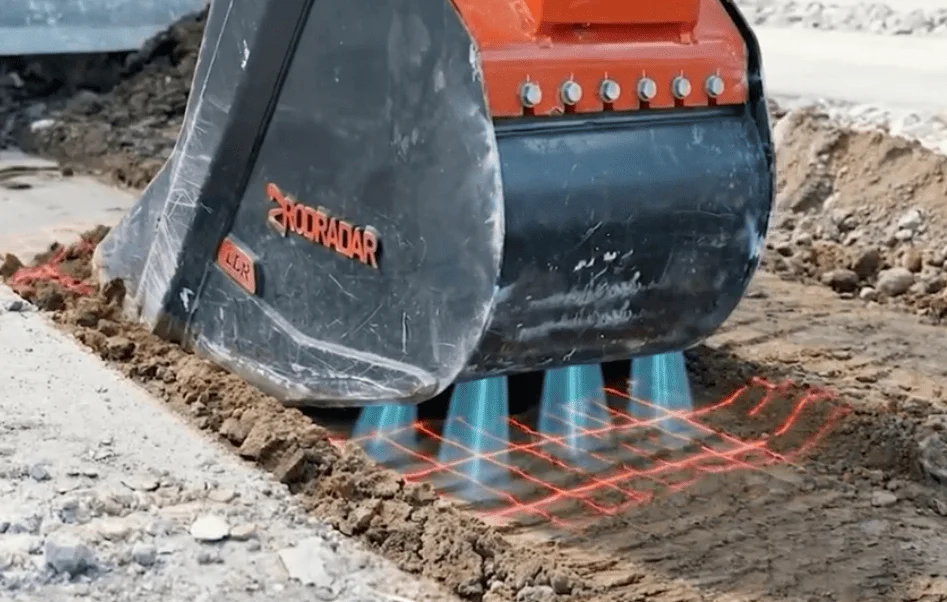
In its announcement, the system combines RodRadar’s Live Dig Radar (LDR) with Xwatch’s safety-grade hydraulic controls. RodRadar’s technology embeds ground-penetrating radar directly into the excavator bucket, allowing operators to detect buried utilities in real time during active digging rather than relying solely on pre-marked utility maps. When the radar detects subsurface infrastructure, the Xwatch system automatically halts the excavator bucket to prevent contact.
“RodRadar has solved the detection problem during excavation,” Director of Sales at Xwatch Safety Solutions Dan Leaney said. “By integrating their Live Dig Radar technology directly into our safety-grade hydraulic control, we can physically stop the machine before a strike occurs. That’s the difference between warning about a risk and actually preventing it.”
Xwatch Safety Solutions said nearly half of utility strikes occur because utilities were not located or were mislocated, and in 64% of those cases buried infrastructure sits outside marked zones. By linking detection directly to hydraulic intervention, the companies aim to move beyond warning systems toward automatic prevention.
“The integration further closes the safety gap, transforming LDR detections into automatic strike prevention and delivering the industry’s first Stop-Before-Strike solution,” said Yuval Barnea, VP of Sales and Marketing at RodRadar. “We envision this being recommended, and ultimately mandated, by industry stakeholders, project owners, and contractors.”
The integrated platform is designed to allow operator override while introducing automatic stop functionality when a risk is detected. Xwatch said the approach could establish a new safety benchmark on job sites where underground utilities are present, as regulators and contractors continue to focus on reducing struck-by incidents, which account for a significant share of construction fatalities.
Underground utility strikes remain a persistent risk in construction, with one to two incidents occurring every minute in the United States. According to Xwatch Safety Solutions, more than 400,000 strikes are reported annually, costing an estimated $30 billion each year and contributing to thousands of injuries and hundreds of fatalities over the past two decades.
Xwatch, which has more than 6,500 systems installed globally, was acquired by Hexagon AB in April 2024 and operates within Hexagon’s Safety, Infrastructure & Geospatial division.
The companies said the integrated solution will be demonstrated at ConExpo-Con/Agg 2026 in early March in Las Vegas.
Image credit: RodRadar