- IQM Quantum Computers unveiled an AI-driven calibration system based on NVIDIA Ising models to automate tuning and support scalable quantum deployments.
- The method applies parallel agent-based calibration across qubits, overcoming scaling limitations and reducing dependence on specialized quantum engineers.
- The solution integrates with hybrid quantum-classical environments, enhancing system stability, performance, and usability in enterprise and HPC settings.
PRESS RELEASE — On World Quantum Day, IQM Quantum Computers today announced AI-driven agentic calibration, an automated approach to tuning quantum systems with NVIDIA Ising.
The development marks a step toward making quantum computing operationally viable for enterprises, AI factories, and high-performance computing data centres — reducing dependence on dedicated quantum engineering expertise and bringing quantum infrastructure within reach of institutions that need to own and operate it at scale.
The core architectural advance is parallelism. IQM’s visual agents inspect calibration results across qubits simultaneously at each stage — not sequentially. As quantum processors scale, the number of interaction channels between qubits grows non-linearly. Sequential calibration cannot keep pace. Parallel agentic inspection can.
“We want enterprises to use quantum computers, not just study them. Calibration has always been the quiet bottleneck. If we can take that off the table, enterprises can focus on what they actually bought the machine for,” said Juha Vartiainen, Chief Global Affairs Officer and Co-founder of IQM Quantum Computers.
The operational barrier is compounded by a structural one. Quantum engineering talent is scarce globally, and demand is outpacing supply. Requiring on-site quantum specialists to maintain calibration is not a sustainable model for broad enterprise adoption. Agentic calibration addresses this directly — shifting the operational burden from human expertise to intelligent automation, and making quantum ownership viable for institutions that cannot recruit from a talent pool that barely exists yet.
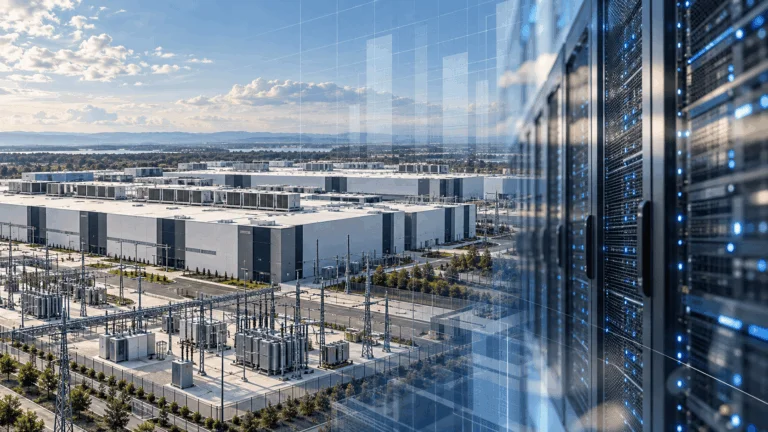
As governments and enterprises race to build AI factories — integrated facilities combining classical HPC, accelerated computing, and increasingly, quantum processing — operational simplicity is not optional. A quantum system that requires resident specialists to stay calibrated is not factory-ready. IQM’s agentic calibration is designed to change that.
IQM’s implementation builds on NVIDIA Ising models, fine-tuned for quantum tasks — a key ingredient in the system’s accuracy and reliability. The agentic calibration integrates AI agents directly into IQM’s existing calibration infrastructure, augmenting rather than replacing the underlying system. The result is quantum computers that self-optimise, maintain higher algorithmic efficiency, and operate consistently at high fidelity — delivering accurate computational results faster.
“The next generation of supercomputers will be quantum-GPU systems, and AI is what makes them operable,” said Sam Stanwyck, Director of Quantum Product at NVIDIA. “NVIDIA Ising gives developers an open foundation to tackle quantum computing’s hardest challenges, and IQM’s agentic calibration is a pioneering demonstration of what that future looks like.”
The collaboration builds on existing integration between IQM and the NVIDIA quantum platform, including the NVIDIA NVQLink GPU-QPU hardware interconnect and NVIDIA CUDA-Q hybrid quantum-classical software platform.
For IQM, this advance is a proof point in its production quantum thesis. Central to that thesis is a commitment to open ecosystem development. IQM has consistently invested in open standards, partner integrations, and shared infrastructure — the conviction being that broad quantum adoption requires an ecosystem no single company can build alone.
IQM’s open architecture, drawing on NVIDIA Ising open models for parallel agentic calibration is designed as a foundation enterprises can build on ahead of the fault-tolerant era. The quantum era does not begin when the technology works in a lab. It begins when institutions can own it, operate it, and build on it — without a team of quantum physicists running the infrastructure.