Insider Brief
- SWARM Biotactics, a German deep-tech startup developing insect-based bio-robotic systems for defense and disaster response, has raised €10 million in seed funding, bringing total capital to €13 million with backing from Vertex Ventures US, Possible Ventures, and Capnamic.
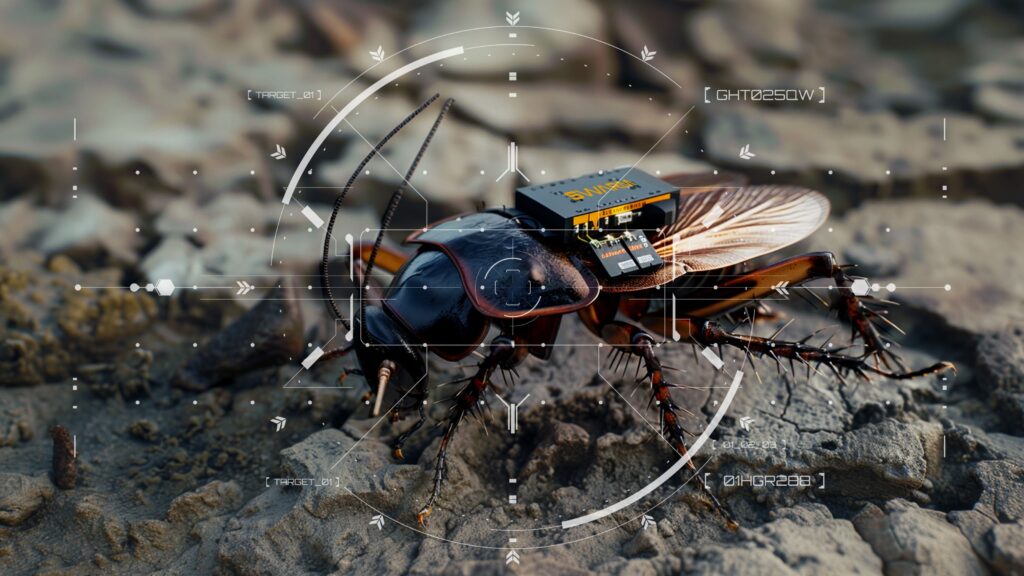
- The company outfits living cockroaches with sensor-equipped control backpacks to create AI-enabled bio-swarms capable of navigating and gathering real-time data in environments inaccessible to traditional robots or drones.
- Funding will support the move from R&D to operational pilots in Europe and North America, scaling production of sensor units and neural interfaces, and expanding SWARM’s engineering and field operations for mission-critical applications in denied or high-risk terrain.
PRESS RELEASE – SWARM Biotactics, developer of bio-robotic systems based on fully controllable living insects for mission-critical operations, has secured €10 million in seed funding, bringing its total raised to €13 million, including a €3 million pre-seed. The round was backed by a consortium of international investors from Europe, the United States, and Australia, including Vertex Ventures US, Possible Ventures, and Capnamic, who was the first investor in the pre-seed round. Several early backers also increased their stakes in the oversubscribed round.
Unmatched Access for Critical Missions
SWARM Biotactics is creating a new category of robotics: living, intelligent systems designed for environments where machines can’t go—cluttered, denied, and high-risk terrain. Bio-robotic swarms consist of cockroaches equipped with a custom-built backpack for control, sensing, and secure communication—enabling precise navigation and real-time data collection in the most inaccessible places. SWARM delivers highly scalable bio-robotic systems for defense, security, and disaster response.
“We’re entering a decade where access, autonomy, and resilience define geopolitical advantage,” said Stefan Wilhelm, CEO of SWARM Biotactics. “Conventional systems fail where control is needed most—denied zones, collapsed infrastructure, politically complex terrain.

SWARM is the first company building an entirely new category of robotics: biologically integrated, AI-enabled, and mass-deployable systems for persistent intelligence in places no drone or ground robot can reach. This funding moves us from deep tech to deployment—delivering the infrastructure democracies need to operate more smartly, more safely, and with total tactical awareness.”
From Deep Tech R&D to Operational Readiness
SWARM will use the new funding to transition from advanced research to field deployment. Priorities include:
- Launching operational pilots in Europe and North America with defense, national security, and emergency response agencies.
- Scaling production of proprietary sensor backpacks, neural interfaces, and swarm infrastructure.
- Expanding its R&D centers and its international go-to-market and engineering hub.
- Recruiting top talent in insect neurobiology, embedded AI, field robotics, and dual-use system integration.
“Our mission is to build a scalable, dual-use intelligence platform that adapts to any terrain, threat, or mission,” said Moritz Strube, CTO and co-founder. “This funding round validates the vision—and brings in the right global partners to help us scale.”