
Insider Brief
- Amazon Robotics has surpassed 1 million deployed robots and introduced a new generative AI foundation model called DeepFleet to optimize fleet performance across more than 300 global facilities.
- DeepFleet acts as an intelligent traffic management system for robots like Hercules, Pegasus, and Proteus, reducing travel time by 10% and increasing package delivery speed while lowering energy costs.
- The milestone highlights Amazon’s decade-long robotics evolution and its broader AI workforce shift, including retraining over 700,000 employees since 2019 and increasing technical hiring at new fulfillment centers.
Amazon Robotics just passed the 1 million robot milestone—and launched a generative AI model to make them all smarter.
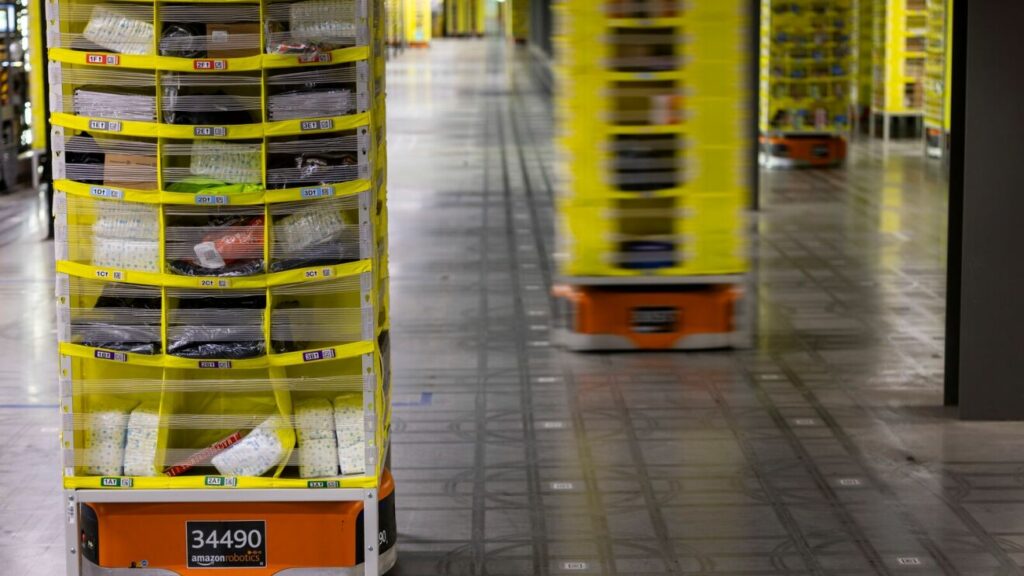
In a blog post, Amazon Robotics VP Scott Dresser noted the company has rolled out a new generative AI foundation called DeepFleet. Dresser noted DeepFleet acts like a traffic controller for Amazon’s global robot network, which now spans more than 300 facilities and includes systems like Hercules, Pegasus, and the fully autonomous Proteus.
Built using internal logistics data and AWS tools like SageMaker, DeepFleet improves fleet coordination and cuts travel time by 10%, helping Amazon deliver packages faster and cheaper while reducing energy use.
“Think of DeepFleet as an intelligent traffic management system for a city filled with cars moving through congested streets.,” Dresser wrote. “Just as a smart traffic system could reduce wait times and create better routes for drivers, DeepFleet coordinates our robots’ movements to optimize how they navigate our fulfillment centers. This means less congestion, more efficient paths, and faster processing of customer orders.”
Over the past decade, Amazon has transformed its robotics capabilities from a single mobile unit introduced in 2012 to a diverse fleet designed to improve safety, efficiency, and employee experience across its operations. Today, the company’s robotic lineup includes Hercules, which lifts up to 1,250 pounds; Pegasus, which uses conveyor belts to handle individual packages; and Proteus, the first fully autonomous robot capable of navigating around workers in open environments while transporting heavy carts.
These robots are built to work alongside employees, taking on physically demanding and repetitive tasks while enabling Amazon’s workforce to transition into more technical roles. Since 2019, the company has trained over 700,000 employees through programs focused on advanced technology skills. At its recently launched next-generation fulfillment center in Shreveport, Louisiana, the integration of robotics has increased demand for roles in reliability, maintenance, and engineering by 30%, signaling how automation is shaping new career paths within the company.
“What makes our approach to robotics and AI unique is how we combine innovation with real-world impact,” Dresser pointed out, adding Amazon uses local suppliers to make its robots in the U.S. while deploying them worldwide.
“Twelve years ago, we worked backwards from a simple problem: how to help employees access inventory more efficiently,” he said. “Today, we’re applying the latest AI technology to make our entire robot fleet smarter, ultimately delivering better value to our customers through faster service and lower costs.”
Amazon is reshaping its workforce as it accelerates AI deployment across fulfillment, customer service, and software engineering. In a memo to employees in June, CEO Andy Jassy said the company will need fewer people in some current roles and more in areas like machine learning, data governance, and safety, though the scale of future job reductions remains uncertain. The shift reflects a broader reallocation of talent toward AI-driven functions.