
Insider Brief
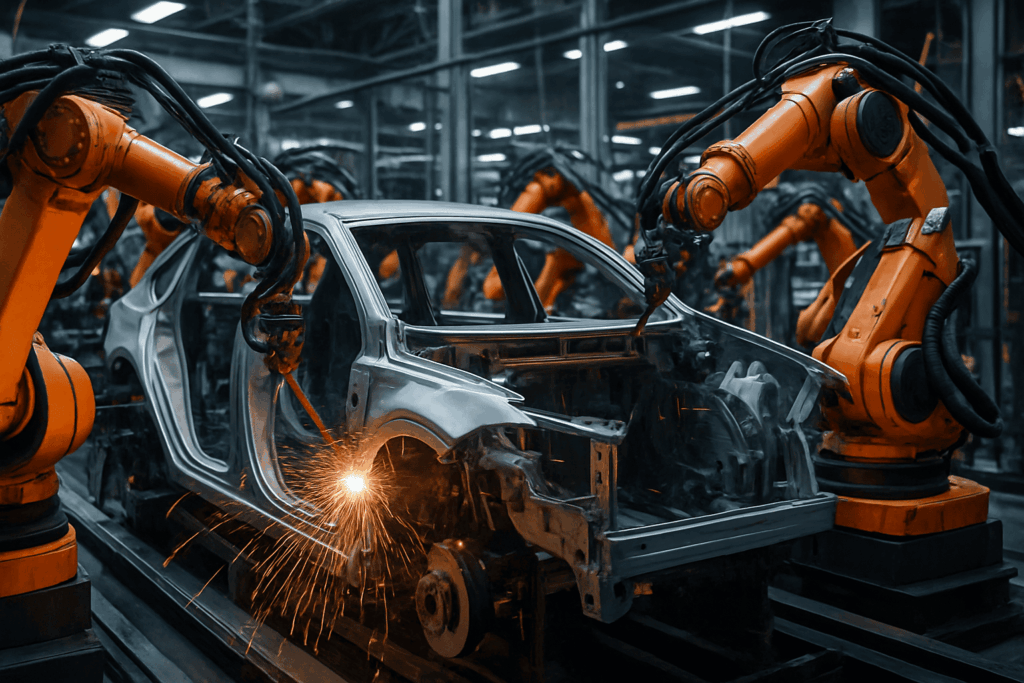
- Japan’s automotive industry installed approximately 13,000 industrial robots in 2024, an 11% increase from the previous year and the highest total since 2020, according to preliminary data from the International Federation of Robotics (IFR).
- The surge reflects manufacturers’ shift toward electric, fuel cell, and hydrogen-powered vehicles, with automation investments supporting more adaptable production lines.
- Japan remains the global leader in robot manufacturing, producing 38% of the world’s industrial robots, while its car industry ranks fourth worldwide in robot density at 1,531 units per 10,000 employees, trailing Slovenia, South Korea, and Switzerland.
Japan’s automotive industry installed approximately 13,000 industrial robots in 2024, the highest total since 2020, according to preliminary data from the International Federation of Robotics (IFR). The 11% year-over-year increase underscores the role of robotics in modernizing production as Japanese automakers shift toward electric, fuel cell, and hydrogen-powered vehicles, IFR reports.
“Japan is the world´s predominant robot manufacturing country representing 38% of global robot production,” Takayuki Ito, President of the International Federation of Robotics, said in a statement. “In terms of factory automation, Japan’s automotive industry ranked fourth worldwide with a robot density of 1,531 robots per 10,000 employees in 2023. This is ahead of the United States and Germany only behind Slovenia, Korea and Switzerland.”
IFR data shows that Japan produces 38% of the world’s industrial robots, making it the global leader in robot manufacturing. The automotive sector accounted for roughly a quarter of Japan’s robot installations in 2024, second only to the electronics industry, which installed about 14,000 units but posted a 5% annual decline. Robot density in Japan’s car industry reached 1,531 units per 10,000 employees in 2023, ranking fourth worldwide behind Slovenia, South Korea, and Switzerland.
The increase in robotics adoption reflects Japanese manufacturers’ efforts to restructure production for alternative powertrains, including battery-electric and hydrogen technologies. The need for adaptable production processes is driving this automation investment, the IFR reports.
Limitations of the current data include its preliminary nature and its focus primarily on installations, without detailed insights into productivity outcomes or workforce impacts. However, the IFR’s figures emphasize ongoing growth in industrial robotics within Japan’s automotive sector.
Further developments will be highlighted at the Future Creation Robot Week, running July 13 – 19 at Expo 2025 in Osaka. The event will showcase Japan’s robotics technologies, demonstrating applications in industrial, workplace, and everyday settings as the country positions robots as key contributors to future society.