Insider Brief
- Nvidia will invest £2 billion to expand capital and compute for U.K. AI startups and researchers across London, Oxford, Cambridge, Manchester, and new government “AI growth zones.”
- The effort partners with Accel, Air Street Capital, Balderton, Hoxton Ventures, and Phoenix Court and expands access to advanced systems for training and inference to counter limited supercomputing, VC concentration, and high energy costs.
- U.K. leaders and investors say the move will create jobs, accelerate commercialization beyond London, and strengthen transatlantic ties as the investment is domiciled in the U.S. but activated in Britain.
Nvidia will invest £2 billion in the U.K. to jump-start the country’s AI startup engine and help young companies scale with capital and computing power.
The chip maker said the money will flow to founders and researchers across London, Oxford, Cambridge and Manchester, alongside new “AI growth zones” announced by the government. The package aims to ease long-standing hurdles for British startups—limited access to supercomputers, venture capital concentrated in London, and high energy costs—by pairing fresh funding with modern infrastructure and deeper ties between investors and universities, the company said.
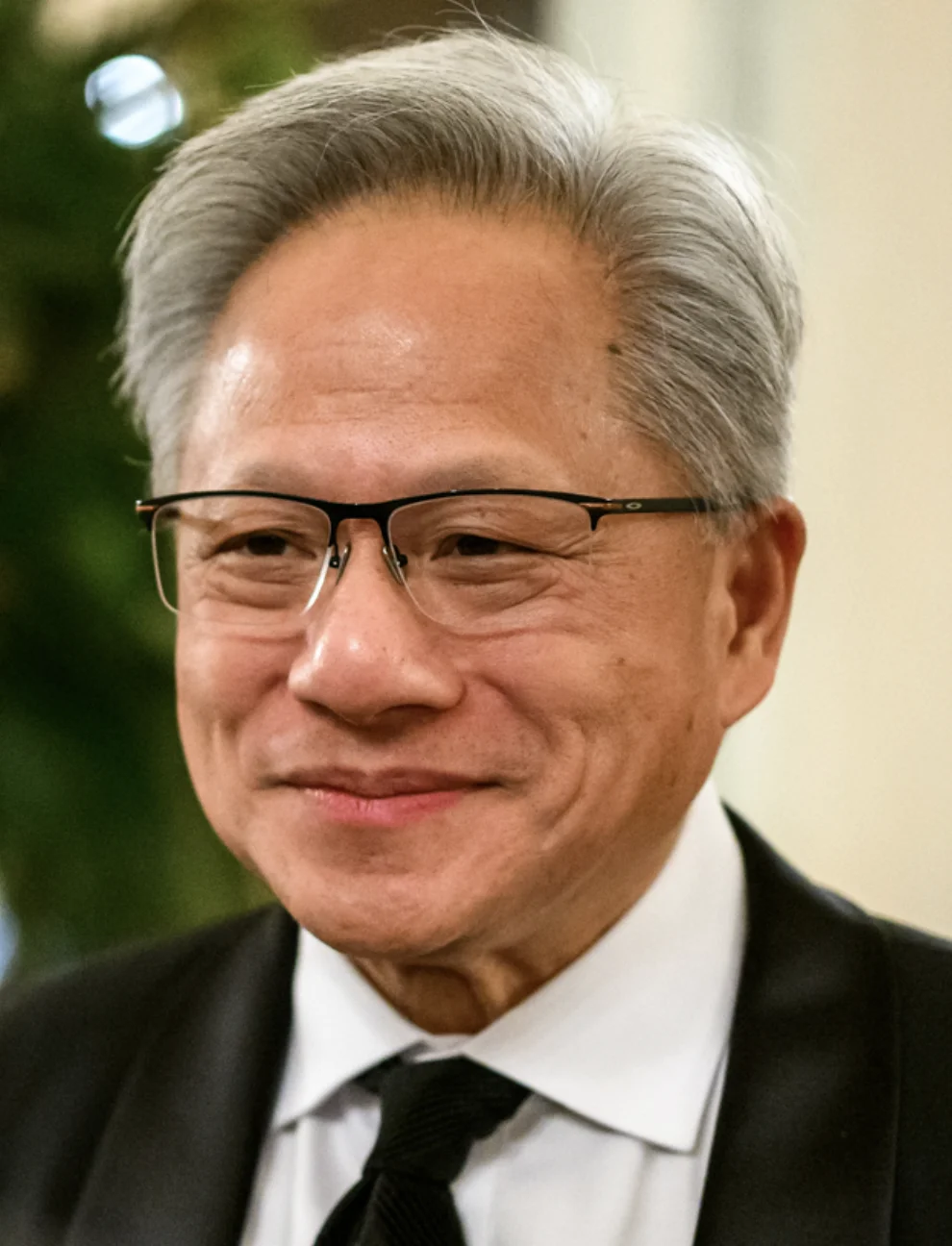
“This is the age of AI — the big bang of a new industrial revolution,” Jensen Huang, founder and CEO of NVIDIA, said in a statement announcing the investment. “The United Kingdom is in a Goldilocks moment, where world-class universities, bold startups, leading researchers and cutting-edge supercomputing converge. There has never been a better time to invest in the U.K. — AI is unlocking new science and sparking entirely new industries. With new capital and advanced infrastructure, we are doubling down to empower the U.K. to lead the next wave of AI innovation.”
The plan centers on two levers that most AI companies need to grow: cash and compute. Nvidia is partnering with Accel, Air Street Capital, Balderton Capital, Hoxton Ventures and Phoenix Court to channel investment into startups at different stages. On the compute side, the company said the commitment will expand access to advanced systems needed to train and run AI models—short-hand for the vast number-crunching servers and software that power modern machine learning.
U.K. leaders welcomed the move as a sign that British AI remains investable in a crowded global race. “NVIDIA’s investment is a major vote of confidence in the U.K. both today and long into the future,” said U.K. Prime Minister Sir Keir Starmer. “By backing our startups, empowering our researchers and connecting capital with talent, this partnership will create jobs, spark new industries and ensure the U.K. remains at the forefront of global AI leadership.”
The investment is designed to reach beyond the capital. Nvidia said it will work with “top U.K.-based funds” to get both capital and compute to ambitious founders in the country’s major research hubs and the government’s new AI zone. That is meant to address a common complaint from founders outside London: money and mentorship often stop at the M25. By tying funding to access to high-performance computing, the program also seeks to cut the time and cost to bring new AI products to market.
Venture capital firms backing the effort said the bottlenecks are real and solvable.
Sonali De Rycker, partner at Accel said,”World-class compute and fresh capital will empower the next wave of entrepreneurs and AI startups, create new jobs and further enable the U.K. to compete in the AI race,” and Nathan Benaich, general partner at Air Street Capital, noted, “The U.K. has world-class talent and research, but the infrastructure has not kept pace. This commitment aims to bridge that gap by providing U.K. founders with the resources needed to build globally significant AI companies.”
Investors also flagged energy and compute costs as friction points for scaling. “We are in the midst of a seismic technology shift as people and companies around the world increasingly depend on more intelligent hardware and software,” said James Wise, a partner at Balderton Capital. “The challenge facing us, however, is how to overcome constraints like the cost of energy or ability to access compute. Investment from firms like Balderton and companies like NVIDIA will help smooth the path, so more global winners can be built and thrive here in the U.K.”
Other backers said the goal is to connect Britain’s research strength with commercial outcomes. “The U.K. has the talent, research institutions and entrepreneurial drive to build world-leading AI companies — but turning breakthrough ideas into global impact requires collective action,” said Hussein Kanji, founder and partner at Hoxton Ventures. Saul Klein, founder and executive chair of Phoenix Court, pointed to an existing base of nearly 800 venture-backed U.K. companies generating more than $25 million in revenue and said the opportunity is to “back the next wave of truly differentiated AI companies solving real-world challenges.”
Nvidia framed the move as part of a broader transatlantic strategy. Following its recent pledge to manufacture up to a half-trillion dollars’ worth of AI supercomputers in the U.S., the company said the U.K. investment will be domiciled in the United States and activated in Britain—an approach it cast as strengthening ties between the two ecosystems.