Insider Brief
- 1X has rolled out an updated world model for its humanoid robot NEO, using a video-based AI system grounded in physical constraints to translate natural-language prompts into physical actions without task-specific programming.
- The company said the model combines large-scale internet video data with onboard perception and an internal dynamics system, enabling NEO to plan and execute movements in unfamiliar environments while reducing reliance on human-operated data collection.
- 1X reported that internal demonstrations show improved robustness across household tasks and variable conditions, as the company prepares NEO for early-access delivery in 2026 through both purchase and subscription models.
1X has introduced an updated world model for its humanoid robot Neo, aiming to expand how the system converts natural-language requests into physical actions. According to 1X, the update uses a video-based AI model grounded in physical constraints and fine-tuned with robot data that allows NEO to attempt tasks in unfamiliar environments without task-specific programming.
“With the 1X World Model, you can turn any prompt into a fully autonomous robot action — even with tasks and objects Neo’s never seen before,” 1X AI researcher Daniel Ho said in the announcement.
The California-based company said the system combines large-scale internet video data with onboard perception to plan actions and translate them into motion through an internal dynamics model. In practice, this allows Neo to generate a sequence of movements from a text or voice prompt based on what it observes in front of it, rather than relying solely on pre-scripted behaviors or narrow training sets.
“After years of developing our World Model and making Neo’s design as close to human as possible, Neo can now learn from internet-scale video and apply that knowledge directly to the physical world,” Bernt Børnich, CEO and Founder, 1X, said in a statement. “With the ability to transform any prompt into new actions — even without prior examples — this marks the starting point of Neo’s ability to teach itself to master nearly anything you could think to ask.”
1X positions the world model as a step toward reducing dependence on human-operated data collection, enabling the robot to gather additional experience through its own interactions and refine performance over time. The approach also allows the system to benefit indirectly from continued improvements in general-purpose video models that the company said could accelerate capability gains compared with robot-only training pipelines.
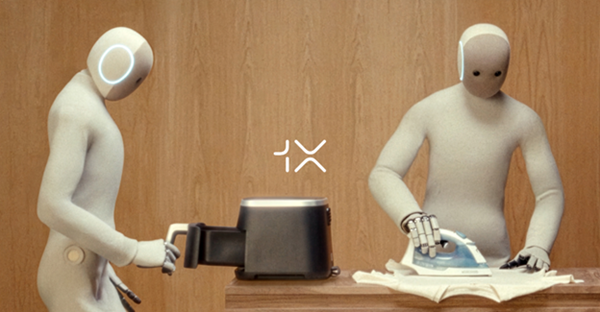
The company reported that internal demonstrations show Neo performing a range of household tasks, including object handling and basic home interactions, in settings that differ from its training data. The focus, 1X said, is on improving robustness in variable conditions such as changing lighting, clutter, and partially obstructed objects, which remain persistent challenges for home robotics.
Neo is currently offered through 1X’s early-access program, with priority delivery targeted for 2026. The company said it plans to make the robot available through both upfront purchase and subscription options as it continues to iterate on hardware and software capabilities.
Image credit: X1 Technologies