

Insider Brief
- Deep33 Ventures has emerged from stealth with plans for a $150 million deep-tech fund, securing a $100 million first close to invest in AI infrastructure, energy systems, autonomous robotics, and quantum computing, with physical constraints on AI deployment at the core of its thesis, according to the Jerusalem Post.
- The firm is positioning itself as a bridge between Israel’s research-driven innovation ecosystem and U.S. government and industrial demand, focusing on scaling post-research technologies into commercial and public-sector use amid growing limits on power, compute, and data-center capacity.
- While quantum computing is treated as a foundational layer intersecting with AI rather than a standalone bet, Deep33 said it has already made five initial infrastructure-focused investments and plans to complete its full raise by the end of the first quarter of 2026.
Deep33 Ventures has emerged from stealth with plans for a $150 million fund aimed at deep tech, including backing the physical infrastructure increasingly constraining the growth of artificial intelligence, according to the Jerusalem Post. The firm said it has secured a $100 million first close and will invest in AI infrastructure, energy systems, autonomous robotics, and quantum computing, with AI-related capacity and deployment challenges at the center of its thesis.
The fund is built around the view that AI’s next phase will be limited less by algorithms than by access to power, compute, materials, and industrial-scale deployment. Deep33 is positioning itself as a bridge between Israel’s research-driven technology base and U.S. government and industrial demand, with offices in Tel Aviv, New York, and Los Angeles. The firm describes its strategy as accelerating technologies from post-research development into large-scale commercial and public-sector use.
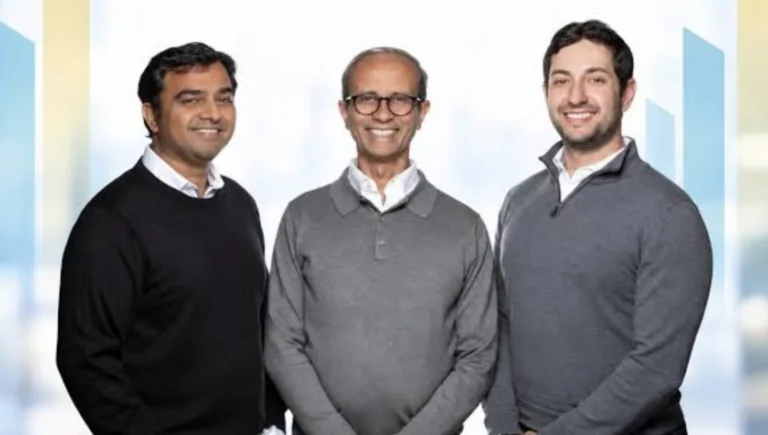
Deep33 is led by Lior Prosor, an entrepreneur and investor with experience across technology, energy, and defense, and Michael Broukhim, a California-based entrepreneur and angel investor. Eclipse Ventures founder Lior Susan will serve as chairman, while Yarden Golan, formerly chief of staff to Israel’s ambassador to the U.S., will oversee government engagement and grant strategy, according to the Jerusalem Post.
According to the Jerusalem Post, Deep33 has already made five initial investments aligned with this infrastructure-first strategy, though it has not disclosed the companies. The first close was backed by a mix of family offices, institutional investors, founders, and venture capital partners in Israel and the U.S.
Quantum Computing Intersection with AI
While the fund will invest across several capital-intensive sectors, quantum computing is framed as a foundational layer that intersects with AI rather than a standalone research bet. Deep33’s approach treats quantum as part of a broader computing stack that could shape future AI workloads, optimization problems, and national infrastructure planning. The firm’s quantum strategy is guided by Col. (Res.) Joab Rosenberg, a quantum physicist affiliated with the Weizmann Institute and a former Talpiot commander.
The emphasis on infrastructure reflects growing concern that AI’s expansion is running into hard physical limits. Training and operating large-scale models increasingly depend on energy availability, specialized chips, data-center capacity, and resilient supply chains, areas where software-driven gains alone are no longer sufficient. Deep33 said its investment scope is designed to address those bottlenecks by backing companies that sit upstream of AI deployment rather than at the application layer.
The firm expects to complete its full $150 million raise by the end of the first quarter of 2026.