
Insider Brief
- The Senate Commerce, Science & Transportation Committee will hold a hearing on self-driving cars as lawmakers consider whether federal action is needed to replace a fragmented state-by-state regulatory framework that industry groups say is slowing autonomous vehicle deployment.
- The hearing, chaired by Ted Cruz, reflects growing pressure to establish national safety standards for autonomous vehicles amid competition with China and concerns that inconsistent state rules are delaying commercialization and scaling.
- Scheduled witnesses include executives from Tesla and Waymo, the head of the Autonomous Vehicle Industry Association, and a transportation law expert from the University of South Carolina.
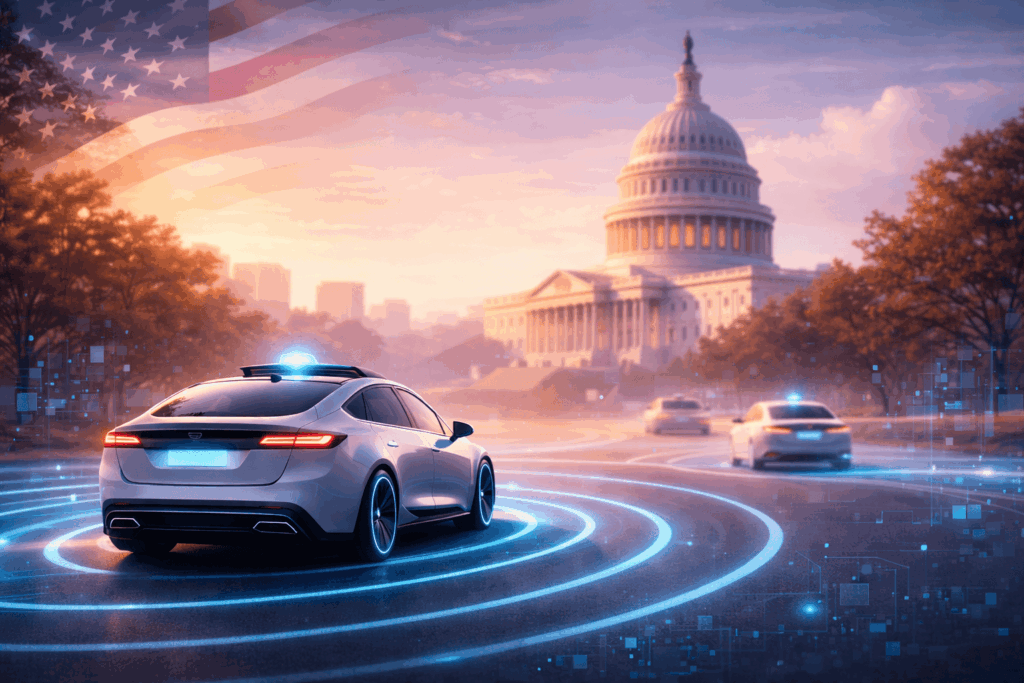
The U.S. Senate Committee on Commerce, Science, and Transportation will hold a hearing, titled “Hit the Road, Mac: The Future of Self-Driving Cars,” on Wednesday at 10 a.m. EST.
According to the committee, the hearing, chaired by Ted Cruz, comes as U.S. policymakers face mounting pressure to establish national safety standards for autonomous vehicles amid intensifying competition with China. Supporters of federal preemption argue that inconsistent state rules have made it difficult for companies to scale operations across state lines, raising costs and delaying commercialization.
“Every commuter has sat in traffic, staring at brake lights, wasting time they could be spending with their families or getting work done. Autonomous vehicles have the potential to change that — making traffic move faster, reducing distracted driving, and dramatically cutting car crashes,” Cruz said in a statement. “They also can bring meaningful independence for people with disabilities. But today, a confusing mix of federal and state laws makes it much more difficult to bring safer, more advanced autonomous vehicles to market. This hearing will examine how outdated regulations are holding back lifesaving technology — and what Congress can do to fix it.”
Proponents of autonomous driving technology point to safety and mobility benefits as central to the debate. Federal data attributes the vast majority of traffic crashes to human error, and developers argue that fully autonomous systems could reduce fatalities by removing driver-related risks. Industry advocates also say autonomous vehicles could expand mobility for people with disabilities who are unable to drive, improving access to work, healthcare, and daily services.
Witnesses scheduled to testify include Lars Moravy, vice president of vehicle engineering at Tesla; Mauricio Peña, chief safety officer at Waymo; Jeff Farrah, chief executive of the Autonomous Vehicle Industry Association; and Bryant Walker Smith, a law professor at the University of South Carolina who specializes in transportation policy.
The hearing will take place in the Russell Senate Office Building and will be livestreamed on the committee’s website and YouTube channel.