“I am working on AI that transforms the way we do science and engineering,” said AI professor Anima Anandkumar in her TED talk on bridging the digital and physical worlds through artificial intelligence (AI). Anandkumar’s work focuses on developing AI systems that can simulate and understand complex physical phenomena, going beyond the capabilities of current language models.
Anandkumar argues that while language models like ChatGPT can generate ideas, they lack physical grounding and cannot replace laboratory experiments.
“Language models hallucinate because they have no physical grounding,” she explained. To address this limitation, her team has developed an AI technology called neural operators.
Neural operators represent data as continuous functions or shapes, allowing for unprecedented detail and scalability.
“Neural operators allow us to train on data at multiple scales or resolutions,” Anandkumar noted. This capability enables the simulation of physical phenomena “as much as a million times faster than traditional simulations.”
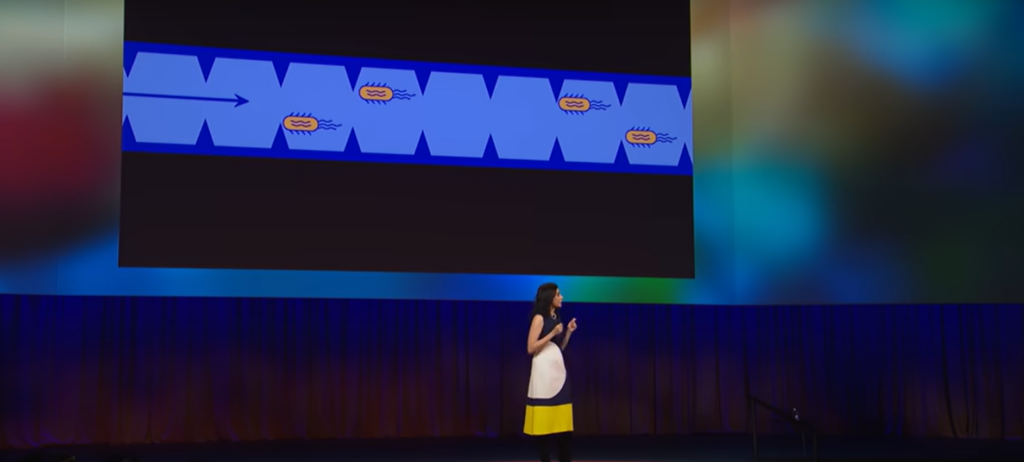
The practical applications of this technology are already emerging. Anandkumar describes how neural operators were used to design an improved medical catheter that significantly reduces bacterial infections. In weather forecasting, her team’s FourCastNet model has shown remarkable speed and accuracy. “What used to take a big supercomputer can now run on a gaming PC that you may have at home,” she stated.
Looking to the future, Anandkumar sees even more ambitious goals.
“We are building a generalist AI model with emergent capabilities that can simulate any physical phenomena and generate novel designs that were previously out of reach,” she revealed. This technology could potentially tackle complex challenges like climate change and nuclear fusion.
Anandkumar’s work represents a significant step towards AI systems that can truly understand and interact with the physical world. As she concluded: “This is how we scale up neural operators to enable general intelligence with universal physical understanding.”
Her research promises to open new frontiers in scientific discovery and engineering design, potentially revolutionizing fields from aerospace to medicine.
Featured image: Credit: TED