Insider Brief
- The Oil and Gas Automation and Digitalisation Congress (AUTOMA) 2025 in Amsterdam showcased AI-powered transformation, smart infrastructure, digital decarbonisation, and autonomous operations across the energy sector.
- The event featured over 350 professionals, 11 sessions, and 288 B2B meetings, with leading companies presenting advances in hybrid-AI digital twins, IoT, and real-time monitoring for energy efficiency and carbon reduction.
- Discussions highlighted digital twins, AI integration, and clean hydrogen as key enablers of a net-zero transition, setting the stage for AUTOMA 2026 to focus on practical automation strategies.
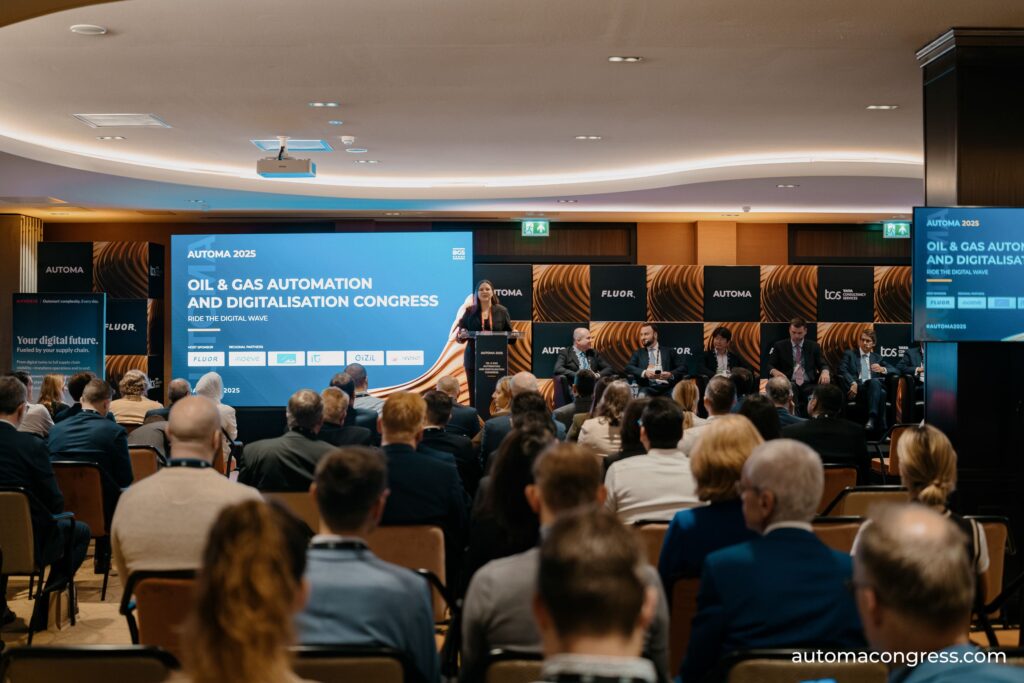
PRESS RELEASE — The future of the oil and gas industry was on display at The Oil and Gas Automation and Digitalisation Congress (AUTOMA) 2025, held on 13-14 October in Amsterdam. Experts from o&g companies, EPCs, pipeline operators, refineries, service providers and technology developers explored technologies driving AI-powered transformation, smart infrastructure, digital decarbonisation and autonomous operations.
The numbers speak for themselves: powered by 350 professionals, 20-plus hours of networking, 11 sessions and 288 guaranteed B2B meetings – AUTOMA 2025 has been a remarkable milestone. The Congress highlighted its value for participating companies seeking collaboration and partnership with industry peers, marking the beginning of what promises to be a dawn of a new age for the oil and gas sector.
With the support of Regional Partners – Moeve, Linde plc, Italgas S.p.A., Gizil GmbH, Repsol – and the Host Sponsor Fluor, AUTOMA 2025 proved to be a dynamic hub for sharing case studies and driving the conversation forward.
Sustainability and efficiency
The first day began with an opening speech by Yuliya Glazyrina, Project Director of AUTOMA, at a panel discussion focusing on issues related to energy efficiency, carbon reduction and the enhancement of storage safety protocols.
Leading companies such as Chiyoda Corporation Netherlands B.V., Italgas S.p.A., Linde plc. and others have presented their way to stay carbon-neutral. Francesco Coletti, PhD, CEO at Hexxcell Ltd., highlighted the power of real-time insights with the Hybrid-AI digital twins. By integrating physics-based models with AI, these twins offer performance monitoring of heat exchangers, resulting in an 8% reduction in CO₂ emissions and the prevention of a 3% production loss.
The subsequent sessions provided a focus on AI, IoT and remote monitoring solutions. Benoit Gotab, Chief projects data & IT at CVA Group, explained the company’s success using AI to optimise geoscience workflows. An AI-based real-time monitoring was the subject of a presentation by Shubham Rajvanshi, Senior Director at Larsen & Toubro (L&T) Technology Services Limited, highlighting best practices for a successful digitalisation programme.
Experts from Saipem SpA, CVA Group, Fluor, SES, JGC Corporation, DEKI, Worley Consulting, SOCAR Turkiye Energy, Voovio, Wood and other leading companies focused on virtual modelling, enhanced reality technology, AI for monitoring of infrastructures, standardisation for work efficiency.
New digital landscape
On the second day, leaders had a discussion on the role of digital technologies in achieving a net-zero energy transition through clean hydrogen production. Tecnimont SpA, CAXperts GmbH, Aramco Overseas Company B.V., Orlen S.A. and Repsol Cartagena Industrial Complex presented their view on the issue.
Digital twin integration has prompted companies to seek adoption methods. Bernd Kalusche, Director Vertical Management Energy, Siemens Digital Industries at Siemens AG, discussed how digital twins optimise production and cut emissions. Additionally, Saleh Alhonayan, Process Engineer and Digital Officer at Saudi Aramco, examined the role of digital twins in gas facilities.
Case studies were the focus of two keynotes sessions presented by experts, which also featured live interaction with the audience. Focusing on aspects of industrial technology, Dennis Rohe (Business Consulting Lead, Imubit) demonstrated AI’s potential in industrial sustainability, and Darren Albers (Chief Information Security Officer, Fluor) explored IT security challenges for EPC companies.
The next frontier for the sector
In an evolving world, upholding core consistency and implementing value-adding innovations are essential. AUTOMA 2025 plays a vital role in guiding the industry towards trends and addressing sector needs.
Embracing the synergy between oil, gas and chemicals, the Congress gathers leaders under the motto “drive the digital wave” to advance the transformation that hallmarks the AUTOMA series.
Ultimately, the series has extended its focus to the chemical sector with AUTOMA Chem. This expansion introduces fresh innovations and automation relevant to chemicals, delivered with its consistent style.
Moving beyond trends showcased at other series’ events, the Oil and Gas Automation and Digitalisation Congress (AUTOMA) 2026 prioritises practical strategies for implementing automation and digitalisation in the oil and gas sector. The next edition is held in Amsterdam on 5-6 October 2026: https://sh.bgs.group/3ci