Insider Brief
- A research team outlines a vision for “pharmaceutical superintelligence,” in which advanced AI systems autonomously orchestrate drug discovery from a plain-language prompt through preclinical development and clinical planning.
- The authors argue that integrating generative models, automated laboratories and multi-agent reasoning systems into a closed-loop pipeline could reduce development timelines, lower costs and improve clinical success rates.
- They emphasize that significant technical, regulatory and governance challenges — including model hallucinations, interpretability, validation and human oversight — must be addressed before such autonomous systems can be widely adopted.
Could researchers one day prompt new medicines and treatments for patients?
In a ACS Central Science paper, researchers report that drug discovery is approaching a structural shift — from fragmented, human-led development to AI-orchestrated systems that could one day translate a plain-language prompt into a clinical drug candidate.
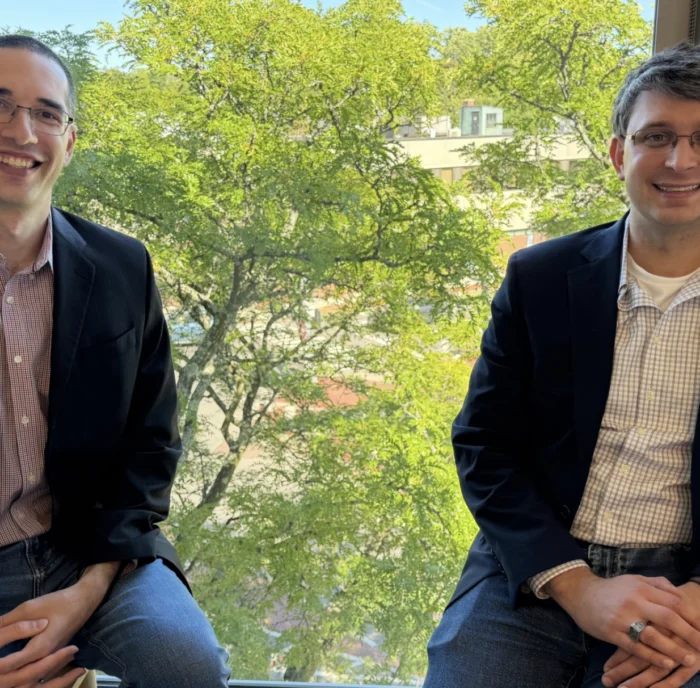
In “From Prompt to Drug: Toward Pharmaceutical Superintelligence,” Alex Zhavoronkov and David Gennert, both of of Insilico Medicine, and Jiye Shi, of Eli Lilly, describe a future in which generative artificial intelligence (AI) does more than design molecules. They outline a closed-loop framework in which AI systems coordinate target discovery, compound design, synthesis, biological validation and even elements of clinical trial planning.
The researchers call this emerging model “pharmaceutical superintelligence,” or PSI — a fully integrated, autonomous drug discovery pipeline capable of continuous learning across biological, chemical and clinical domains.
From Fragmentation to Integration
AI has been embedded in pharmaceutical research for decades, according to the paper. Early machine learning systems classified compounds, predicted drug–target interactions and helped identify promising candidates from large chemical libraries. The rise of deep learning expanded those capabilities, allowing researchers to model protein structures, simulate molecular binding and analyze large biological data sets.
Generative AI marked another leap. Variational autoencoders, generative adversarial networks and transformer-based large language models enabled the creation of novel chemical structures and the extraction of biological insights from vast corpora of scientific literature. AI-designed molecules have advanced into clinical trials, signaling that these tools are no longer confined to theory.
However, these capabilities remain siloed with target discovery, medicinal chemistry, laboratory validation and clinical development typically handled by separate software systems and distinct teams. In this complex ecosystem, data formats differ and hand-offs introduce delays. Human coordination also becomes a bottleneck.
The researchers report that the real transformation will not come from improving individual tools but from linking them under a central AI controller capable of orchestrating the entire workflow.
The Prompt-to-Drug Framework
At the center of the proposed system is an advanced reasoning model. In theory, a researcher could issue a request such as “Design a drug for idiopathic pulmonary fibrosis.” The system would then deploy specialized AI agents to identify potential biological targets, generate and optimize candidate molecules, plan synthesis routes, and design preclinical and clinical testing strategies.
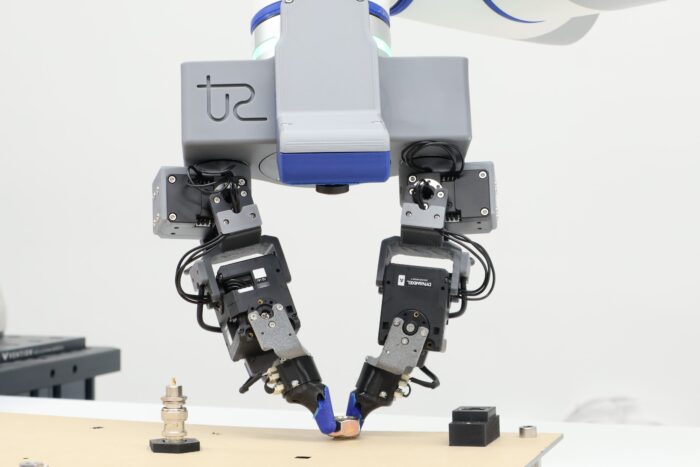
Biology agents would scan literature, multi-omics data and internal datasets to nominate disease-associated targets. Chemistry agents would design molecules using docking simulations and predictive models for pharmacokinetics and toxicity. Automated laboratories — including robotic synthesis platforms — would execute experiments, feeding results back into the system.
Clinical prediction modules would analyze trial design variables and patient populations to estimate the probability of success. Post-approval data, including Phase IV studies, would further refine the system’s models in a continuous feedback loop.
In this architecture, AI does not merely suggest options; it manages workflows, monitors outcomes and dynamically adjusts research plans based on new data. The goal is a seamless pipeline that reduces development time, lowers cost and improves clinical success rates.
Technical Building Blocks — and Gaps
The team reports that much of the technical infrastructure already exists in modular form. Generative chemistry platforms can produce novel compounds. Multi-agent research assistants can mine literature and propose hypotheses. Automated synthesis systems can carry out laboratory procedures. Clinical trial prediction models estimate outcomes based on historical data.
However, current implementations remain limited for a few reasons, the team suggests. Many large language models lack deep biochemical understanding and rely on simplified representations of molecular structures. Agentic systems often operate within narrow domains and struggle with complex task coordination. Cascading errors — where inaccuracies in early-stage predictions propagate downstream — remain a risk.
Physical laboratory automation also has constraints. Small-molecule synthesis platforms may not handle complex biologics or advanced purification steps. Clinical prediction tools have yet to undergo broad external validation in real-world regulatory settings.
The researchers suggest that bridging these gaps will require hybrid systems that combine language-based reasoning with physics-based simulations, molecular dynamics and quantum mechanical modeling. Multimodal models trained on structural, biological and clinical data will likely be necessary to achieve reliable autonomy.
Governance, Validation and Human Oversight
The team reports that full autonomy cannot replace accountability. Large language models are prone to hallucination, which means they can generate plausible but incorrect outputs. In drug discovery, such errors could translate into flawed molecular designs or unsafe trial plans.
Interpretability poses another challenge. Regulators require clear rationales for decisions related to patient stratification, mechanism-of-action claims and trial design. Black-box AI systems may face resistance unless they provide transparent audit trails.
The researchers recommend embedding safeguards into any autonomous framework. These include inter-agent validation, human-in-the-loop checkpoints, traceable records of model inputs and software versions, and compliance with privacy regulations governing patient data.
They also suggest that new validation methods — such as parallel “AI arms” in clinical trials — may be needed to test predictive models against traditional approaches.
Toward Pharmaceutical Superintelligence
The vision of PSI rests on the idea that linking modular AI systems into a closed-loop, continuously learning architecture will unlock a new phase of drug discovery. Instead of discrete, manual stages, development would become a coordinated, adaptive process managed by advanced reasoning AI.
According to the team, collaboration across academia, biotech companies and regulators will be essential. Standardized APIs, transparent reporting and shared datasets could enable interoperability among subsystems. Incremental validation at each stage would build confidence before AI-generated candidates reach patients.
If realized, the prompt-to-drug model could compress timelines and expand the search space for therapeutics by minimizing human bias and computational bottlenecks. The paper stops short of predicting when such systems will become routine. But it suggests that the necessary components — generative models, robotic laboratories and advanced reasoning agents — are already emerging.