
Insider Brief
- UNESCO said it has launched an AI in education observatory for Latin America and the Caribbean to support governments integrating AI into education systems with a focus on equity, quality and sustainability.
- The platform will provide data, policy guidance and teacher training support as AI adoption accelerates across classrooms while formal frameworks and institutional capacity remain limited.
- UNESCO said the initiative brings together regional and global partners to address learning gaps and workforce challenges as AI reshapes education and skills development.
PRESS RELEASE — UNESCO launched the Observatory on Artificial Intelligence in Education for Latin America and the Caribbean on 14 April, a regional platform designed to support States in integrating artificial intelligence (AI) into their education systems, with a focus on equity, quality and sustainable development.
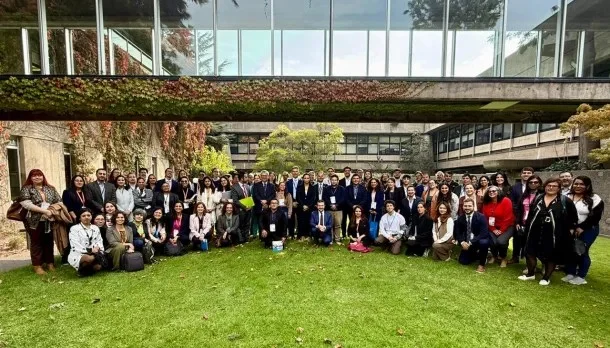
The launch took place at ECLAC headquarters in Santiago, Chile, as part of the 2026 Forum of the Countries of Latin America and the Caribbean on Sustainable Development. The event brought together authorities, experts, representatives of multilateral organizations, academia, the technology sector and civil society, consolidating itself as a space for regional coordination on educational transformation.
In a context of rapid expansion of artificial intelligence in education, the Observatory emerges as the first multi-stakeholder platform and a space for regional cooperation aimed at supporting countries in the growing incorporation of these emerging technologies into teaching, learning and educational management processes. It is not a space for passive observation, but rather a coordinated action that will generate contextualised evidence to guide public policies, strengthen teacher training and decision-making, and promote innovations validated in classrooms under ethical frameworks.
The initiative responds to a twofold regional urgency. On the one hand, the learning crisis: six out of ten sixth-grade students in Latin America do not reach minimum levels in reading and mathematics, according to data from the Latin American Laboratory for the Assessment of the Quality of Education (LLECE). On the other, the rapid adoption of artificial intelligence in classrooms: in countries such as Chile and Brazil, more than 50% of teachers already use these tools, although fewer than 10% of institutions in the region have formal guidelines and sufficient capacities to integrate them with clear criteria.
“Artificial intelligence is transforming education around the world, and Latin America and the Caribbean are no exception. The challenge is not its emergence, but how we ensure that it translates into more and better opportunities for all. In a context of learning crisis and rapid technological adoption, we must act urgently, but also with ethical responsibility and pedagogical purpose, so that artificial intelligence strengthens learning, supports teachers’ work and helps to close, rather than widen, existing gaps,” said Esther Kuisch Laroche, Director of the UNESCO Regional Office in Santiago.
The expansion of artificial intelligence in education also poses decisive challenges for the future of work in the region. Without consolidated foundational learning and the critical thinking needed to understand, evaluate and use technology with judgement, the labour reskilling required by this transition cannot rest solely on education systems. This is a challenge that calls for an intersectoral and sustained response, in a context where the expansion of artificial intelligence still coexists with structural gaps in education.
This initiative is led by UNESCO together with the Development Bank of Latin America and the Caribbean (CAF), the National Centre for Artificial Intelligence of Chile (CENIA), the Regional Center for Studies on the Development of the Information Society (Cetic.br/NIC.br), ECLAC, the Ceibal Foundation, Fundación Santillana, Tecnológico de Monterrey, ProFuturo, the Universidad del Desarrollo (Chile), and the International Research Centre on Artificial Intelligence (IRCAI), among others. The Observatory also has an Advisory Council composed of the Organization for Economic Co-operation and Development (OECD), the Organization of Ibero-American States for Education, Science and Culture (OEI), experts from Harvard University and the United Nations Independent International Scientific Panel on AI.
UNESCO calls on more stakeholders to join this effort, as only broad collaboration will make it possible to ensure that artificial intelligence serves the right to education. This is a decisive moment for the region: the Observatory seeks to build a shared response so that technology and education advance with inclusion, purpose and ethical criteria.
La UNESCO invita a empresas y organizaciones comprometidas con la educación a sumarse a esta iniciativa y explorar oportunidades de colaboración. Para más información, escriba a: [email protected]
Image credit: UNESCO