

Insider Brief
- Generalist AI has raised $400 million in new funding, bringing its total funding to more than $500 million, to accelerate development of what it calls physical artificial general intelligence, or AGI.
- The round was led by Radical Ventures and included 8VC, Union Square Ventures, Hanabi Capital and Norwest, with existing investors including NVIDIA’s NVentures, Boldstart Ventures, Spark Capital, Bezos Expeditions and NFDG also participating.
- Generalist is developing foundation models designed to work across a range of robotic systems, and said the funding will be used to expand its AI models, scale real-world data collection, increase computing infrastructure and support commercial deployments.
Generalist AI has raised $400 million in new funding as the robotics startup looks to develop what it calls physical artificial general intelligence, or AGI, bringing its total funding to more than $500 million.
The round was led by Radical Ventures and included new investments from 8VC, Union Square Ventures, Hanabi Capital and Norwest. Existing backers including NVIDIA’s NVentures, Boldstart Ventures, Spark Capital, Bezos Expeditions and NFDG also participated, according to the company. New angel investors include Zoom founder Eric Yuan, Xiaomi co-founder Bin Lin, AI researcher Fei-Fei Li and entrepreneur Naval Ravikant.
The company indicated the funding will be used to expand the company’s robotics AI models, scale data collection efforts, increase computing infrastructure and support deployments with commercial partners, according to Generalist.
Physical AGI Approach
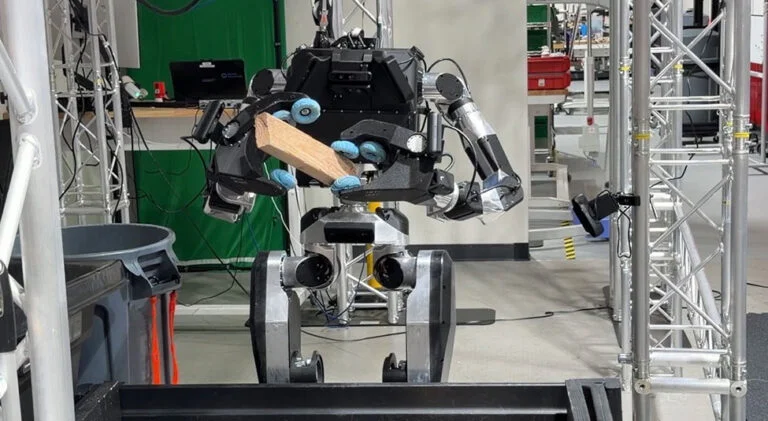
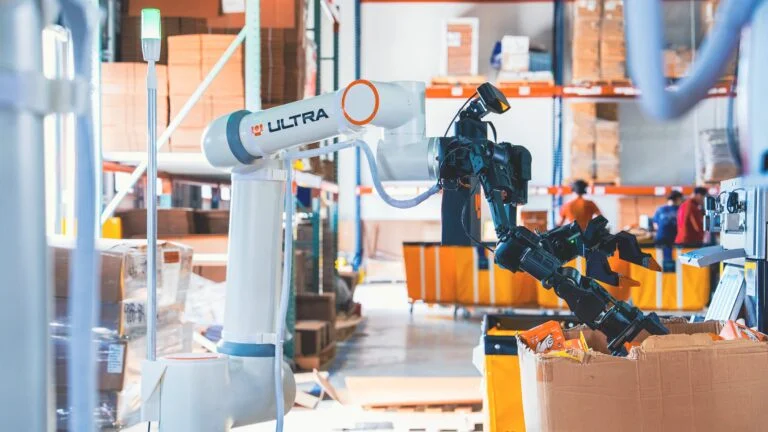
The Silicon Valley startup is pursuing a different approach than many robotics companies that focus on a specific machine or application. Instead, Generalist is building foundation models intended to work across a range of robotic systems, from humanoid robots and warehouse machines to industrial robotic arms and other autonomous platforms.
“The future of robotics is bigger than any single robot,” the company noted in a blog post. “Whether it’s a humanoid in the home, a robotic arm on a factory floor, a mobile robot in a warehouse, or an autonomous system in space, the vital technology will be the intelligence that works across form factors, environments, and applications.”
The company suggests that advances in robotics will increasingly come from general-purpose AI models trained on large volumes of real-world data rather than from specialized software written for individual tasks. Its latest systems, known as GEN-0 and GEN-1, are designed to learn from physical experience and improve as they interact with the world.
Generalist noted GEN-0, introduced last year, demonstrated what the company describes as scaling laws for robotics, showing that larger models trained on more real-world data produced more capable robotic systems. In April, the company introduced GEN-1, which it says improved reliability, speed and dexterous manipulation capabilities across a range of tasks. According to Generalist, data collected from real-world deployments can be used to continuously improve future generations of models, creating a feedback loop between robot performance and AI training.
“This is how general intelligence will emerge in the physical world: through systems that learn by acting, improve through experience, and become useful by working alongside people,” the company said.