Insider Brief
- Kemaro raised $5 million in an initial pre-closing of its Series B round, led by Spicehaus Partner AG, as it looks to expand in the U.S. and broaden its industrial cleaning robot portfolio.
- The Switzerland-based company has sold more than 1,500 autonomous floor-cleaning robots to over 600 industrial customers worldwide, including Unilever, Nestlé, BMW and Amazon, and is targeting a total $20 million for the full Series B round.
- Kemaro has opened its first U.S. office in Atlanta and plans to launch the smaller K700 robot alongside its flagship K900, aiming to deploy 10,000 robots across Europe and the U.S. while using its privacy-focused design as a competitive advantage in North America.
Swiss industrial robotics company Kemaro has raised $5 million in an initial pre-closing of its Series B round.
According to the company, the pre-closing was led by Spicehaus Partner AG with the Series B round targeting $20 million. Proceeds will go to bolstering sales operations, scaling international growth and new product development.
Founded in 2016, the Switzerland-based company builds autonomous industrial floor-cleaning robots for warehouses, logistics centers and manufacturing facilities where traditional cleaning systems often struggle with high debris and complex layouts.
Its flagship product, the K900, is designed for large-scale industrial environments and has helped the company establish a global customer base. Kemaro said it has sold more than 1,500 robots to over 600 industrial clients worldwide, including Unilever, Nestlé, BMW and Amazon.
A major focus of the new funding is North America and the company has established its U.S. subsidiary, Kemaro Inc., in Atlanta. The company said it will serve as a regional base for sales, customer support and market development. Co-founder Thomas Oberholzer is also relocating to the U.S. to help lead the expansion directly.
“The U.S. is no longer an experiment; it is our next major revenue engine,” the company wrote in the announcement.
Kemaro said one of its competitive advantages in the U.S. market is its “privacy by design” approach. Unlike some competing systems, its robots do not rely on 360-degree cameras or collect visual data, which the company says helps address customer concerns around industrial espionage and data security.
The company is also using the funding to expand beyond its flagship robot with the launch of the K700, a smaller autonomous cleaning robot designed for tighter industrial spaces and facilities with lower ceiling heights.
Kemaro indicated its longer-term goal is to deploy 10,000 robots across Europe and the United States over the next several years as demand for automation continues to rise in industrial operations facing labor shortages and pressure to improve efficiency.
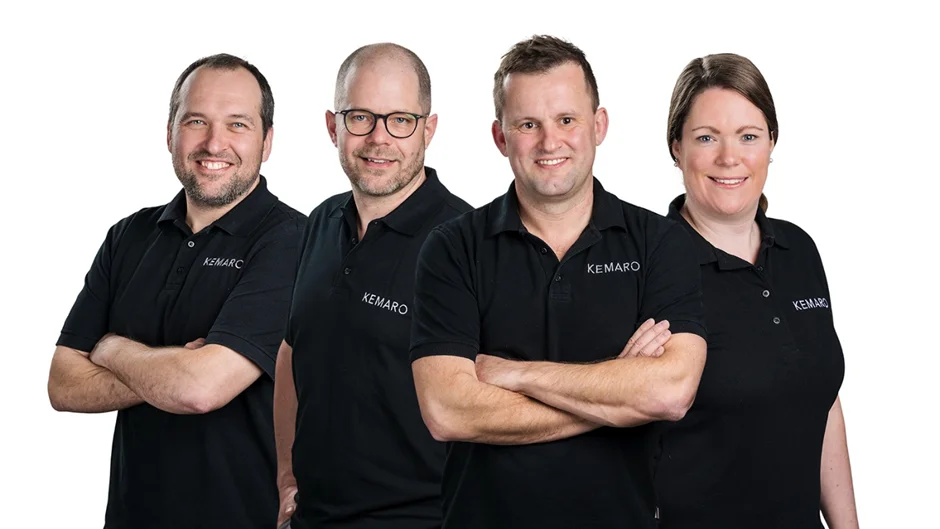
Image credit: Kemaro