Insider Brief
- WISeKey and subsidiary SEALSQ launched WISeRobot.ch, a development hub outlining a roadmap for AI-powered robotic systems combining conversational AI, digital identity and post-quantum cybersecurity technologies.
- The site serves as a central platform for the WISeRobot ecosystem, detailing product plans, deployment scenarios, partnership opportunities and future development phases.
- WISeKey said the initiative builds on earlier Davos demonstrations and ongoing work embedding post-quantum security protections into AI and autonomous systems intended for sectors including healthcare, government and critical infrastructure.
WISeKey and its subsidiary SEALSQ launched WISeRobot.ch, a website and development hub outlining their roadmap for AI-powered robotics secured with post-quantum cybersecurity technology.
WISeRobot.ch is intended to serve as the central hub for the WISeRobot ecosystem, outlining the multi-phase development plan, product capabilities, deployments and partnership opportunities. The platform brings together WISeKey’s “digital identity and cybersecurity expertise with SEALSQ’s post-quantum semiconductors and PKI infrastructure to support trusted, secure human-machine interaction,” according to WISEkey.
“As robotics and AI are rapidly becoming part of our critical infrastructure, ensuring long-term security is essential,” noted Carlos Moreira, Chairman & CEO of WISeKey. “By testing post-quantum technology in robotics and bringing this first P.O.C., our aim is to demonstrate how trust, security and human-centric values can be embedded into intelligent machines from the very beginning.”
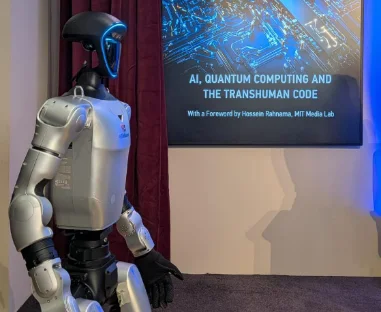
The company pointed out the announcement builds on demonstrations earlier this year at the World Economic Forum in Davos, where WISeRobot was used in an early proof-of-concept integrating post-quantum security into a live robotics environment. According to WISeKey, future development will focus on conversational AI, enterprise applications and wider deployment scenarios.
SEALSQ said it is continuing development of the project by embedding post-quantum security protections at the chip, firmware and system levels. According to the company, the goal is to create a security foundation for AI and autonomous systems operating in areas such as government, healthcare and critical infrastructure.
Image credit: WISeKey