
Former OpenAI CTO Mira Murati made her first major public appearance in roughly 18 months at the Bloomberg Tech conference in San Francisco, using the platform to preview her startup Thinking Machines Lab’s core technology and address the circumstances that first thrust her into the spotlight.
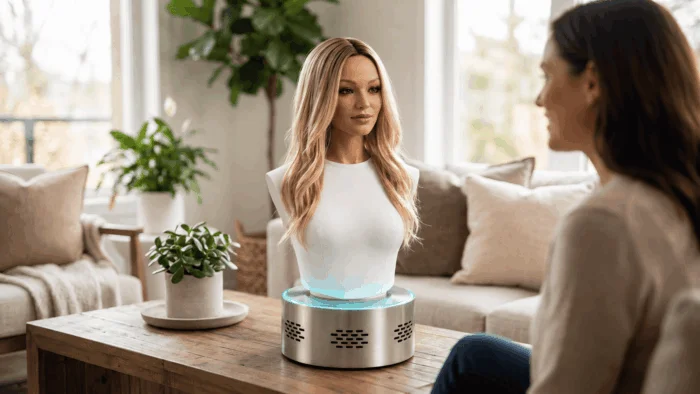
Murati described what the company calls “interaction models” — a departure from the standard prompt-and-response format that defines most AI products today. Rather than turn-based exchanges, the models are designed to process continuous streams of audio, text, and video in 200-millisecond intervals, enabling them to respond to interruptions, mid-thought corrections, and conversational pauses in something approaching real time. She framed the capability as a first step rather than a finished product, declining to commit to a release timeline.
On the 2023 OpenAI board crisis — internally referred to as “the blip” — Murati said her decisions throughout that chaotic week were guided by a commitment to protecting the organisation and its mission. She acknowledged that in retrospect she would have pushed harder for more information and a structured transition plan, and said the company would have collapsed without her involvement. Asked whether she still trusts Sam Altman, she declined to answer directly, instead returning to a broader concern about structural governance across the AI industry, arguing too much attention has focused on individual character and too little on institutional checks.
Murati also downplayed recent researcher departures from Thinking Machines, attributing organisational volatility to the compressed timelines of building a frontier lab from scratch.