
Insider Brief
- Aether AI has raised $20 million in seed funding to develop what it calls causal world models, AI systems designed to understand cause-and-effect relationships rather than relying solely on statistical patterns.
- The company was founded by UC San Diego researcher Biwei Huang and is initially focused on physical AI and robotics applications, where machines must reason about how actions affect real-world environments.
- Aether AI said the funding will support research, infrastructure expansion and early commercial deployments as it works to build a causal reasoning layer for intelligent systems operating in complex physical settings.
Aether AI has raised $20 million in seed funding to develop what it calls causal world models, AI systems designed to understand cause-and-effect relationships in real-world environments.
According to the company, the round was led by MPCi, with participation from Inno Angel Fund, SWC Global, Unity Ventures and other investors. Aether AI said the funding will be used to expand research and development, grow its engineering and scientific teams, and support early commercial deployments.
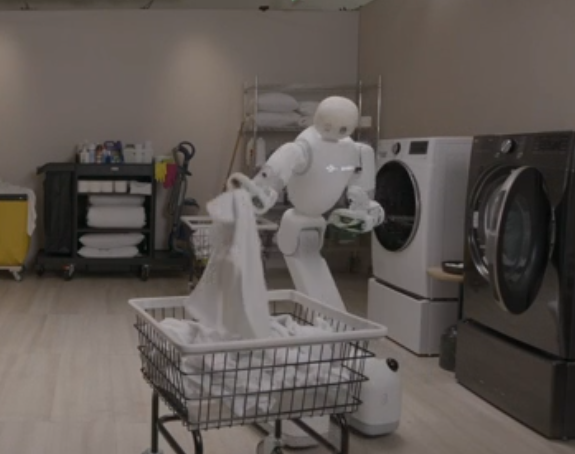
The company’s initial focus is on robotics and physical AI systems, with longer-term plans to develop a broader causal reasoning layer that could support a range of intelligent applications.
Founded by UC San Diego assistant professor Biwei Huang, Aether AI is developing AI models designed to move beyond pattern recognition by identifying causal relationships and reasoning about how actions influence outcomes. The company said it believes this capability could be particularly important for physical AI and robotics applications, where machines must interact with dynamic environments and make decisions based on how the physical world behaves.
“AI has become exceptionally good at recognizing patterns,” noted Huang in the announcement. “But the physical world runs on causality, not correlations. Machines must understand why outcomes happen, not simply observe associations. We believe the next breakthrough in AI will come from a new paradigm of learning and reasoning.”