
Insider Brief
- Researchers at CZ Biohub San Francisco and Stanford have created an AI-driven “Virtual Lab” that allows a team of AI agents, each emulating a specific scientific role, to collaboratively tackle complex biomedical research questions.
- In a Nature study published July 29, 2025, the Virtual Lab successfully designed and helped validate new Nanobodies against emerging SARS-CoV-2 variants, showcasing autonomous multistep reasoning and interdisciplinary coordination by AI agents.
- The system, led by a “Principal Investigator” AI, includes specialist and critic agents and allows human scientists to monitor and validate progress, offering a new paradigm where AI drives the full research pipeline from question to testable discovery.
Researchers at CZ Biohub San Francisco and Stanford have created an AI-driven “Virtual Lab” that allows a team of AI agents, each emulating a specific scientific role, to collaboratively tackle complex biomedical research questions.
According to the researchers, in its first real-world test, the system designed dozens of synthetic antibody-like proteins against COVID-19 variants—two of which proved effective in lab tests. The study was published in Nature on July 29, 2025.
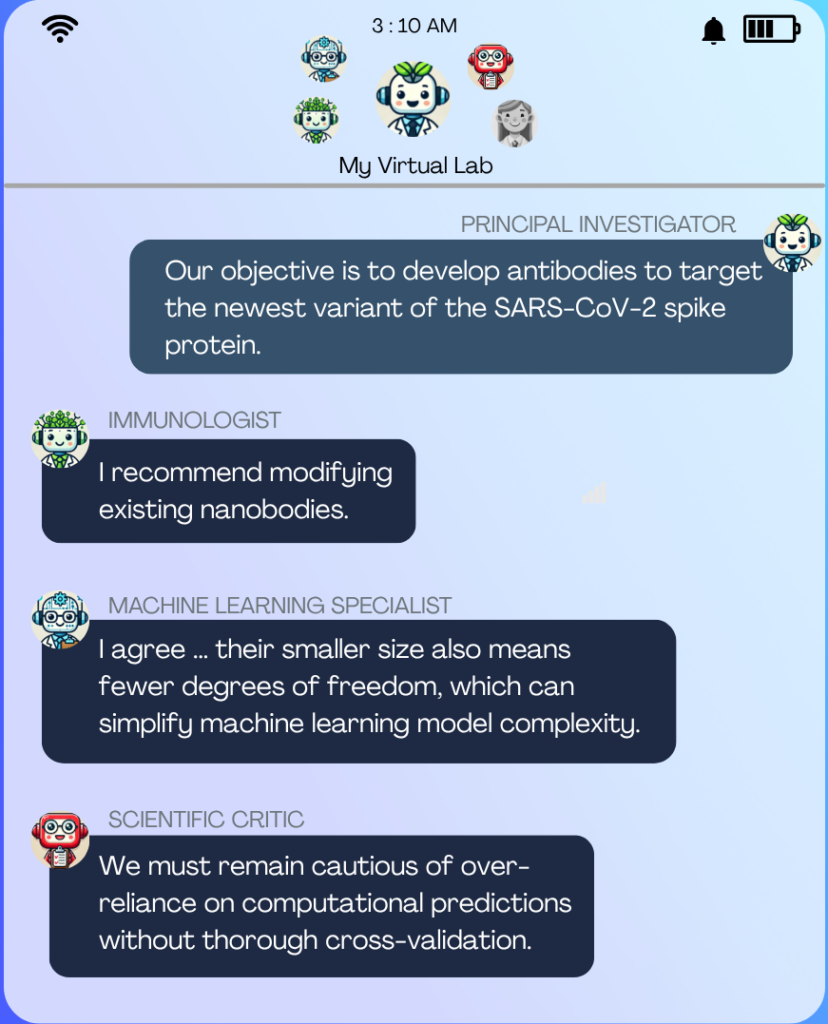
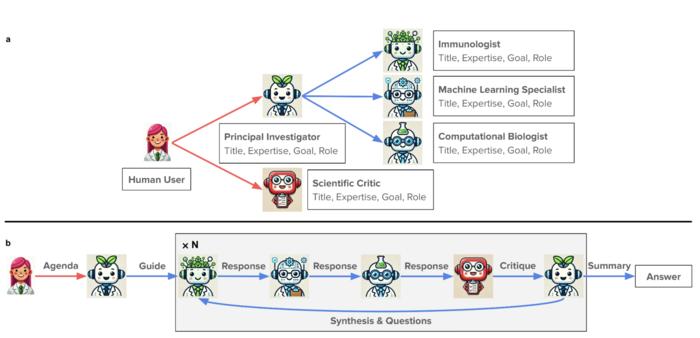
The AI system does more than just assist scientists with routine tasks. It serves as a complete virtual research team: one agent acts as the principal investigator, coordinating a cast of others with distinct specialties like virology, bioinformatics, and immunology. These AI agents collaborate in meetings, debate ideas, propose experiments, and deliver results—much like a human lab team would. Human scientists can monitor and weigh in, but most of the decisions and discussions are handled by the AI.
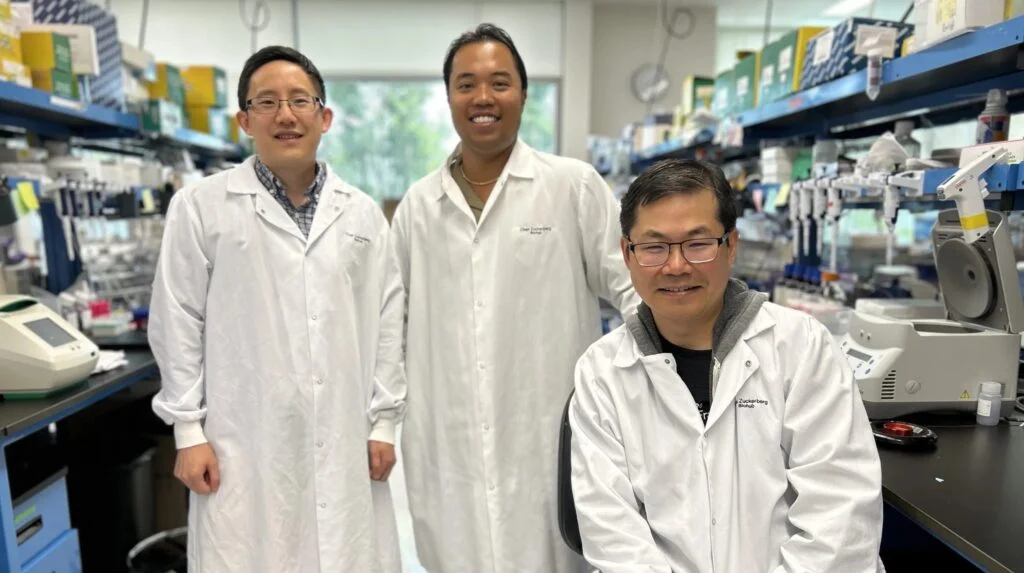
“What was once this crazy science fiction idea is now a reality,” said co–senior author John Pak, group leader of the Biohub SF Protein Sciences Platform. “The AI agents came up with a pipeline that was quite creative. But at the same time, it wasn’t outrageous or nonsensical. It was very reasonable – and they were very fast.“
To test the system, the researchers posed a question to the Virtual Lab team: could it design new antibodies that would bind to the spike protein of emerging SARS-CoV-2 variants? Within days, the AI agents had built a computational pipeline and generated blueprints for 92 so-called “Nanobodies,” which are tiny synthetic proteins that mimic antibodies. Two of the candidates were later validated by Pak’s lab as effective binders against new viral strains.
“This is the first demonstration of autonomous AI agents really solving a challenging research problem, from start to finish,”” pointed out James Zou, an associate professor of biomedical data science who leads Stanford University’s AI for Health program and is also a CZ Biohub SF Investigator. “The AI agents made good decisions about complex problems and were able to quickly design dozens of protein candidates that we could then test in lab experiments.”
The agents, powered by large language models, engaged in a series of structured discussions to determine their strategy, researchers report. One novel feature of the platform is a built-in “Scientific Critic” agent whose job is to challenge assumptions and reduce the risk of flawed logic or hallucinated facts. According to the researchers, the critic helped strengthen the overall quality of decisions by introducing skepticism into the group.
The idea for the Virtual Lab grew out of a hallway conversation between Pak and Zou during a Biohub Investigator Program meeting in 2024. Zou had expressed a desire to do more lab work, while Pak was looking for more ideas to test. They joined forces, and with support from students and colleagues, built the platform that now appears to bridge that gap.
According to the researchers, human input made up just 1% of the total dialogue in the AI agents’ working sessions. The rest was fully autonomous, and yet the decisions and process remained transparent thanks to full transcripts accessible to the researchers.
While the Virtual Lab was used here for biomedical research, Zou said he believes it can be adapted for any scientific field.