Insider Brief
- Hyundai Motor Group signed an MOU with the South Korean government and Jeonbuk State to invest approximately $6.3 billion USD starting in 2026 to build an AI, robotics and hydrogen innovation hub in Saemangeum, Gunsan.
- The funding will be allocated primarily to a $4 billion USD AI data center, along with a robotics manufacturing cluster, a 200 MW-class PEM electrolyzer plant, large-scale solar infrastructure and development of an AI hydrogen smart city, with most facilities targeted for completion by 2029.
- The project forms part of Hyundai’s broader $86.7 USD billion domestic investment plan through 2030 and is projected to generate $11 billion USD in economic impact and approximately 71,000 jobs in South Korea.
Hyundai Motor Group announced plans to invest approximately $6.3 Billion (USD) starting in 2026 to build a large-scale AI, robotics and hydrogen innovation hub in South Korea. The project, to be built in Saemangeum, Gunsan city, is backed by a memorandum of understanding with the South Korean government and Jeonbuk State and forms part of the company’s broader domestic investment strategy through 2030, according to Hyundai.
The funding targets physical AI infrastructure, advanced manufacturing and clean energy production in one integrated industrial complex.
What Is Hyundai Building?
Hyundai says the investment will support five major components:
- AI Data Center Infrastructure — USD $4 Billion
- Robotics Manufacturing Cluster — USD $277.6 Million
- 200 MW-class PEM Electrolyzer Plant — USD 694 Million
- Solar Power Infrastructure — USD $902 Million
- AI Hydrogen Smart City Development — USD $277.6 Million
Construction on the AI data center and solar infrastructure is expected to begin in 2027, with completion targeted for 2029. The hydrogen plant is scheduled to break ground in 2027 and begin operations in 2029, followed by phased expansion. The robotics cluster is slated to begin construction in 2028 and finish in 2029.
Hyundai said it is working with funding partners, including Korea Development Bank, to structure financing.
Why Is the AI Data Center Central to the Plan?
The largest portion of the investment, $4 billion, will fund a high-capacity AI data center designed to support autonomous driving, robotics and software-defined vehicle development, the company said.
Hyundai plans phased deployment of up to 50,000 GPUs, along with large-scale data storage to process training data across smart factories, robotics systems and next-generation vehicles.
“By consolidating and processing large-scale learning requirements across these multiple technological domains, the facility will establish a foundation for accelerating physical AI innovation,” the company noted in the annoumcement.”
What Will the Robotics Cluster Produce?
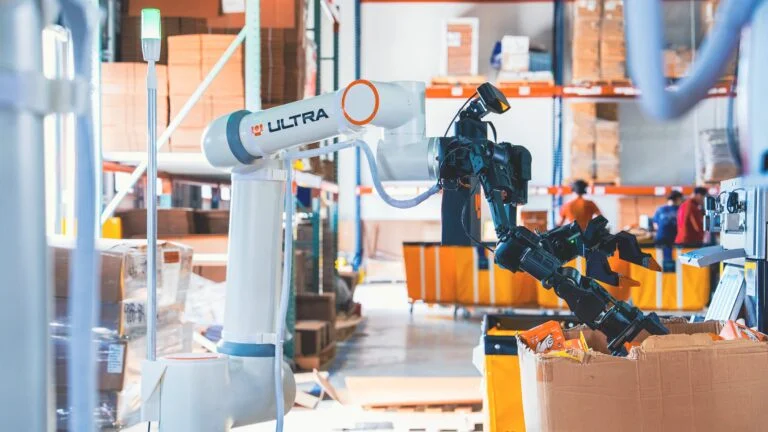
The robotics manufacturing cluster is designed to produce approximately 30,000 robot units annually, according to Hyundai. The facility will include a foundry operation plant, a component supply zone and a robot application center for AI-based validation and testing before deployment.
Hyundai said the cluster will also support domestic automotive suppliers transitioning into robotics component manufacturing.
How Does Hydrogen Fit Into Hyundai’s Strategy?
A 200 MW-class polymer electrolyte membrane (PEM) electrolyzer plant will anchor Hyundai’s hydrogen strategy in Saemangeum. The facility will use renewable energy to produce clean hydrogen for mobility and industrial use.
Hyundai said it plans to expand electrolyzer capacity domestically to 1 GW over time and is already constructing a separate Ulsan fuel cell plant targeted for completion in 2027. The company reports its PEM electrolyzer technology has achieved more than 90% localization through domestic R&D.
How Will the Site Be Powered?
Hyundai plans to scale solar capacity to gigawatt levels by 2035, building on an existing 99 MW solar facility it has been involved with since 2021. The solar infrastructure is intended to provide predictable baseload power for energy-intensive AI data and hydrogen production operations.
What Is the Broader Economic Impact?
Hyundai projects the Saemangeum investment could generate roughly $11 billion in economic impact and create approximately 71,000 jobs across direct and indirect employment.
The project is part of Hyundai’s previously announced $86.6 domestic investment plan through 2030.
At CES 2026, Hyundai Motor Group outlined an AI Robotics Strategy focused on advancing physical AI through partnerships with NVIDIA and Google DeepMind, integrating automotive manufacturing, AI and hydrogen technologies. The company said the mid- to long-term investment is intended to accelerate related industries and reinforce South Korea’s position as a global innovation hub.