Insider Brief
- Coco Robotics is expanding its robot delivery service to Washington, D.C., with customer deliveries set to begin this summer in Logan Circle.
- Customers ordering through participating delivery partners, including DoorDash, may be matched with one of Coco’s sidewalk robots and can unlock the robot through the app when it arrives.
- Coco said its robots can reduce last-mile delivery costs by up to 20%, and the company has completed more than 500,000 deliveries across markets including Los Angeles, Miami, Chicago, Jersey City, San Jose, Helsinki and Turku.
Coco Robotics is expanding its robot delivery service to Washington, D.C., with customer deliveries set to begin this summer.
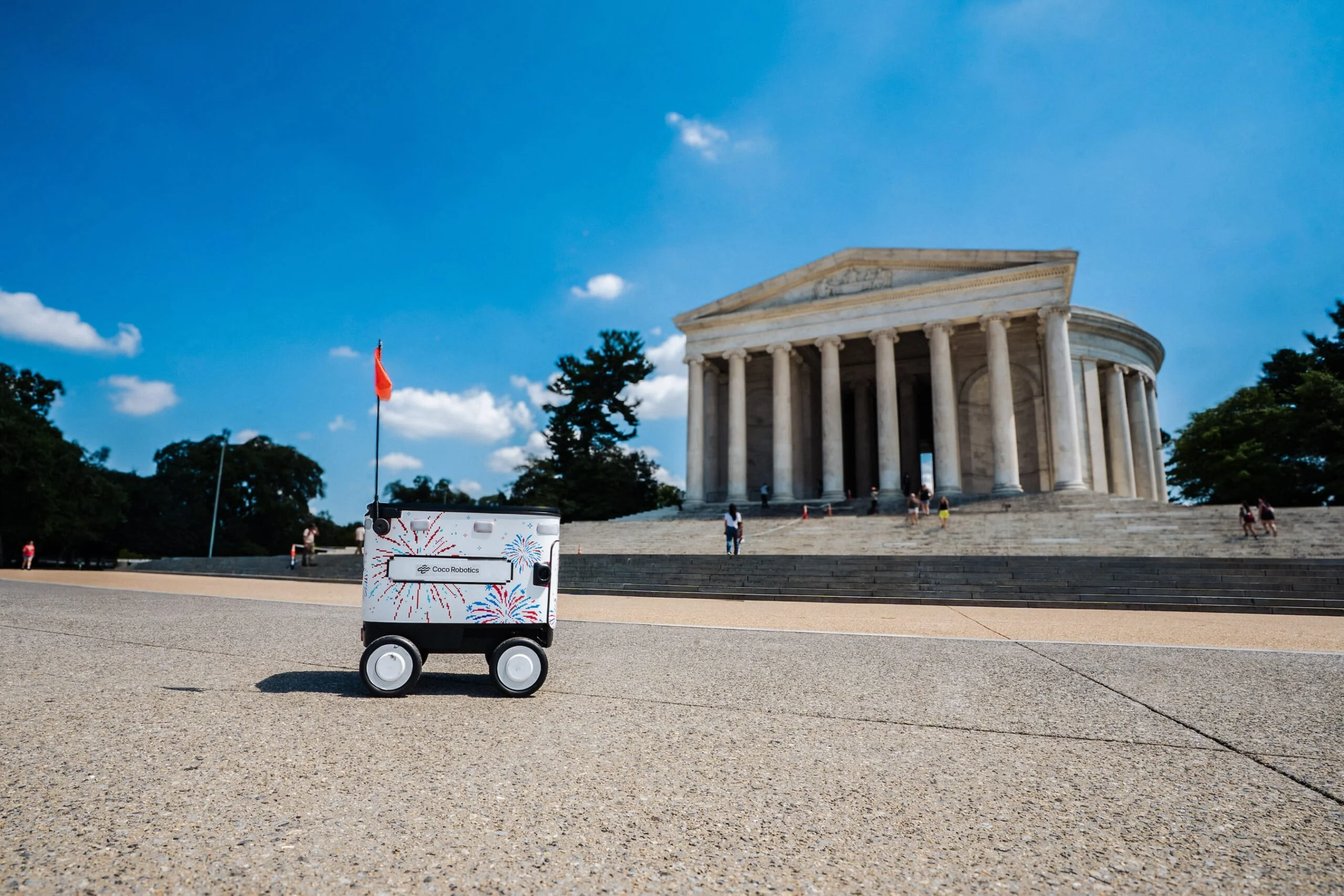
According to the company, the rollout will start in Logan Circle and serve restaurants and merchants across key D.C. neighborhoods and customers ordering through participating delivery partners, including DoorDash, may be matched with one of Coco’s delivery robots at checkout.
When the robot arrives, customers receive a notification and unlock the lid through the app to collect their order. Coco said the service does not require tips or additional fees. Coco says its robots can reduce last-mile delivery costs by up to 20%, making delivery more affordable for customers and merchants.
The company’s robots are designed for short, low-speed deliveries in dense, walkable neighborhoods and are intended to help local restaurants and retailers offer delivery at lower cost while reducing some car-based trips, traffic and parking congestion. Coco is also working with accessibility partners, including BlindSquare, to help keep sidewalks navigable for people with visual impairments and other mobility needs.
As for the latest rollout, the company said it worked with the District Department of Transportation and other local stakeholders ahead of the launch to align its operations with local rules and pedestrian-safety priorities.
The company said it has completed more than 500,000 deliveries across Los Angeles, Miami, Chicago, Jersey City, San Jose, Helsinki and Turku. The company said it is working to operate thousands of vehicles by the end of 2026.
The expansion is also expected to create local operations jobs, according to Coco. On average, every 10 robots deployed creates about one full-time operations role in areas such as fleet management, maintenance, charging, monitoring, robotics operations and field support, the company claims.
Image credit: Coco Robotics