Insider Brief
- Humanoid robots are advancing toward real-world deployment but face technical, economic, and adoption hurdles, according to the International Federation of Robotics, which says they will complement—not replace—current industrial machines in the near term.
- IFR cites breakthroughs in AI, sensors, materials, and navigation systems as key enablers, with applications emerging in automotive manufacturing, logistics, healthcare, and service roles; major investment is coming from U.S. tech firms, Chinese industrial policy, and Japan’s and Europe’s targeted initiatives.
- Challenges include limited battery life, high costs, and task-specific limitations, as well as cultural differences in acceptance; broader adoption could arrive in 5–10 years if economies of scale lower production costs.
Humanoid robots are edging closer to real-world use, but the International Federation of Robotics (IFR) says technical limits, high costs, and uneven adoption will keep them from replacing today’s industrial machines anytime soon.
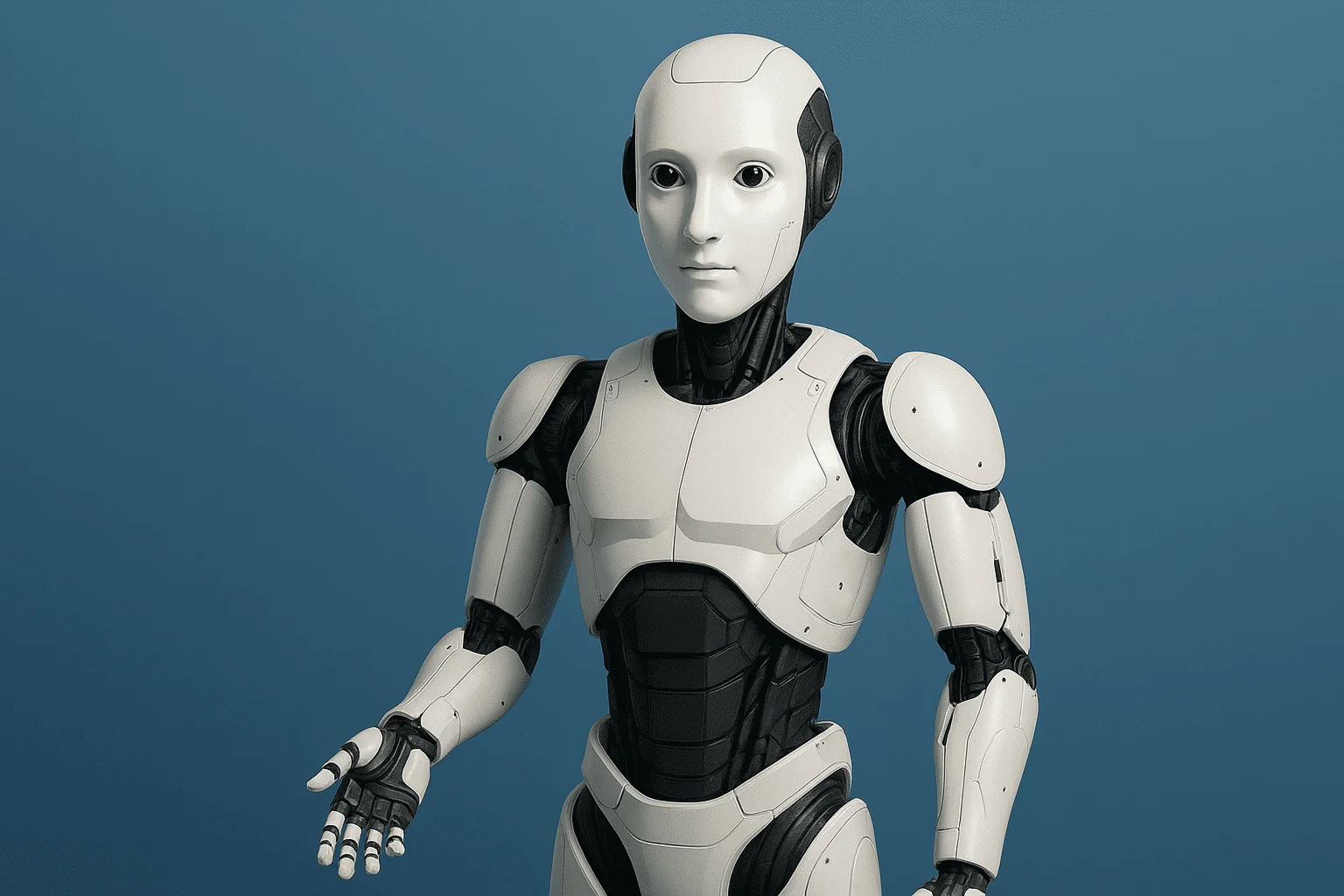
In a new position paper, the IFR describes humanoids as robots designed to function in human-centric environments without modification. They typically resemble the human form—with a head, torso, arms, and legs—and are intended to operate in settings built for people, from factory floors to hospitals and homes. The group says demand is rising in part because of labor shortages in developed economies and the need for adaptable machines that can handle varied tasks without custom infrastructure.
Global investment is accelerating, the IFR points out. In the United States, companies such as Tesla, Nvidia, and Amazon are funding development alongside government programs from DARPA and the Department of Defense. China’s government has made mass production of humanoids a strategic goal, with its Ministry of Industry and Information Technology predicting they could be as transformative as computers or smartphones. Japan, a longtime leader in robotics, continues to focus on social and caregiving applications, while Europe emphasizes human-centric design, safety, and ethics.
What Are the Technology Trends Driving Advancements in Humanoid Robotics?
- Technological advances and operational confidence: Ongoing breakthroughs in robotics and AI, combined with growing trust in machine reliability, are making human–machine collaboration more feasible, paving the way for deployment in real-world environments.
- Materials and components: The use of lighter, stronger materials and miniaturized parts is producing more agile, lifelike humanoids, allowing for faster, more efficient movement and reduced wear in demanding settings.
- Tactile and force torque sensors: These sensors provide hands and grippers with human-like touch and pressure sensitivity, enabling precise handling of delicate or irregular objects in industrial, service, and home applications.
- Dynamic balancing, joint flexibility, and motor control: Advances here let humanoids run, jump, and traverse uneven terrain, expanding their usefulness in unpredictable or hazardous workspaces.
- Safety features: Force feedback and compliance control help robots adjust their movements to avoid harming humans, building trust for close-proximity operation in factories, hospitals, and homes.
- SLAM (Simultaneous Localization and Mapping): Paired with LIDAR (Light Detection and Ranging), cameras, and advanced vision systems, SLAM allows humanoids to map and navigate complex spaces independently, enabling deployment in facilities without major infrastructure changes.
- Advanced AI and machine learning (Vision Language Action Models – VLAMs): These tools help robots learn from large datasets, make better decisions, and adapt to unfamiliar situations, reducing the need for task-specific programming.
Also, advances in simulation training, imitation learning, and sensor technology are enabling humanoid robots to acquire new skills faster and interact more naturally with people and environments. Other advances noted in the report include improvements in processing power, from edge computing to AI-specific chips, along with cloud integration, which are boosting real-time decision-making and coordination across multiple units. Longer battery life and smarter energy management are extending operational hours, making these machines more practical for sustained use in industries from logistics to healthcare.
The IFR outlines key application areas already emerging. In industry, prototypes are being tested in automotive manufacturing for tasks like kitting, machine tending, and quality control. Logistics and warehousing could benefit from humanoids that can navigate existing layouts without expensive retrofitting. Service roles in hospitality, retail, and healthcare are also in early trials, with robots greeting guests, managing inventory, transporting equipment, and assisting in patient care.
Yet the report stresses that humanoids face significant trade-offs. For high-speed, precision manufacturing, traditional industrial robots remain superior—simpler, faster, and more reliable for repetitive tasks. Battery life is another barrier, often limited to about an hour of operation. And while some humanoids excel at physical movement and others at cognitive tasks, none yet match human versatility in both.
Cultural attitudes will also shape adoption. Japan and parts of Europe are more open to robots as companions, while the U.S. and China focus on productivity and economic growth. The IFR notes that safety standards for legged robots are still in development, given the balance and stability challenges posed by upright designs.
From an economic standpoint, high production costs will limit adoption in the near term, with broader deployment possible in five to ten years if economies of scale bring prices down. The IFR concludes that humanoids will complement rather than replace current robots, expanding automation into environments and tasks where human-like form and function offer clear advantages.
For more information on the state of humanoid robotics, check out the full report here.