Insider Brief
- UCLA and UC Davis will co‑lead PRISM, a large patient‑centered randomized trial testing whether AI decision support improves screening mammography accuracy versus radiologist‑only reads across five states.
- Hundreds of thousands of exams will be randomized to standard interpretation or to radiologist reads supported by the FDA‑cleared Transpara tool integrated via Aidoc aiOS, with radiologists making the final decision.
- Results aim to guide clinical practice and payer coverage by weighing cancer‑detection gains against recall rates, while surveys and focus groups assess patient and clinician trust and communication in AI‑assisted care.
A $16 million award from the Patient-Centered Outcomes Research Institute is funding a multi-institutional randomized trial co-led by UCLA and UC Davis to determine whether FDA-cleared artificial intelligence can help radiologists read screening mammograms more accurately and reduce unnecessary callbacks—key goals tied to patient anxiety, costs and access, according to UCLA.
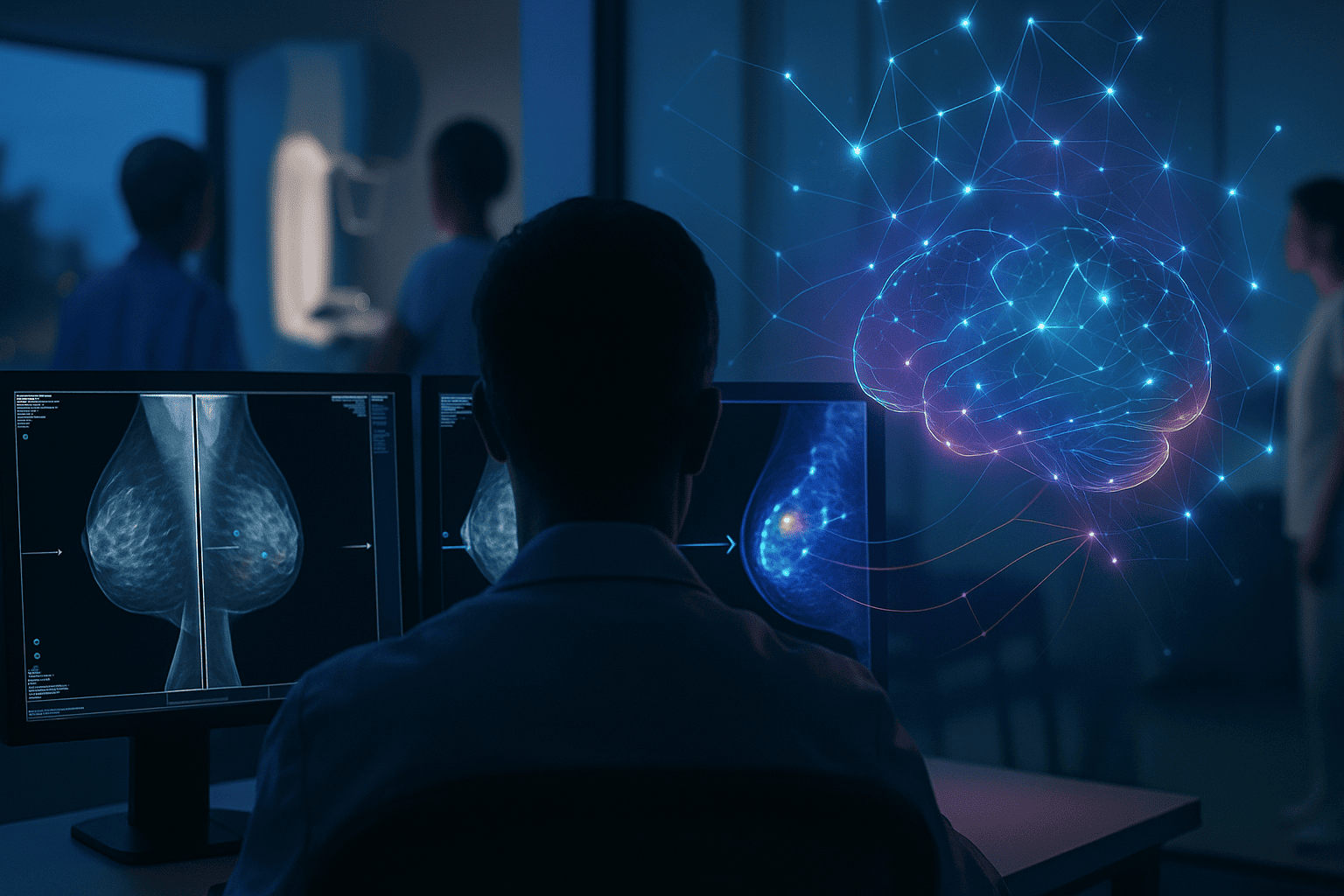
The PRISM Trial—Pragmatic Randomized Trial of Artificial Intelligence for Screening Mammography—will compare radiologist-only reads with radiologist reads supported by AI. PRISM is designed to be patient-centered, the university noted. PRISM will enroll hundreds of thousands of screening exams across academic medical centers and breast-imaging facilities in California, Florida, Massachusetts, Washington and Wisconsin.
“This is the first large-scale randomized trial of AI in breast cancer screening in the United States,” said Dr. Joann G. Elmore, Dual Principal Investigator and lead of the Administrative Coordinating Site, and professor of medicine at the David Geffen School of Medicine at UCLA and of health policy and management at the UCLA Fielding School of Public Health. “We’re looking carefully and objectively at whether AI helps or hinders — and for whom. Expert radiologists remain in the driver’s seat for all interpretations.”
According to researchers, exams will be randomized either to standard interpretation by a radiologist or to interpretation with assistance from an FDA-cleared decision-support tool—Transpara by ScreenPoint Medical—integrated into clinical workflow through the Aidoc aiOS platform. In both arms, the radiologist makes the final decision.
Researchers note mammography saves lives through early detection, but screening has trade-offs: false positives trigger extra testing and anxiety, while some cancers are missed. If AI support raises accuracy or efficiency without inflating recalls, health systems and payers will have a clearer basis to adopt the technology in routine screening.
“AI has great promise, but it also raises real questions,” said Elmore, who is also an investigator at the UCLA Health Jonsson Comprehensive Cancer Center and serves as director of the UCLA National Clinician Scholars Program. “We want to know whether AI helps radiologists find more cancers, or just flags more exams that ultimately turn out to be normal.”
Beyond registry-style outcomes, researchers will run surveys and focus groups to gauge how patients and clinicians perceive AI use and how it affects communication and trust. UC Davis is the data coordinating center; UCLA serves as the administrative coordinating site.
Participating institutions include:
- UCLA
- UC Davis
- Boston Medical Center
- UC San Diego Health
- University of Miami
- University of Washington – Fred Hutchinson Cancer Center
- University of Wisconsin–Madison
Researchers noted the trial will not change the patient’s experience stressed that the aim is not to replace not to replace humans. “Our expert radiologists will continue to make the final call. AI may be a useful co-pilot — but it’s the radiologist who holds the wheel,” Elmore said.