
Insider Brief
- At CES 2026, robotics companies signaled a shift from scripted automation to shared autonomy, with visual perception emerging as the core capability enabling robots to operate safely in human environments.
- RealSense CEO Nadav Orbach said advances in depth sensing, sensor fusion, and real-time perception are foundational to mission-based robots, humanoids, and AMRs showcased by companies including Unitree, LimX Dynamics, Mobile Industrial Robots, and Boston Dynamics.
- The industry is entering a scaling phase in which interoperable perception, compute, and AI ecosystems allow robots to train, adapt, and deploy continuously, making automation increasingly invisible while reshaping how work is done across industrial and public settings.
Robotics is crossing a threshold from controlled demonstrations to sustained, real-world operation, and at CES 2026 in Las Vegas, Intel spin-out RealSense said the implications are becoming clear. As robots move from novelty to necessity across factories, warehouses, hospitals and public spaces, the company argues that visual perception is emerging as the defining capability for the next generation of autonomous systems.
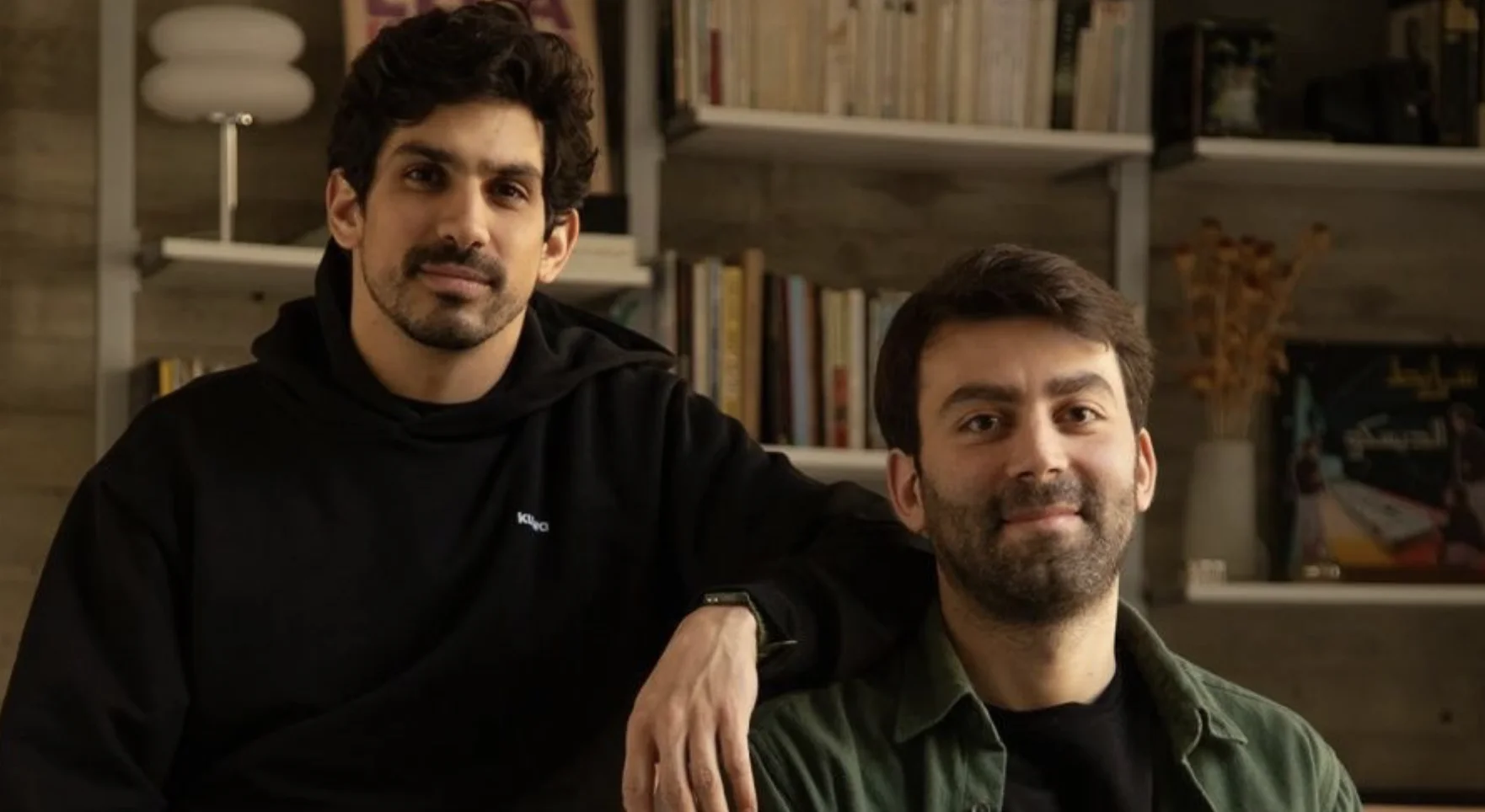
“We’re moving from isolated automation to shared autonomy,” Nadav Orbach, CEO of RealSense, said in a statement. “Robots are no longer executing scripts; instead, they’re being asked to understand intent, navigate uncertainty and collaborate. That only works if they can see and perceive the world with confidence.”
In an analysis based on deployments and demonstrations across CES, RealSense said humanoid robots, autonomous mobile robots and industrial inspection systems are converging on a shared challenge: operating safely, intelligently and continuously in unstructured human environments. The industry, the company said, is shifting from isolated automation toward shared autonomy, where machines must understand context, navigate uncertainty and collaborate alongside people.
Drawing on systems shown by companies including Unitree, LimX Dynamics, Mobile Industrial Robots, and collaborations involving Intel Foundry and Boston Dynamics, RealSense outlined five trends it believes will define robotics in 2026.
1. Perception becomes the foundation of physical AI
RealSense said physical AI cannot function without reliable perception. As robots move into real-world settings, depth sensing, sensor fusion and real-time environmental awareness form the basis of intelligence. The company emphasized that long-term reliability depends on combining depth with motion awareness and calibration that remains stable over time. Perception, it said, enables the full autonomy lifecycle, from teleoperation and data capture to training, simulation and safe, independent operation.
2. Robots shift from scripts to missions
According to RealSense, robots are moving beyond pre-programmed instructions toward executing assigned goals through vision-language-action models. Instead of defining every movement, developers specify intent, leaving robots to infer context, plan routes, recognize objects and adapt in real time. The company said perception allows robots to learn through experience, progressing from teleoperation to mission-level autonomy.
3. Humanoids gain momentum, with vision determining viability
RealSense said humanoid robots are gaining traction because they fit naturally into environments designed for humans. Their viability, however, depends on perception that enables safe and autonomous operation alongside people and integration into larger robotic systems. Reliable, low-latency vision is required for balance, manipulation, interaction and continuous learning, all of which are prerequisites for autonomy.
4. Autonomy scales through ecosystems
The company said robotics is moving away from siloed machines toward interoperable ecosystems. Scaling autonomy increasingly requires integrating sensing, compute and AI across platforms, as well as workflows that connect perception data to simulation and deployment. RealSense said this transition is enabling faster iteration, lower integration friction and global scalability.
5. Automation becomes invisible
RealSense said the economics of automation have reached a tipping point. In 2026, autonomous robots are expected to operate continuously in facilities from day one. As systems mature, the technology fades into the background, while smarter robots quietly reshape how work gets done.
Looking ahead, RealSense said the next phase of robotics will be defined by trust, safety and real-world reliability. Intelligent perception, the company argued, is what enables robots to collaborate, coordinate and coexist with people, turning autonomy from a standalone capability into a shared, system-level infrastructure.