
Insider Brief
- Skild AI has acquired Zebra Technologies’ robotics automation business, including its Symmetry Fulfillment orchestration platform, to expand its warehouse automation stack and support large-scale deployments
- The deal combines its Skild Brain software, designed to operate across multiple robot types, with Zebra’s orchestration layer that coordinates fleets of robots and human workers in real time across warehouse environments
- Skild AI said the combined platform is intended to enable end-to-end automation within existing facilities, reducing integration complexity as it scales deployments following a nearly $1.4 billion funding round led by SoftBank Group valuing the company at more than $14 billion
Skild AI announced the acquisition of Zebra Technologies’ robotics automation business, including its Symmetry Fulfillment orchestration platform, in a move to expand its warehouse automation stack.
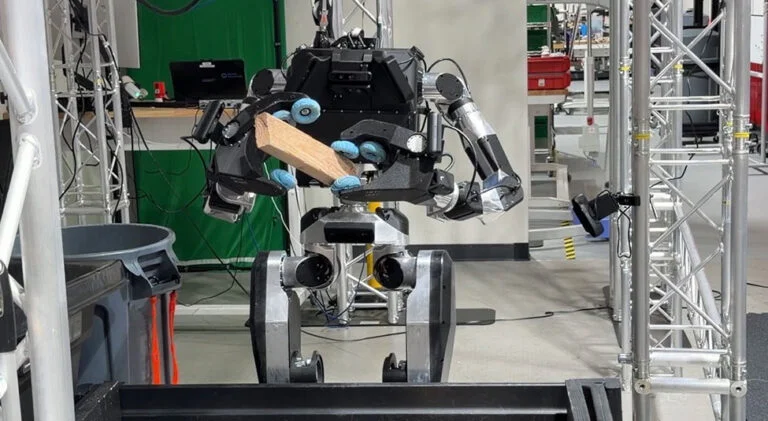
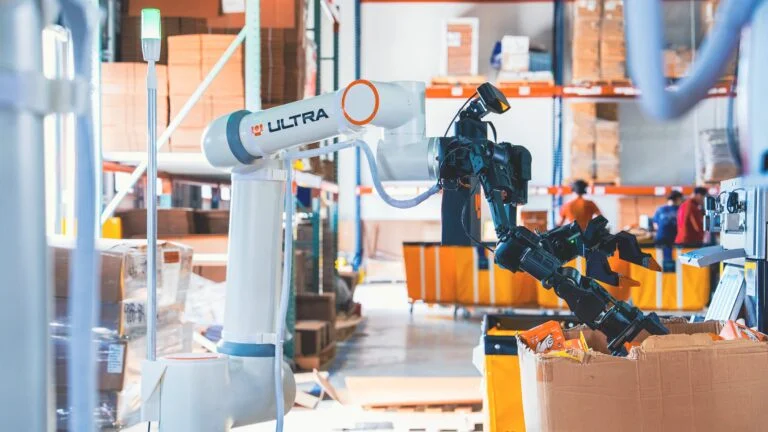
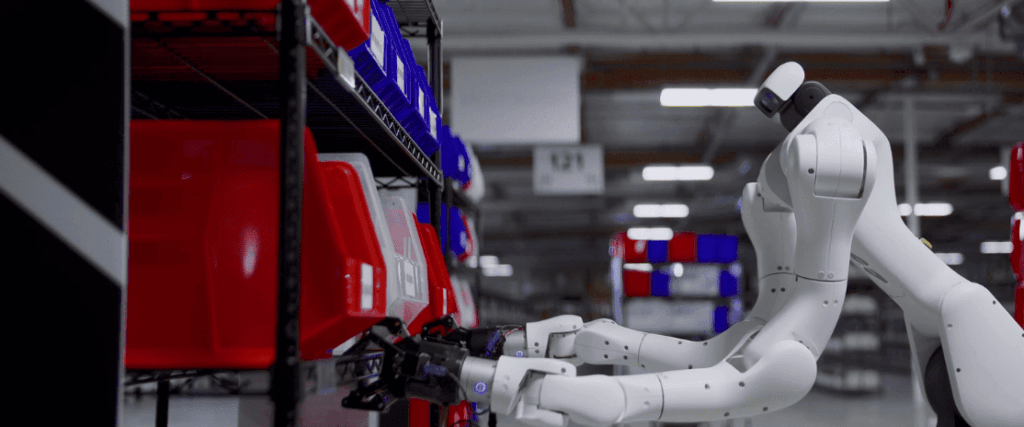
According to Skild AI, the deal combines Skild AI’s general-purpose robotics software, known as the Skild Brain, with Zebra’s orchestration layer, which coordinates fleets of robots and human workers in real time. Skild AI’s software is designed to operate across different robot types, including humanoids, mobile robots and robotic arms, while Symmetry provides coordination across those systems inside live operations.
“Warehouse automation remains deeply fragmented today, with classical approaches falling short in most real-world scenarios — a fundamental barrier to achieving true operational efficiency,” Skild AI CEO Deepak Pathak said in the announcement. “Tearing down and rebuilding warehouses to suit pre-programmed robots is simply not a viable economic solution. By combining Zebra’s human-robot orchestration platform with Skild AI’s omnibodied brain, we are set to transform what end-to-end automation looks like in warehouses that exist today.”
The company said the combined platform is intended to allow operators to deploy multiple robot types within existing facilities, using a single orchestration layer to manage tasks such as picking, packing, inspection and material movement. The approach is aimed at reducing integration complexity and enabling more flexible automation strategies.
Pittsburgh-based Skild AI, founded in 2023, said it has scaled to roughly $30 million in revenue within months and is now focused on accelerating enterprise deployments. Earlier this year, the company raised nearly $1.4 billion in a funding round led by SoftBank Group, valuing the robotics AI startup at more than $14 billion. Investors include SoftBank Group, Nvidia Ventures, Macquarie Capital, Jeff Bezos, Sequoia Capital, Lightspeed, Coatue and Felicis.
Image credit: Skild AI