Insider Brief
- Gravis Robotics raised $200 million in a Series A investment from SoftBank to expand its physical-AI systems for autonomous heavy construction equipment.
- The ETH Zurich spinout develops the Gravis Rack, a hardware-agnostic control system that can retrofit machinery from manufacturers including Caterpillar, John Deere, JCB, Hitachi and Volvo for operator-assisted or autonomous operation.
- Gravis said its systems are deployed across four continents and can improve jobsite productivity by up to 30%, while the new funding will support hiring, global expansion and additional autonomous-equipment deployments.
Gravis Robotics has raised $200 million in a Series A investment from SoftBank to expand autonomous heavy machinery development and deployments.
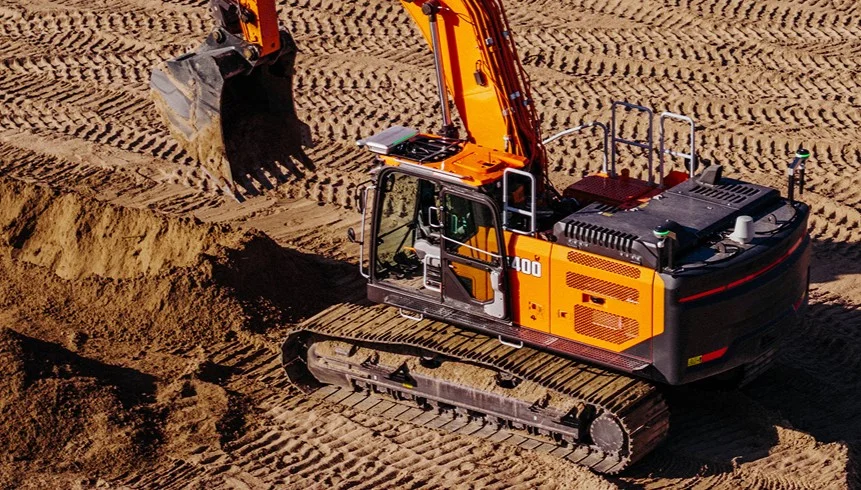
According to the Zurich-based company, the financing will support a broader rollout of its physical-AI technology, which can be installed on excavators and other heavy equipment from multiple manufacturers. Gravis was founded in 2022 as a spinout from ETH Zurich and develops software and hardware intended to automate construction machinery rather than require contractors to replace existing fleets.
Gravis is focusing on an industry where automation has historically been harder to deploy than in controlled manufacturing environments. Its approach is to add software-defined controls to machines contractors already own and operate, while allowing customers to move between operator-assistance and autonomous modes depending on the job.
“Skilled operators read the earth through subtle physical feedback — listening to the engine strain, sensing the machine vibration and reacting to hydraulic resistance, noted co-founder and CTO Dominic Jud,. “Our AI takes that same physical input and grounds it in machine telemetry, responding to varying subterranean forces and soil mechanics at microsecond speeds. We didn’t try to simplify the world for our software; we gave it the physical intuition to handle real jobsites with precision that goes beyond what any human can feel from inside the cab”
Gravis trains its models extensively in simulation, where its software can experience different soil conditions and machine behaviors before being deployed on physical equipment. The company said that approach helps bridge the “sim-to-real” gap, or the difficulty of transferring behavior learned in a virtual environment to actual machinery and jobsites.
Rather than building its technology around a single equipment manufacturer, Gravis designed its system for mixed fleets. Its autonomous control hardware, called the Gravis Rack, has been installed on machinery from Caterpillar, Case, Develon, John Deere, JCB, Hitachi, Sumitomo, Yanmar and Volvo, among others.
The Gravis system can operate in two modes:
- Gravis Copilot: Keeps the operator in the cab while providing real-time 3D guidance and hazard detection.
- Autonomous operation: Allows the machine to work without continuous manual control, with operators able to supervise multiple machines from outside the cab.
In either mode, Gravis-equipped machines can also collect site data as they work, including surveying information and hazard maps.
Gravis said its underlying models incorporate machine telemetry and information about how individual equipment types interact with the ground. That allows the same core software to operate machinery of different sizes and manufacturers without rebuilding the control system for each platform.
Co-founder and CEO Ryan Luke Johns said earthmoving is a basic requirement for projects ranging from housing and energy infrastructure to data centers, and delays in that work can slow construction across the broader built environment.
“Our machines are built for the messy, unscripted reality of live jobsites that breaks traditional automation,” Johns added. “With SoftBank’s backing, we can hire the best builders and engineers, put Gravis-powered autonomy on every major jobsite, and scale faster than anyone thought possible”
The company reported productivity improvements of as much as 30% compared with peak manual operation in some applications. Those figures are based on Gravis’ own deployments and have not been independently verified.
Gravis said its systems are already operating with infrastructure companies across four continents. The new funding will be used to increase deployments and integrate its autonomous systems into additional heavy-equipment fleets. The company reported it is also leading an $8 million U.K. government-backed CAM Pathfinder project with Flannery Plant Hire, a large British heavy-equipment rental provider. The project will retrofit excavators with Gravis Rack systems, allowing Flannery to offer autonomous equipment to contractors through its existing rental fleet.
“Physical AI is central to SoftBank’s vision for the next phase of AI. Gravis is bringing AI-powered autonomy to construction, helping build smarter, more efficient infrastructure, and we look forward to supporting its mission,” said Dai Sakata, Managing Director of SoftBank Group.
Image credit: Gravis Robotics