- Researchers in Sweden found that three commercially available AI mammography systems were able to identify signs associated with some future breast cancers years before diagnosis, suggesting AI could help support earlier detection and more personalized screening strategies.
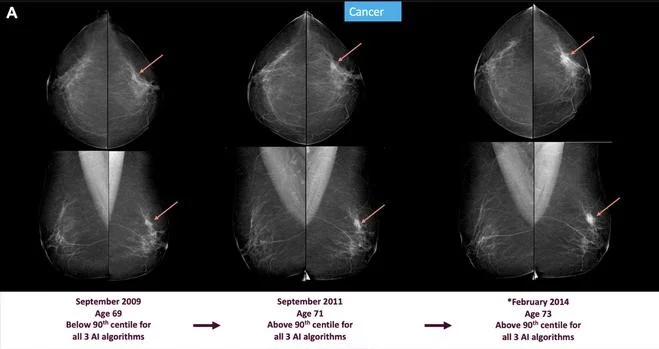
- The study, published in Radiology, analyzed 88,963 mammograms from 31,394 women and found that approximately 20% of breast cancer cases showed imaging patterns detectable by AI as much as six years before diagnosis.
- At a specificity rate of 90%, the AI systems flagged potential warning signs in up to 19.7% of women six years before diagnosis, 25.2% four years before diagnosis and 39.3% two years before diagnosis, though researchers said additional studies are needed before the technology can be incorporated into routine clinical care.
Researchers in Sweden have found that artificial intelligence systems analyzing routine mammograms may be able to identify signs of breast cancer years before a formal diagnosis, raising the possibility of earlier detection and intervention for some patients.
According to the Radiological Society of North America, the study, published in Radiology and led by researchers at Karolinska University Hospital, evaluated three commercially available AI-based computer-aided detection systems (AI-CAD) using data from Sweden’s national breast screening program. The findings suggest that AI could help identify subtle patterns associated with future breast cancers that may not be recognized during routine screening.
The researchers analyzed 88,963 mammograms from 31,394 women collected over a 10-year period through the Validation of Artificial Intelligence for Breast Imaging (VAI-B) database. The dataset includes breast imaging records from volunteers between the ages of 40 and 74 across four regions of Sweden.
The Findings
During the study period, 12,072 participants, representing 38.5%, were diagnosed with breast cancer.
“Approximately 20% of breast cancer cases demonstrate mammographic signs that are already visible to AI around 6 years before diagnosis,” senior coauthor Fredrik Strand, M.D., Ph.D., of Karolinska University Hospital in Stockholm, noted. “Our study confirms the potential of AI to, in some cases, find signs of cancer in the mammograms much earlier than when radiologists detected it.”
According to researchers, the results showed that AI-generated cancer risk scores tended to be elevated years before diagnosis in women who eventually developed breast cancer, while remaining low among women who did not develop the disease.
At a specificity level of 90%, the AI systems identified potential warning signs in:
- Up to 19.7% of women six years before diagnosis
- Up to 25.2% of women four years before diagnosis
- Up to 39.3% of women two years before diagnosis
According to the researchers, approximately 20% of breast cancer cases in the study showed mammographic signs that were detectable by AI about six years before the cancer was ultimately diagnosed.
Breast cancer screening programs traditionally rely on radiologists to review mammograms for visible signs of disease, researchers noted. While AI has previously shown promise in identifying cancers at the time of screening and predicting short-term cancer risk, this study examined whether AI could detect earlier changes that may precede a diagnosis by several years.
“This study aims to add to the growing literature regarding the application of AI in breast cancer screening and how it can help play a role in earlier detection of breast cancer,” added Dr. Strand. “Analyzing the AI scores of screened individuals over time could provide insight into how early detectable changes arise, potentially allowing for earlier intervention.”
Image credit: Radiological Society of North America