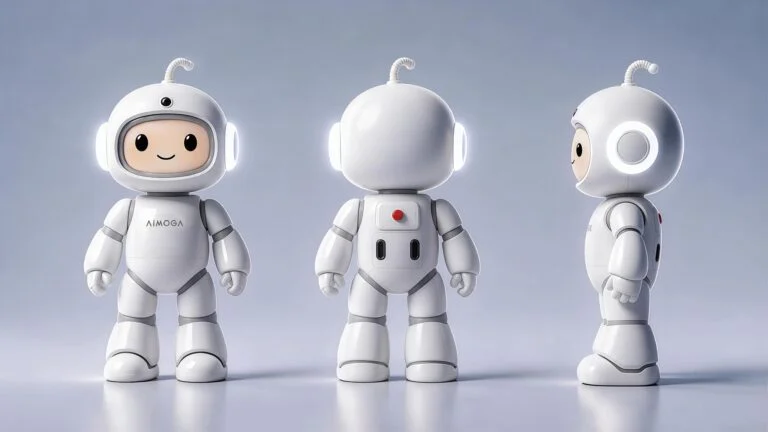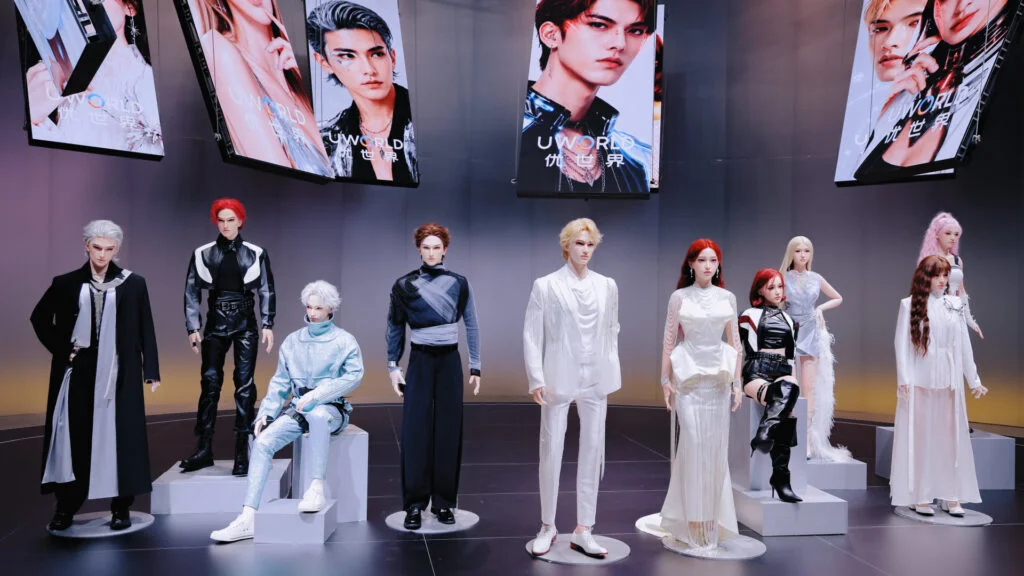
- UBTech Robotics introduced the UWORLD U1 Series, a new humanoid robot line aimed at consumer and commercial uses including companionship, elder care, reception, hospitality, tourism and education.
- The Shenzhen-based company said the line includes the U1 Lite semi-torso edition, the full-body U1 Pro and the full-body U1 Ultra, with pricing starting at 119,800 yuan, or about $16,500.
- UBTech said cumulative orders for the U1 Series had surpassed 13,361 units as of the June 30 launch event, and the company plans to donate 100 customized U1 Series robots in 2026 for companionship and mental well-being programs.
UBTech Robotics introduced a new humanoid robot line as the Chinese company expands past industrial robots into consumer and commercial that encompass companionship, care and service applications.
The company unveiled the UWORLD U1 Series at a June 30 launch event in Shenzhen and the line’s three models include the U1 Lite semi-torso edition, the full-body U1 Pro and the full-body U1 Ultra. According to teh company, pricing starts at 119,800 yuan, or about $16,500. The company said cumulative orders for the U1 Series had surpassed 13,361 units as of the launch event.
The launch clearly marks UBTech’s move into consumer robotics with the company saying UWORLD is expected to become a second growth engine.
UWORLD U1 Features
UBTech described the U1 Series as a full-size humanoid robot line designed for mass production. The robots are intended for daily companionship, emotional support, reception, hospitality, elder care, tourism, education and other consumer and commercial settings.
Key features of the U1 series include:
Target uses: The robots are designed for companionship, emotional support, elder care, reception, hospitality, tourism, education, research and premium domestic service applications.
Three-model lineup: The UWORLD U1 Series includes the U1 Lite semi-torso edition, the full-body U1 Pro and the higher-dynamic full-body U1 Ultra.
Mass-production focus: UBTech said the U1 Series is designed for mass production, with pricing starting at 119,800 yuan.
Human-like movement: The robots feature 88 degrees of freedom and a proprietary dual-pivot biomimetic cervical spine, which UBTech said allows the system to replicate up to 90% of fundamental human movements.
Emotion-aware AI: The platform uses an emotion-aware large language model designed for long-term companionship and capable of recognizing more than 20 emotional states, according to the company.
Fast interaction: UBTech said the system includes a biomimetic fast-and-slow brain architecture, combining quick intuitive responses with deeper reasoning capabilities.
Facial expression and speech sync: A biomimetic expression system is designed to reduce speech-to-lip synchronization latency to within 20 milliseconds.
Long-term memory: The Agent Memory OS is built to support persistent interaction history and longer-term user relationships.
Wake-word-free interaction: A proactive care engine uses environmental awareness to respond to contextual cues without requiring a wake word.
Privacy controls: UBTech said UWORLD uses a three-layer privacy architecture based on local-first processing, minimal cloud dependency and user-controlled hardware safeguards.
Human-Robot Companion Initiative
At the launch event, UBTech also launched what it calls the Human-Robot Companionship Initiative, a program to donate customized humanoid robots for mental well-being and companionship programs.
The company said it plans to donate 100 customized U1 Series robots in 2026 to support groups including older adults living alone, children growing up apart from one or both parents and families facing difficult circumstances.
Those donated robots are expected to include 3D facial reconstruction and voiceprint-based identity replication technologies, along with emotion-driven interaction models and long-term memory systems, according to the company.
UBTech said the initiative is part of its view that companion robots could become a new consumer category, particularly as aging populations and social isolation create demand for new forms of emotional support.
Image credit: UBTech