Insider Brief
- Infiforce raised nearly $150 million across Series A and Series A+ rounds to develop embodied-AI models, expand its DataGrid infrastructure and increase robot deployments in industrial and commercial settings.
- The Chinese startup plans to advance its AtomBrain system and causal world models while using first-person “Ego” data to train models intended to transfer capabilities across different robot forms.
- Infiforce said its robots and systems are being tested or commercialized across more than 30 Chinese cities and more than 100 scenarios, including manufacturing, logistics, warehousing and commercial services.
Infiforce has raised nearly $150 million across Series A and Series A+ rounds to develop embodied-AI models, expand its data infrastructure and deploy more robots in industrial settings.
According to the Chinese startup, Dunhong Asset Management and state-owned investment platforms led the financing, with participation from Zhejiang University Science and Technology Innovation Group, Yandu State-owned Assets Management, Lishui State-owned Assets Management and other investors. Existing shareholder Genesis Partners Venture Capital also increased its investment.
Infiforce indicated the funding will primarily support three areas: development of its AtomBrain embodied-intelligence system and causal world models, continued expansion of its DataGrid AI infrastructure, and larger deployments of several types of robots in manufacturing and other commercial environments.
Ego Data
The company said it is taking an approach centered on what it calls Ego data, or first-person recordings of people interacting with the physical world. Rather than relying primarily on demonstrations captured from an outside camera or data gathered by remotely operating robots, Infiforce is using first-person video and related information about movement, spatial relationships and environmental feedback to train its models.
Infiforce said plans to release an embodied model trained this way and that its technology stack combines that data with its Atom series of world models and AtomBrain, which is intended to provide a common intelligence layer across different robot forms.
The company suggests that this approach could provide larger amounts of training data at lower cost than collecting all data directly from robots.
The company reported several benchmark results from its research. Its AtomVLA model recorded a 97% success rate on the Libero robot-learning benchmark, while its HiMem-WAM model reached 97.7%. Infiforce said its third-generation AIM world model scored 93.1% on RoboTwin 2.0, while its SAM3D method reached 99.1% on Libero. Those results come from company-reported research and benchmark testing rather than commercial deployments.
DataGrid
DataGrid provides the infrastructure feeding those models. The system combines data collection, processing and hardware and supports several collection methods, including handheld grippers, first-person recording devices and remote operation of physical robots. Infiforce said the goal is to create a feedback loop in which robot deployments generate additional data that can be used to train subsequent models.
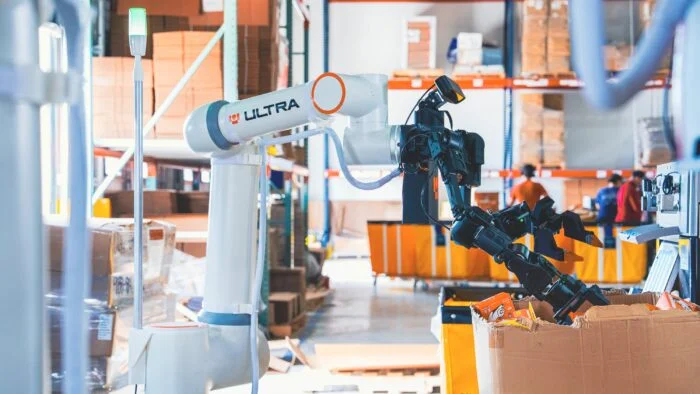
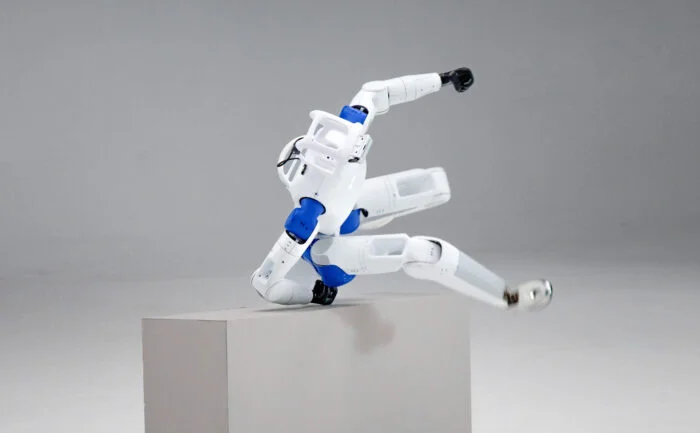
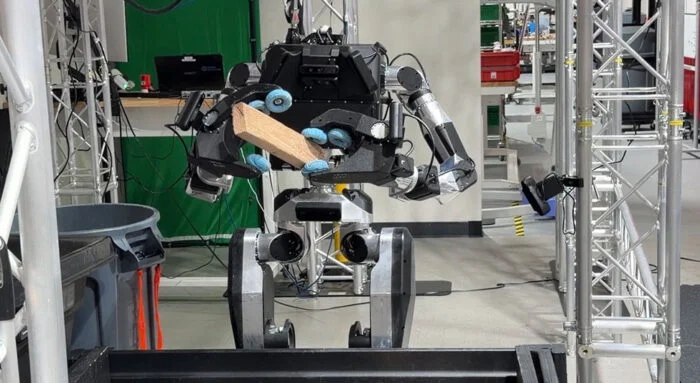
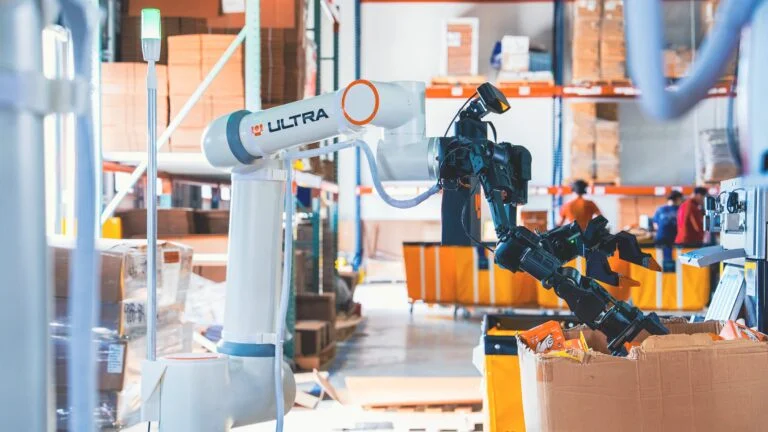
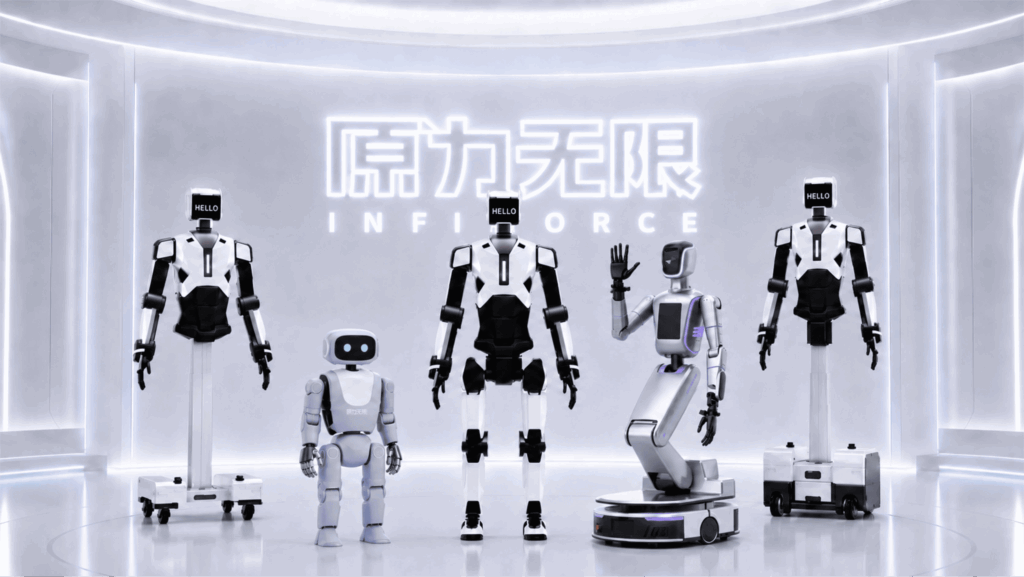
The company is also testing whether the same underlying intelligence can transfer across different robot bodies. Its hardware lineup includes the AstroDroid wheeled humanoid, UltraDroid general-purpose robot, Little Atom bipedal robot and specialized Force systems.
Testing and Collaborations
Infiforce pointed out that its robots and systems are being tested or commercialized across more than 30 Chinese cities and more than 100 scenarios, including commercial services, warehousing, logistics and industrial manufacturing. The company is also working with CRRC High-Tech on embodied intelligence for infrastructure applications and has participated in work on a proposed national specification covering crowdsourced embodied-intelligence data collection and management.
Infiforce noted it plans to continue expanding deployments in manufacturing, inspection, logistics, energy and commercial settings while developing world models with longer-term memory and continuous-learning capabilities.
“The arrival of the physical AI era will begin with a truly embodied brain that understands the world,” the company wrote in the announcement. “And a truly embodied brain that understands the world will eventually emerge in the real world.”
Image credit: Infiforce