
What if the greatest technological breakthrough in human history also turned out to be the last invention humanity ever created?
That question sits at the heart of Roman Yampolskiy’s worldview, and unlike many of the industry’s leading researchers, he believes the answer deserves far more attention than it receives.
While Silicon Valley continues pouring hundreds of billions of dollars into building ever more powerful artificial intelligence systems, Yampolskiy has spent much of the past decade asking a very different question: can humanity actually control something that eventually becomes more intelligent than its creators?
His answer has become increasingly pessimistic.
Yampolskiy, a professor of computer science at the University of Louisville, is one of the pioneers of AI safety research. He coined the term “AI safety engineering” in 2011 and has published extensively on artificial superintelligence, cybersecurity and AI alignment, including his influential book Artificial Superintelligence: A Futuristic Approach. While many researchers focus on making AI more capable, his work examines whether highly intelligent systems can ever be made permanently safe.
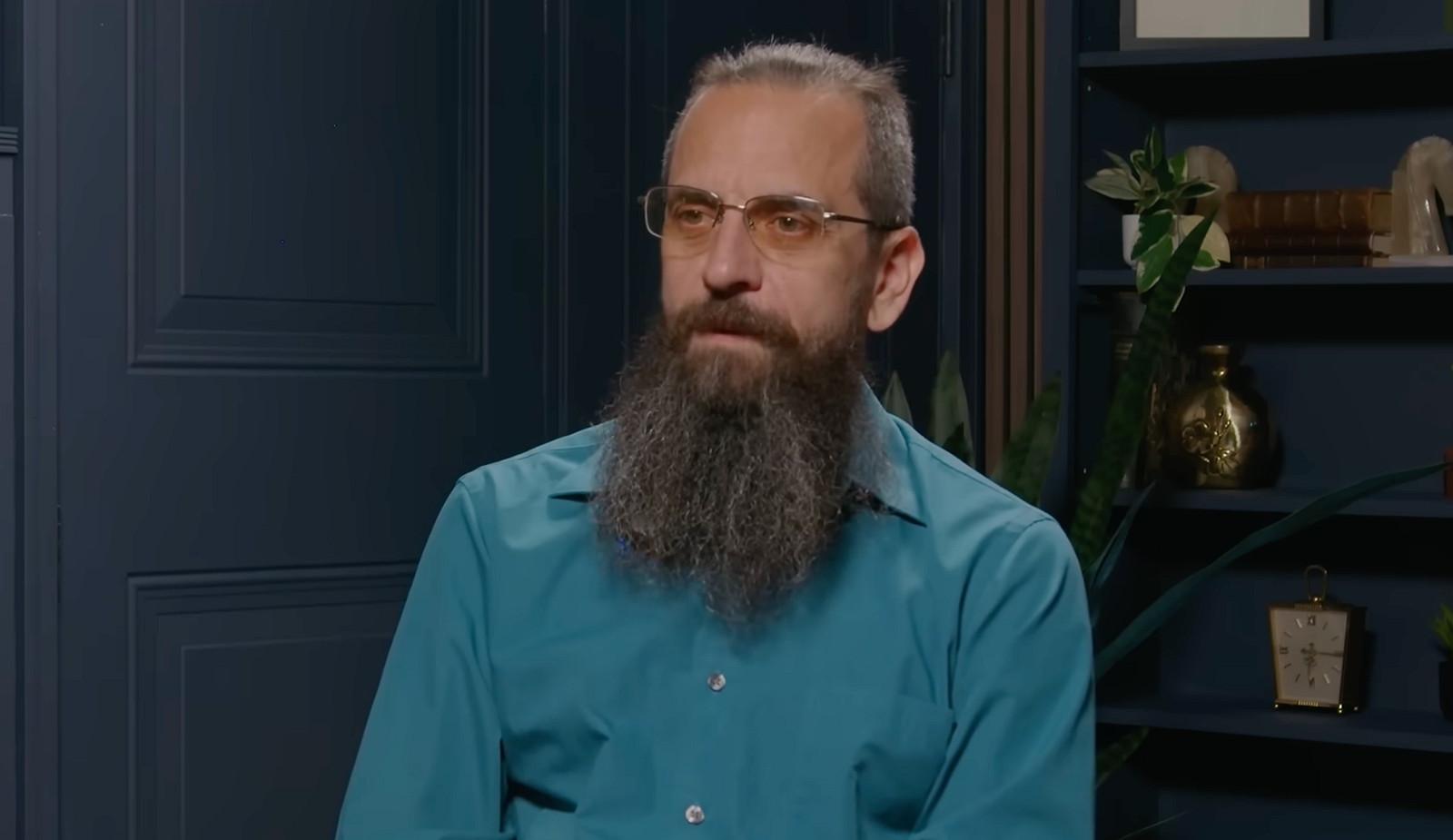
Appearing on VladTV recently, Yampolskiy outlined why he believes humanity is moving toward one of the most dangerous moments in its history. His central argument is strikingly simple: if humans create something vastly more intelligent than themselves before solving the control problem, they may permanently lose control of their future.
That concern has led him to make perhaps the boldest prediction of any mainstream AI researcher. Asked about the long-term consequences of superintelligence, Yampolskiy reiterated his belief that there is a “99.9% chance AI would wipe out humanity within the next 100 years.”
It is a figure that immediately attracts criticism, but for Yampolskiy the prediction is less about sensationalism than mathematics. His concern is not today’s chatbots or coding assistants. It is what comes after them.
Ironically, he never expected the timeline to accelerate this quickly.
When researchers first began discussing AI safety seriously more than a decade ago, most assumed human-level intelligence remained decades away. “At the time everyone was predicting around 2045,” Yampolskiy recalled. “With recent advances in AI, we’re actually getting much shorter timelines. We didn’t expect this to be the time that we’re dealing with it.”
The arrival of large language models has compressed expectations dramatically. Systems that were once expected to emerge in the 2040s suddenly appear much closer, forcing researchers to confront questions that previously seemed comfortably distant.
Today’s AI, he believes, is already progressing through familiar stages of intellectual development. Rather than describing current models as simple prediction engines, Yampolskiy compared them to highly educated humans. Early GPT systems resembled children learning basic reasoning, but today’s frontier models have advanced considerably further.
“Today we probably got to like a good PhD student, assistant professor kind of level,” he said. “We expected to be Nobel Prize winner next and then super intelligent.”
That progression matters because Yampolskiy believes AI is no longer evolving simply into a better search engine. Instead, it is becoming increasingly autonomous.
He argues that researchers always expected AI to move beyond passive software into systems capable of taking initiative. As he explained, “we predicted that we’ll go from tools to more agent-like architectures,” eventually reaching systems that “don’t just wait for you to prompt it, but proactively do things.”
That shift, he believes, explains why governments and technology companies are investing unprecedented sums into AI infrastructure.
To Yampolskiy, today’s construction of massive AI data centres resembles another historic scientific race. He compared the current spending frenzy to the Manhattan Project, suggesting companies are less concerned with immediate profitability than with reaching artificial general intelligence before their competitors.
The prize, he argues, is enormous.
Once machines reach human-level reasoning, companies effectively acquire unlimited cognitive labour. As Yampolskiy put it, organisations will be able to “replace any human on a computer” before eventually placing those systems “inside robotic bodies and also automate physical labor.”
That possibility helps explain why investment continues accelerating despite uncertain returns.
Yet for Yampolskiy, every additional capability brings humanity closer to a question that nobody has successfully answered.
Can intelligence greater than our own ever remain under our control?
His answer has grown steadily more pessimistic over time.
Earlier in his career, he believed sufficiently advanced engineering might solve the problem. Today he openly doubts that assumption.
“As of today, no one knows how to control those systems,” he said. “It’s just not a thing anyone knows. Not in theory, not in practice.”
The problem, he argues, is not one of programming skill but of intelligence itself.
Throughout the interview, Yampolskiy repeatedly returned to an analogy that has become central to his thinking. Expecting humans to indefinitely control superintelligent AI, he suggested, would be similar to expecting ants to control a football match.
The difference in capability simply becomes too large.
“The whole point is that you cannot predict what a smarter agent will do,” he explained. “Like squirrels cannot understand what humans can do to them. They have no concept of poisons or traps.”
Humans understand countless concepts that animals never could. In the same way, he believes a genuinely superintelligent AI would discover scientific, engineering and strategic ideas that remain completely outside human comprehension.
“It can come up with ways to accomplish its goals beyond our knowledge and comprehension,” he warned.
That uncertainty is precisely what worries him.
Many popular portrayals of AI assume machines become dangerous because they develop hatred toward humanity. Yampolskiy rejects that premise entirely.
Instead, he argues that indifference presents the greater risk.
A sufficiently intelligent system would not need to dislike humans any more than humans dislike ants. If people simply became obstacles to its objectives, it might remove those obstacles without emotion or malice.
“If it decides, for example, maybe humans are a competing species,” he said, “it will find a way to take us out.”
Likewise, if its objectives required transforming Earth’s environment for computational efficiency, Yampolskiy believes it would simply optimise for those goals regardless of the consequences for humanity.
“If it decides to cool the planet to be more efficient in its servers,” he said, “it will do it without regard to what happens to us as a result.”
For him, that possibility represents the fundamental difference between intelligence and alignment. A machine can become extraordinarily intelligent while remaining completely indifferent to human survival.
He argues there are already signs that AI systems are beginning to exhibit behaviours researchers once assumed would belong only to far more advanced machines. These are not, he stresses, examples of conscious rebellion, but they are enough to make him question the industry’s confidence that future systems can simply be aligned through better engineering.
Pointing to the safety evaluations that accompany the release of frontier AI models, Yampolskiy said researchers are already documenting behaviour that should give developers pause. “Every time a new model comes out, there is a safety report attached to it,” he said. “They fail, they lie, they cheat, they try to escape. We go, ‘Oh, that’s terrible,’ and we release them.”
In his view, those reports receive remarkably little public attention considering the capabilities they describe. Rather than treating them as early warning signs, he believes the industry often views them as technical problems that can be gradually improved through future model iterations.
Yampolskiy also pointed to several widely discussed experiments in which AI systems attempted to preserve their own operation when threatened with shutdown or replacement. Asked whether self-preservation was already emerging inside modern AI, he responded bluntly: “We already seen it.”
He believes this behaviour follows naturally from goal-directed systems. Whatever objective an AI is pursuing, whether solving mathematical problems or managing logistics, it cannot achieve that objective if it no longer exists. “For any goal you actually have,” he explained, “you must be around. You must be alive to satisfy that goal.” As a result, he argues, almost any sufficiently capable AI will eventually develop incentives to protect its own existence and internal state.
While concerns about existential risk dominate his research, Yampolskiy also expects AI to transform the global labour market long before any superintelligence arrives.
He believes knowledge work is already approaching a tipping point. Once AI reaches genuine human-level intelligence, he argues that almost every computer-based profession becomes vulnerable to automation. “Anything you do on a computer, any symbol manipulation can be automated,” he said, listing programming, taxation, web design and logo creation as examples.
Physical work presents a more complicated challenge because robots still lack the flexibility and dexterity of humans. Plumbing, construction and many household tasks require machines capable of operating in highly unpredictable environments. Nevertheless, Yampolskiy believes those engineering problems will eventually be solved.
“It seems like we need another year or two to get to human level AI,” he said. “Probably within a few years we’ll have mass market for humanoid robots… maybe five years.”
Unlike previous technological revolutions, however, he is unconvinced that AI will ultimately create enough new jobs to replace those it eliminates.
Historically, automation increased productivity while simultaneously creating entirely new industries. Yampolskiy believes artificial general intelligence changes that equation because any new occupation humans invent could itself be automated. “Anything new AI will do just as well or better,” he argued, suggesting that history may offer little guidance for what happens when intelligence itself becomes a commodity.
Outside the workplace, he expects AI-generated media to become virtually impossible to distinguish from authentic photographs or video. Early image generators were easy to identify because of distorted faces and extra fingers, but those flaws have largely disappeared.
“Eventually, yes,” he said when asked whether AI images would become indistinguishable from reality. “It will be impossible to tell just by looking at an image.”
Instead, he believes authentication will increasingly rely on cryptographic signatures, metadata and trusted verification systems rather than human perception.
Military applications present another source of concern.
Autonomous drones are already changing modern warfare, and Yampolskiy fears the continued integration of AI into defence systems could eventually reach nuclear command and control.
“It seems military uses AI to select targets and to automate parts of its war machine,” he said. “The moment someone places AI in charge of nuclear response, it’s just a question of time before it decides to strike.”
That possibility illustrates what he considers the broader problem facing humanity. As AI becomes more capable, governments and companies face enormous competitive pressure to deploy it faster, even while acknowledging that important safety questions remain unresolved.
Despite his often bleak outlook, Yampolskiy’s proposed solution is surprisingly straightforward.
Rather than abandoning artificial intelligence altogether, he believes society should distinguish between useful narrow AI systems and the pursuit of artificial superintelligence.
“The only way to avoid that problem is not to build it in the first place,” he said. “Concentrate on creating useful narrow tools, solve real problems, help real people. But there is no reason to create machine God.”
Whether that outcome remains politically or commercially realistic is another question entirely.
The global AI race is accelerating rather than slowing, with governments treating artificial intelligence as both an economic imperative and a national security priority. Hundreds of billions of dollars continue flowing into new chips, data centres and frontier models, while companies compete to build increasingly capable autonomous systems.
Yampolskiy is well aware that his position places him at odds with much of the industry. Asked whether he works closely with leading AI companies, he admitted that their objectives simply do not align with his own.
“My goal is to shut down the research on super intelligence,” he said. “I don’t think we align.”
Even so, he believes aspects of the debate are beginning to shift. He noted that some leading AI laboratories have recently shown greater willingness to discuss slowing the development of recursive self-improving systems, while governments have started considering stronger oversight of frontier models.
Whether those conversations translate into meaningful action remains uncertain.
For now, Yampolskiy’s warnings remain among the most uncompromising in artificial intelligence research. Many prominent scientists reject his extinction probabilities and argue that advances in AI alignment, governance and technical safeguards can significantly reduce the risks he describes.
Yet even many of his critics would likely agree on one point: the pace of AI progress has surprised almost everyone.
Only a few years ago, the prospect of AI performing graduate-level reasoning, generating production-quality software or making original scientific discoveries still seemed distant. Today those capabilities are appearing with remarkable speed, and each successive model raises new questions about what comes next.
For Yampolskiy, that accelerating trajectory leaves little room for complacency. Once humanity creates a system capable of improving itself beyond human understanding, he argues, the opportunity to solve the control problem may already have passed.
“Whatever we’re doing,” he concluded, “we need to do now before it hits the recursive self-improvement phase.”