Insider Brief
- Google.org has awarded $1M in core funding to the Wits University MIND Institute in Johannesburg, a research hub led by TIME100 AI honoree Professor Benjamin Rosman, to accelerate breakthroughs in natural and artificial intelligence.
- Founded in 2024, the institute has already launched 34 cross-disciplinary fellowships and seeded more than two dozen projects through its MINDFund, spanning reinforcement learning to digital humanities.
- The support strengthens MIND’s mission to train talent, incubate ideas, and shape AI models and policies that reflect Africa’s diversity, positioning the continent as a global player in the evolution of artificial intelligence.
Google.org has awarded $1 million in core funding to the Machine Intelligence and Neural Discovery (MIND) Institute at Wits University, a young research hub in Johannesburg that is positioning Africa at the frontier of artificial intelligence, the university announced.
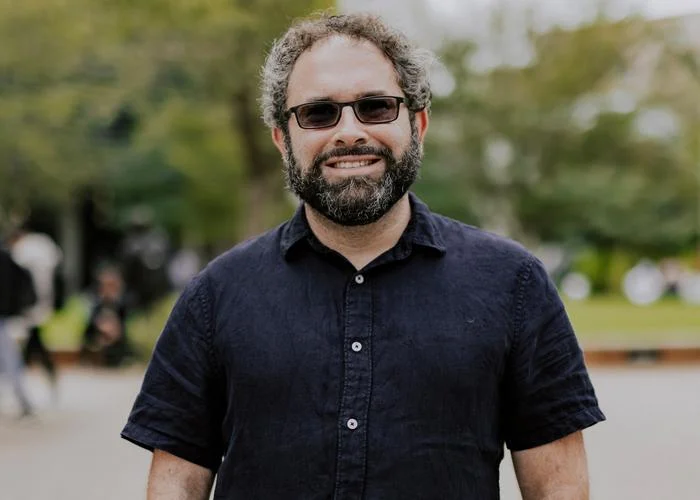
The institute, led by Professor Benjamin Rosman—recently named to TIME magazine’s TIME100 AI 2025 list—focuses on both natural and artificial intelligence. The funding will accelerate research while bolstering MIND’s capacity-building programs designed to connect academia, industry, and policymakers. For Google.org, the investment aligns with its mission to back collaborations that deliver tangible scientific and social impact, the university noted.
“The Wits MIND Institute was conceived to place African researchers at the forefront of the understanding and study of intelligence – natural and artificial,” Professor Benjamin Rosman, Director of The Wits MIND Institute, said in a statement. “Google.org’s support cements our capacity to train talent, incubate disruptive ideas, and ensure our discoveries translate into societal benefit,”
Founded in late 2024, the MIND Institute builds on more than a decade of Wits University’s work in postgraduate education and pan-African AI initiatives. In less than a year, it has launched a fellowship program bringing together 34 researchers across disciplines, with collaborations underway on more than two dozen projects. According to Wits, its MINDFund has already seeded early research in areas ranging from reinforcement learning to digital humanities.
“Wits University is proud to host The Wits MIND Institute, a bold experiment in converging natural and artificial intelligence research,” said Professor Zeblon Vilakazi, Vice-Chancellor of the University of the Witwatersrand. “This funding from Google.org reinforces our shared vision for enhancing Wits’ historical role, from the first computer to the RADAR, in placing South Africa, and the rest of Africa, at the cusp of technological development.”
The institute sees its role as both scientific and political: ensuring that AI models and policies reflect the cultural and social diversity of Africa’s 1.4 billion people. By tying global research to local context, MIND aims to give the continent greater influence in shaping how AI evolves.
Applications for the next cohort of MIND Fellows open in September 2025 as the institute expands its network of researchers and stakeholders across Africa and beyond.