Insider Brief
- XPeng said the first Iron humanoid robot has walked off its new production lines, with initial deployments planned for the company’s own stores before a broader market launch and deliveries in China and overseas in 2027.
- The company said more than 80% of core manufacturing processes are automated, while Iron features 76 degrees of freedom, three Turing AI chips delivering up to 2,250 TOPS and on-device execution of XPeng’s physical AI foundation model.
- XPeng is positioning robotics as a major growth business alongside automotive and globalization after raising more than $900 million for the unit in August at a post-money valuation above $6.3 billion.
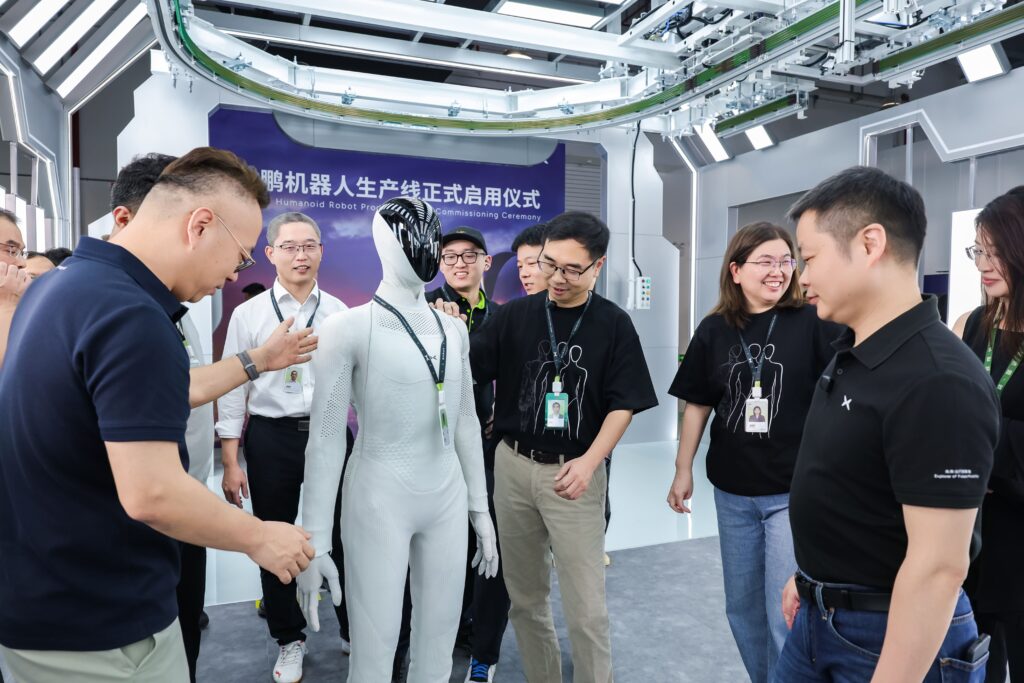
XPeng announced the first of Iron humanoid robot walked off its new productions lines with deployment in its own stores planned first before an official market launch and deliveries in China and overseas in 2027.
According to the Chinese EV maker, more than 80% of the core manufacturing processes are automated and the lines apply quality-control practices drawn from its electric-vehicle manufacturing operations.
“The robot production lines were created from scratch with no precedent to follow,” chairman and CEO He Xiaopeng said in the announcement. “Today’s step is small, but XPeng is building the production lines for an entirely new product category. Looking ahead, XPeng will continue to explore faster production rhythms and greater scale in robot manufacturing, charting a new path toward a leading robot manufacturing industry in China and globally.”
Iron Details
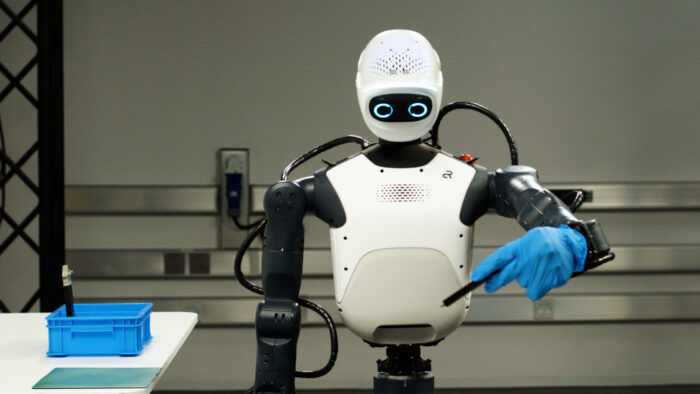
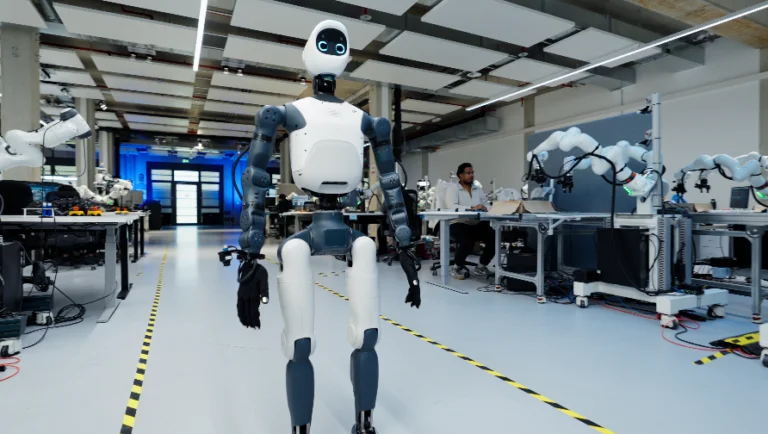
Design: Iron uses a fully enclosed flexible lattice structure that XPeng said is designed to balance its human-like form with safety.
Mobility: The robot has 76 degrees of freedom across its body and 21 degrees of freedom in each hand.
Compute: Iron is powered by three XPeng Turing AI chips delivering up to 2,250 TOPS of computing power.
On-device AI: XPeng said the computing system allows its physical AI foundation model to run directly on the robot, enabling autonomous task execution without remote operation while supporting low-latency inference and data security.
What’s Next?
In late August, XPeng entered share-purchase agreements with multiple investors for more than $900 million at a post-money valuation above $6.3 billion.
XPeng indicated robotics is one of three growth areas alongside automotive and globalization, with the Iron production rollout marking another step in its physical AI strategy. The company said advanced humanoid robots could carry significantly higher gross margins per unit than new-energy vehicles because of technical barriers and limited high-quality supply, while positioning robotics as its second growth curve as manufacturing and commercialization expand.
“We aim to build a new type of robot with full generalization capabilities that can truly become part of everyday life, create a better life for people, and ultimately become a companion in their lives,” He added.
Image credit: XPeng