With a rich tradition in pioneering artificial intelligence (AI) research, the Massachusetts Institute of Technology (MIT) has been an important place for groundbreaking discoveries in the field. Recently, an initiative to delve into the societal ramifications of generative AI was launched by MIT’s leadership. In July, a call for papers was orchestrated by MIT President Sally Kornbluth and Provost Cynthia Barnhart, aiming to gather comprehensive roadmaps, policy suggestions, and actionable recommendations concerning the broad sphere of generative AI.
The announcement was covered in an MIT News piece published on September 18.
The call was met with a robust response as proposals poured in from every school within MIT over the subsequent month. The academic community exhibited an eagerness to dissect the prospective applications and repercussions of generative AI in a multitude of sectors. The spectrum of interests spanned from environmental and climate concerns to the realms of education, healthcare, companionship, and the arts, including music and literature.
Fast forward to the present, a total of 27 thoughtful proposals have been cherry-picked for preliminary funding. The drafted proposals, which are the brainchild of interdisciplinary collectives of faculty and researchers, hail from all five of the Institute’s schools alongside the MIT Schwarzman College of Computing. These selected proposals encapsulate a broad spectrum of viewpoints, setting the stage for an in-depth exploration into how generative AI could potentially remodel societal structures, veering towards either beneficial or adverse outcomes.
“Impact Papers”
“In the past year, generative AI has captured the public imagination and raised countless questions about how this rapidly advancing technology will affect our world,” said Kornbluth. “This summer, to help shed light on those questions, we offered our faculty seed grants for the most promising ‘impact papers’ — basically, proposals to pursue intensive research on some aspect of how generative AI will shape people’s life and work. I’m thrilled to report that we received 75 proposals in short order, across an enormous spectrum of fields and very often from interdisciplinary teams. With the seed grants now awarded, I cannot wait to see how our faculty expand our understanding and illuminate the potential impacts of generative AI.”
Having embarked on an insightful initiative to explore the societal implications of generative AI, MIT has now transitioned to the next phase by earmarking substantial funding for a select array of promising research groups. The selected cohorts are poised to receive financial backing ranging between $50,000 and $70,000, a gesture aimed at catalyzing the creation of in-depth 10-page impact papers. A deadline was set for December 15 for submissions of the papers. Subsequently, a wider academic and public audience will be privy to the findings and insights encapsulated in these papers, thanks to a publication avenue orchestrated by the esteemed MIT Press in conjunction with the MIT Libraries, ensuring a thorough dissemination of the knowledge gleaned from this initiative.
The meticulous process that led to the selection of these research groups was steered by a distinguished committee comprising 19 faculty members, a representation cutting across a dozen diverse departments within MIT. This assortment of evaluators is a testament to the far-reaching resonance of generative AI, transcending the traditional technological domain into broader societal realms. The initial vetting of submissions was executed by a trio of committee members, meticulously scrutinizing each proposal to ascertain its merit and alignment with the overarching objectives of the initiative. The final torchbearers of recommendations, Professors Caspar Hare, Dan Huttenlocher, Asu Ozdaglar, and Ron Rivest, then distilled the essence of these evaluations, rendering the final verdict on the proposals that merited the exploratory funding. Through their discerning lens, a harmonized synthesis of interdisciplinary perspectives was achieved, paving the way for a profound exploration of generative AI’s societal tapestry.
Important Contribution
“It was exciting to see the broad and diverse response that the call for papers generated,” said Ozdaglar, who is also deputy dean of the MIT Schwarzman College of Computing and the head of the Department of Electrical Engineering and Computer Science. “Our faculty have contributed some truly innovative ideas. We are hoping to capitalize on the current momentum around this topic and to support our faculty in turning these abstracts into impact that is accessible to broad audiences beyond academia and that can help inform public conversation in this important area.”
The overwhelming response to the call for proposals not only ignited new collaborative projects but has set the stage for an extended exploration of generative AI on campus, with a subsequent call for proposals earmarked for later this semester. The selected proposals stand as seminal roadmaps, navigating the intricate nexus between generative AI and diverse fields of inquiry. Committee members envisage these papers as merely the initial brushstrokes of an expansive research canvas that beckons further exploration.
Dan Huttenlocher, the dean of the MIT Schwarzman College of Computing, encapsulates the overarching ambition of this initiative, highlighting the aspiration to ignite riveting inquiries into the ramifications of emerging AI technologies, whilst fostering an enriching crucible for cross-disciplinary dialogue and collaboration across the MIT ecosystem.
Nascent Stages
Contributing to this ambitious initiative, Thomas Tull, a distinguished member of the MIT School of Engineering Dean’s Advisory Council and a past innovation scholar at the School of Engineering, lends his support. Tull underscores the colossal potential of AI, albeit in its infancy, which has spawned a plethora of speculation and discourse spanning both poles of the spectrum. He articulates a fervent advocacy for this funding, rallying some of the nation’s finest minds to not only elevate the level of public discourse surrounding AI but to potentially sculpt the framework of how society assimilates and optimizes what could arguably be the quintessential technological leap of our era.
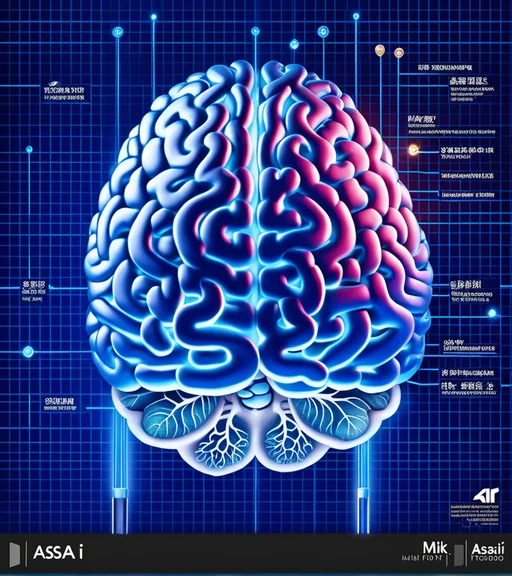
Featured image: Credit: Mauricio Pinheiro, PlaygroundAI