Japan’s Humanoid Robot Restart in 2026: From HRP Heritage to the Factory Floor
 By Greg Bock · · 13 min read
Insider Brief
- Japan’s humanoid robotics sector is re-emerging in 2026 around factory trials, domestic manufacturing plans, physical AI models, component development and real-world service tests rather than a return to the demonstration robots that once defined the country’s industry.
- Kawada, Highlanders, Kawasaki and startup Atom are developing or testing full-body humanoids, while NSK, Algomatic Dynamics, Qualcomm, Telexistence, KDDI and Avita are building components, AI, data and deployment infrastructure around them.
- The numbers are not straightforward as Kawada’s NEXTAGE is an upper-body factory robot, Telexistence’s Ghost is a retail restocking system, Pepper is wheeled, and imported robots used at airports and research labs demonstrate Japanese demand rather than domestic humanoid production.
Japan helped define the modern humanoid robot through the government-backed Humanoid Robotics Project, or HRP, along with Honda’s ASIMO and SoftBank’s Pepper, but the current race looks different from that era. The question now is whether Japanese companies can turn decades of research, industrial know-how and a deep manufacturing base into robots that work reliably in factories and other real-world settings.
A wave of new projects, from heavy industry to startups, points to a restart of a sector that never disappeared but ceded much of the recent attention and production volume to companies in China and the U.S. Some of Japan’s largest companies are also moving to own more of that work themselves, an early pattern rather than a settled trend.
Kawada Reopens the HRP Line
Kawada offers perhaps the clearest link between Japan’s first humanoid boom and the current one.
The company participated in Japan’s government-backed Humanoid Robotics Project, or HRP, which ran from fiscal 1998 through 2002. In November 2025, Kawada Technologies said it had modernized its HRP-2 platform with updated processors, sensors, cameras, batteries, communications and software and begun operational trials at Kawada Construction’s Construction Equipment Center.
The company is testing the humanoid on work including sorting, organizing and transporting bridge components along with indoor work and inspections in order to determine whether the machine can help address shortages of skilled workers rather than simply demonstrate walking or balance.
Kawada also provides a reality check on humanoid deployment numbers. Its Nextage robot, reeased in 2011, has accumulated more than 1,000 installations, according to the company, but NEXTAGE is an upper-body dual-arm system designed to work with people on production lines. But, it does not walk.
“In recent years, humanoid robots have achieved remarkable advancements driven by the evolution of various technologies, including AI,” the company noted. “However, the social implementation of practical full-body humanoid robots that work alongside humans still faces numerous challenges, such as highly functional hardware, practical and user-friendly systems, and adaptability to diverse environments.”
Mitsubishi Puts Humanoid Manufacturing on the Table
Highlanders, a University of Tokyo-origin robotics startup founded in 2023, is developing its N general-purpose humanoid and earlier Ninja biped along with physical AI models and other robotic systems. In July, the company signed a memorandum of understanding with Mitsubishi Motors for developing humanoids for use in Mitsubishi manufacturing plants and examining whether unused buildings at Mitsubishi’s Kyoto Plant could be used to mass-produce Highlanders robots.
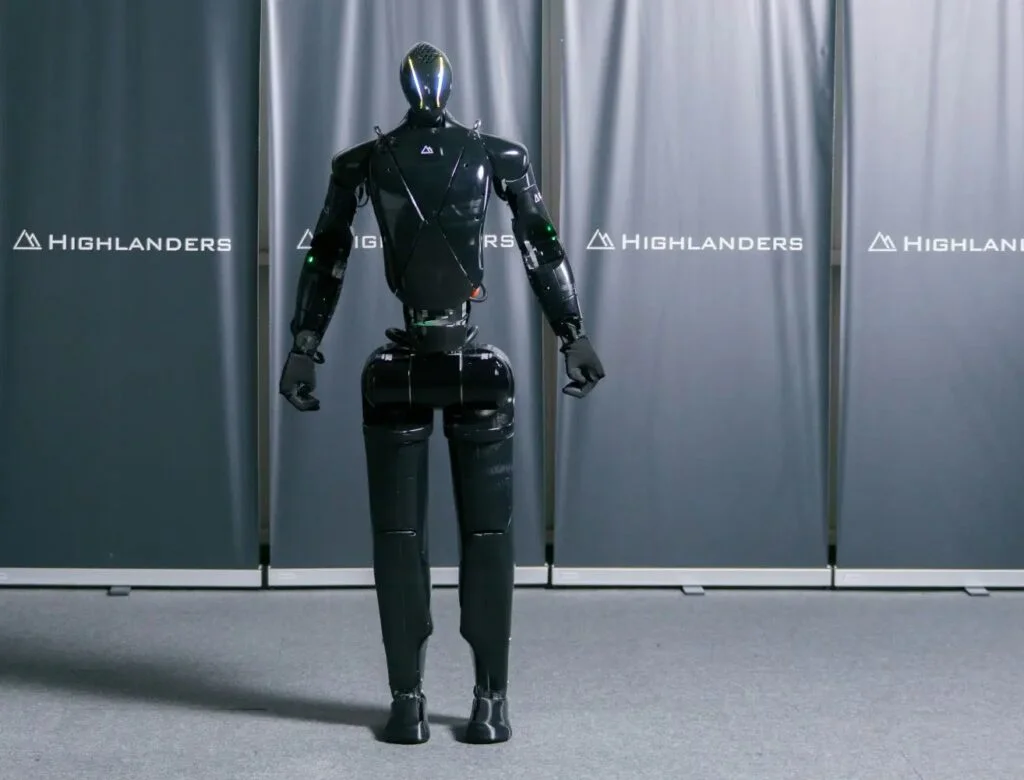
According to Mitsubishi Motors, the companies plan to study the feasibility of beginning production in early 2027. Mitsubishi has already invested in Highlanders and said it expects to make additional investments.
That remains a manufacturing plan rather than an operating humanoid production line. Kyodo, according to The Mainichi, reported a target of 1,000 units a month by the end of 2027, but that figure does not appear in Mitsubishi’s primary announcement.
Highlanders has since moved closer to that point and in October, the startup showed a mass-production prototype of N at the CEATEC trade show near Tokyo and said it is preparing for shipments to begin in 2027. The company said it develops the robot’s mechanics, electronic circuits, embedded software and AI in-house, and it rates the payload at 8 kilograms per arm or 12 kilograms using both arms.
For now, the more significant development is that a Japanese automaker is considering using existing manufacturing infrastructure to build domestically developed humanoids.
Atom Builds the Body and the Brain
Tokyo-based Atom was established in late 2025 and is developing a dual-arm, bipedal humanoid alongside its own physical AI foundation model. Atom describes a vertically integrated approach spanning robot hardware, artificial intelligence, manufacturing and deployment.
The company raised 3 billion yen, aboout $18.7 million, in seed funding in May and later added a 1.5 billion yen, or about $9 million, loan agreement with Mizuho Bank. It has also established a Physical AI Foundry in Tokyo for collecting robot training data, training and evaluating models and improving hardware.
Its partnership with NSK connects a new humanoid developer with one of Japan’s established precision-component manufacturers. NSK and Atom plan to test NSK-developed actuators on Atom humanoids while using manufacturing sites to collect physical AI data. The companies intend to feed that factory data into AI models to enable robots to perform increasingly difficult production tasks.
Atom has said it wants about 200 humanoids running at its foundry at all times by the end of 2027, producing a cumulative 300,000 hours of training data, and it is working to bring its own humanoid to market in 2027.
That combination of robot startup, component supplier and working factory could prove more important than another prototype demonstration as reliable actuators, manufacturing data and access to production environments are among the pieces needed to move humanoids from controlled tests into useful work.
O-ID & ugo
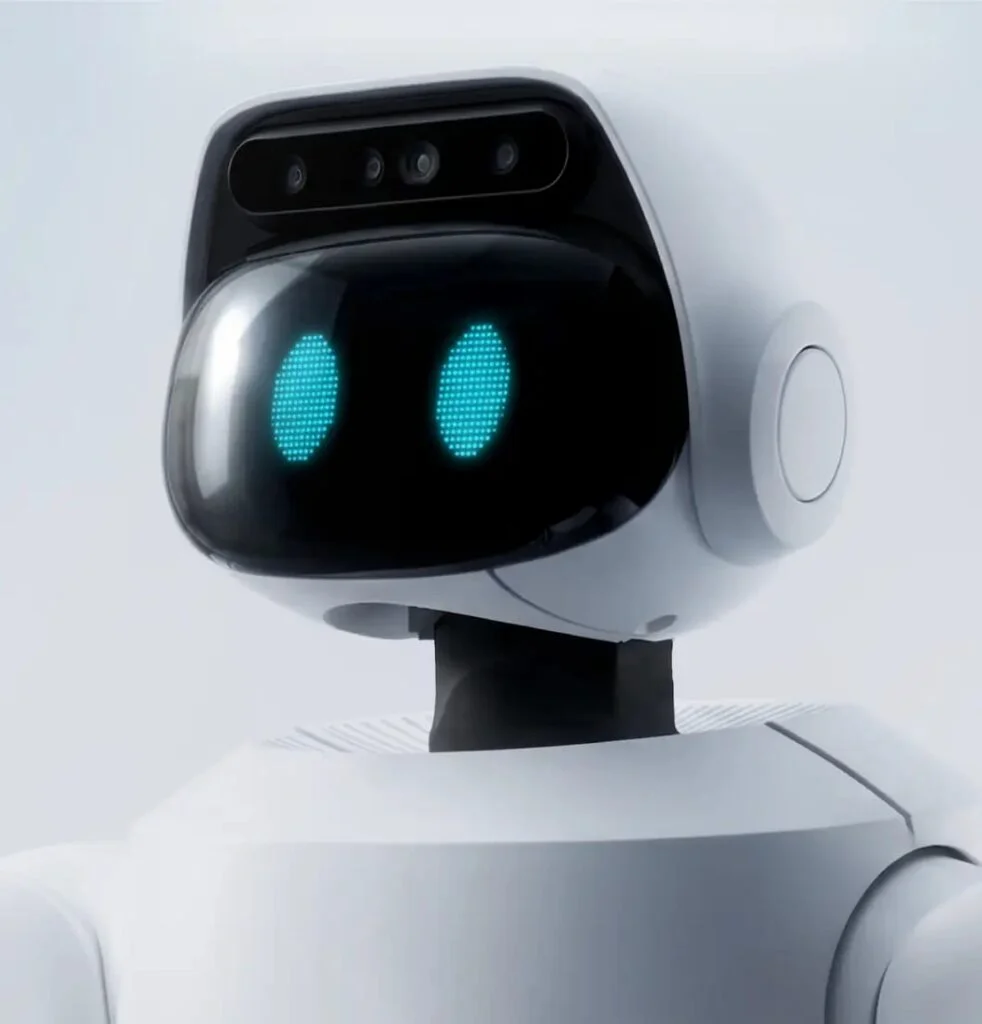
Atom is not the only Japanese newcomer building a full humanoid. O-ID, a Tokyo startup founded in 2025, raised $1.2 million in pre-seed funding to move a modular humanoid toward production for automotive manufacturing and logistics in Japan, AI Insider reported in September. According to the company, major modules can be swapped on-site in about five minutes without tools, and its supply chain is entirely in Japan.
ugo, a Tokyo robotics company, has added a wheeled semi-humanoid to the Japanese lineup. In September, ugo introduced Nova, a dual-arm machine designed and built in Japan, and said it plans to begin mass production in 2027. Nova rolls on wheels rather than walking, so it should not be counted among the bipeds being developed by Highlanders, Atom or Kawasaki.
In October, ugo announced it had raised 10 billion yen, about $65 million, in loans from Mizuho Bank, Bank of Yokohama and the Japan Finance Corporation, bringing its total funding to about 50 billion yen, about $325 million. The company indicated the new money would go toward work including production of Nova, which it demostrated earlier this month at a physical AI meeting held by Prime Minister Sanae Takaich. NTT West just reported that along with Iris Ohyama, it had tested Nova sharing tasks with Iris Ohyama’s JILBY cleaning robots.
Algomatic Targets Hands and Human Skills
Since dexterous manipulation remains one of the hardest parts of useful humanoid work, a company can become part of the wider humanoid supply chain without selling the entire machine.
Algomatic Dynamics launched its robotics and physical AI operations in September after raising 5 billion yen, or $31.7 million, from DMM.com. The company plans to introduce an AI-powered multi-fingered robotic hand platform in Japan by the end of 2026 and is working on manipulation, bipedal control and systems for turning human movements into robot-training data.
Its strategy centers partly on capturing skills that are difficult for workers to describe. Algomatic claims it can analyze video of experienced workers to extract information such as movement timing, force and attention, converting that tacit knowledge into data that robots can use for training.
The company is also developing stable bipedal locomotion and collecting whole-body motion data, but its immediate commercial product is the hand rather than a general-purpose humanoid.
Kawasaki Keeps Advancing Kaleido
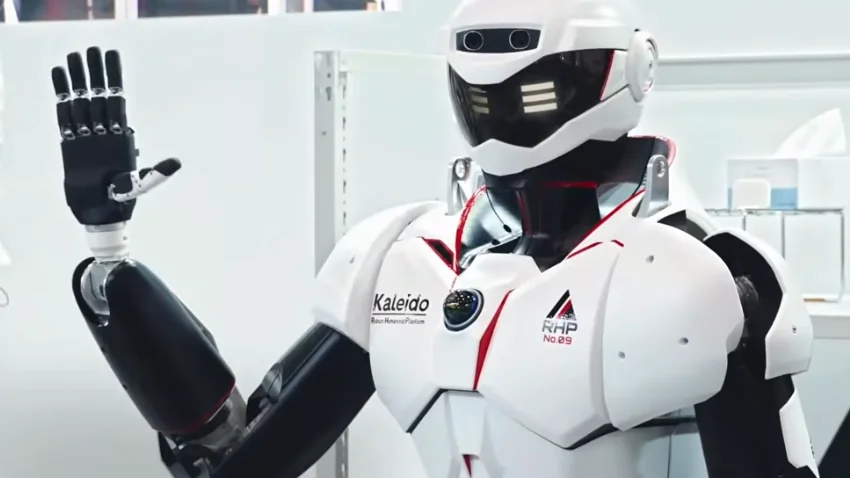
Kawasaki Heavy Industries remains Japan’s most visible large industrial company developing a full-body biped with its Kaleido 9. The company publicly showed the latest version at the International Robot Exhibition in late 2025. It’s the ninth generation of a humanoid program Kawasaki has been developing since 2015.
According to Kawasaki Robotics, Kaleido 9 can use LiDAR-based mapping for autonomous walking and can also be remotely operated using a head-mounted display. Kawasaki has developed a wheeled Kaleido Station that moves the robot over longer distances before allowing it to stand and work.
Kawasaki indicated it sees remote control as a practical bridge to greater autonomy. The company says fully autonomous humanoid operation still faces substantial technical challenges, so its near-term approach combines human control for complex tasks with AI handling simpler work. Kaleido 9 is designed for intuitive, real-time teleoperation through a head-mounted display, an approach Kawasaki has demonstrated with disaster-response scenarios in mind, while full autonomy remains a longer-term goal.
The autonomy work is moving, though. In October, the Matsuo Institute, which works alongside the University of Tokyo’s Matsuo-Iwasawa lab, announced it had helped Kawasaki train a reinforcement-learning control policy for Kaleido 9 in an Nvidia simulator and move it onto the physical robot in about six weeks. According to the institute, Kaleido 9 used the policy to lift a basket weighing about 50 pounds with both hands and set it on a table at the May opening of Kawasaki’s Physical AI Center in San Jose, Calif.
Kawasaki’s approach is that fixed automation can remain more practical for repetitive processes with controlled layouts and strict cycle times. Humanoids become more attractive when robots need to operate in spaces, use tools or interact with equipment already designed around people.
The robot remains an R&D platform rather than a commercial fleet and Kawasaki’s roadmap places factory and plant applications around the end of the decade, followed by progressively less structured environments. Disaster response remains a longer-term goal.
Nikkei Asia later reported that Kawasaki plans to use a physical AI platform from Japanese company Noetra in Kaleido, with a rollout as soon as 2030. According to the report, early use would combine remote control with AI for work such as factory and warehouse patrols and parts transport, with assembly coming later. Kawasaki has not issued a matching announcement, and its own Kaleido 9 overview still places remotely assisted work in controlled environments around 2030 and autonomous operation in unstructured settings around 2040.
Honda’s Avatar Robot
Honda is building on its ASIMO work with its Avatar Robot program. Honda showed its Avatar Robot at the CEATEC trade show in October. The system is a teleoperated upper-body machine with a multi-fingered hand and an AI system that assists the operator.
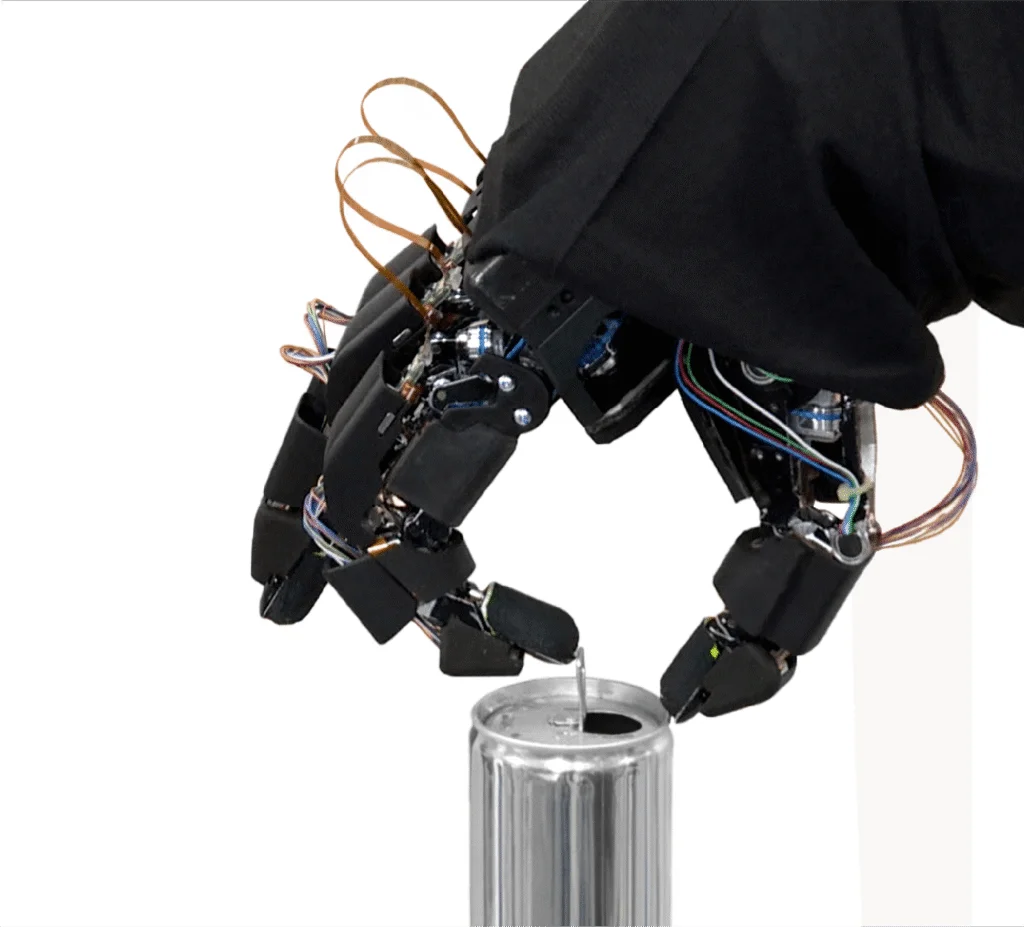
The company pointed out that ASIMO taught it how to make a robot move among people without falling, perform tasks with its hands and respond to the people around it, and Honda is now pairing that experience with new software and AI so a remote operator can control a multi-fingered robotic hand. Honda says the hand can pick up a coin, open a can by its pull tab and unscrew a plastic bottle cap.
The company describes the robot as a way for specialists to handle urgent jobs from far away, such as medical emergencies and equipment repairs. It also sees uses in places people can’t easily or safely reach, including disaster sites and outer space.
Retail Provides Another Training Ground
The retail effort is worth watching since one of the central challenges in physical AI is obtaining enough useful, varied data to teach robots how to operate reliably outside tightly controlled environments.
Telexistence‘s Ghost systems already restock beverages in convenience stores, providing the Tokyo company with real-world manipulation experience. Telexistence describes Ghost as a system combining machine-learning automation with remote operation. While Ghost is a specialized restocking robot, not a walking humanoid, the operating experience feeds into Telexistence’s greater physical AI work.
Telexistence and Seven-Eleven Japan are also developing Astra, a humanoid designed to use vision-language-action models, which connect what a robot sees and is told with the physical actions it takes. Their work included identifying tasks suitable for automation, developing humanoid hardware and building the datasets needed to train the systems. The companies indicated they are looking to deploy in stores in 2029 giving the project a potentially a large number of real-world environments if development progresses due to Seven-Eleven Japan’s more than 20,000 stores.
Airports Show Demand, Not Domestic Production
A separate Japan Airlines program provides another sign that Japanese companies are interested in humanoids for labor-intensive service work, however it does not add to the number of Japanese humanoid manufacturers.
JAL, Japan Airlines Ground Service and GMO AI & Robotics began an airport humanoid demonstration project in May for ground-handling tasks. Potential work includes baggage operations, cabin cleaning and interaction with airport equipment.
The trial falls in line with one of the central themes around humanoid form factors. Airports, factories and other workplaces already contain infrastructure designed for people, so a human-shaped machine could theoretically operate without extensive rebuilding.
The project should not, however, be counted as evidence of Japanese humanoid manufacturing since GMO is acting as a robotics supplier and integrator, and JAL’s English announcement does not identify the robot manufacturer. GMO AI & Robotics separately became an authorized distributor for Unitree and has said it uses the Chinese company’s G1 humanoid in its robotics services.
A Humanoid Takes a Job at Osaka Metro
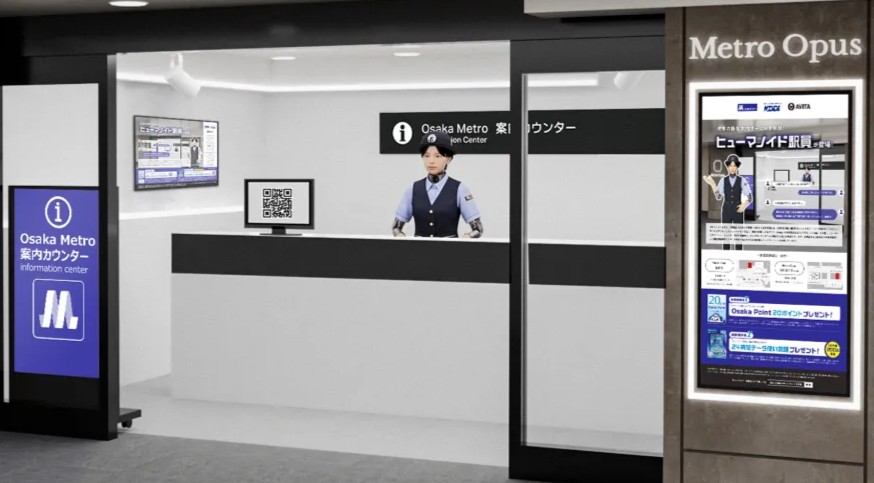
Osaka is testing the conversational side of physical AI before asking the robot to become a fully mobile worker.
Osaka Metro, KDDI and Avita began a trial Aug. 31 of a humanoid station attendant using Google’s Gemini AI model. The robot was tested first near Umeda Station and then at Tanimachi-kyuchome Station, with the experiment scheduled through Sept. 15, in order to measure passenger demand, acceptance and operational problems associated with putting humanoids into customer-service environments. Avita has described the current work as focused largely on human-robot interaction, with later tests expected to explore mobility, inspection and other physical capabilities.
Wearing an Osaka Metro uniform, the humanoid provides station directions, subway transfer information and recommendations for nearby attractions. It can handle multilingual interactions including English and Chinese and display QR codes that allow travelers to move route information to their phones. Avita said Gemini gives the system the ability to process conversational cues such as a speaker’s tone, speed and intonation as part of the interaction.
Japan Builds the Supporting Physical AI Ecosystem
Government and industry efforts increasingly suggest Japan is thinking beyond individual robot companies.
Japan’s Second AI Basic Plan places physical AI alongside industry-specific AI as part of the country’s technology strategy. The plan calls for domestic development of physical AI foundation models, stronger robot manufacturers and support for key components needed to build robotic systems.
The New Energy and Industrial Technology Development Organization, or NEDO, has also launched a program running from fiscal 2026 through fiscal 2030 aimed at developing multimodal foundation models for physical AI.
Research programs are moving in a similar direction. The MIRAI Humanoid project plans to develop an open-source humanoid called MEVA while using existing commercial platforms, including Unitree’s G1, for early research.
Qualcomm added another piece in August when it announced a broader Japanese robotics initiative built around a planned Qualcomm Japan Robotics Center. Qualcomm said the initiative will support applied research, startups, commercialization and deployment, with participants spanning established robotics companies, electronics manufacturers, telecommunications companies, universities and startups.
Japan’s Incumbents Start Building Robotics In-House
Several of Japan’s largest companies that have long relied on suppliers and partners are starting to form robotics groups of their own. Toyota announced it will create Toyota Robotics, a companywide organization, in January 2027. The automaker projects demand for about 400,000 robots across its group and suppliers from 2028 through 2040, a figure that counts robots it builds as well as those it buys, AI Insider reported.
About a week earlier, KDDI and its AI subsidiary ELYZA launched ELYZA Robotics as the group’s center for physical AI work. KDDI plans to invest 30 billion yen, about $190 million, in research and development through fiscal 2030, according to AI Insider. It wants more than 1,000 robots working at real sites by the same year, while buying the machines, including humanoids, from manufacturers in Japan and abroad.
Partnering out has not stopped, and most of the in-house moves are still plans or demonstrations.
Japan’s Different Path Back Into Humanoid Robotics
Japan still does not look like China’s humanoid industry, where manufacturers are chasing far larger volumes with a dense domestic supply chain. Nor does it look like the U.S., where general-purpose physical AI draws the biggest venture rounds. Japan’s edge lies in its industrial customers, precision components and decades of putting machines to work in factories.
What changed in 2026 is that those pieces have started to connect, from Atom pairing its biped with NSK actuators and factory data to Mitsubishi weighing production capacity for Highlanders. Most of the full-body programs are still trials, research projects or manufacturing plans, and none of it means Japan has regained the lead it held in the ASIMO era. The question now is less about what its robots did 20 years ago and more about whether the country can turn the industrial base it already has into a competitive physical AI industry.