
Insider Brief
- Gritt emerged from stealth with $26 million in Series A funding to build AI and robotics systems for large construction sites, starting with solar installation, TechCrunch reported.
- The round was led by Obvious Ventures, with participation from Union Square Ventures and Active Impact Investment, bringing Gritt’s total funding to $32.4 million.
- Gritt said its system attaches to existing jobsite equipment to pick, place, assemble and move materials, while collecting field data to improve its models across construction tasks.
Gritt has launched with $32.4 million in pre-seed and Series A funding to build AI and robotics systems for large construction sites, starting with solar installation.
According to Gritt, its $26 million Series A was led by Obvious Ventures, with participation from Union Square Ventures and Active Impact Investments. Previous investors First Round Capital, Climactic, Congruent Ventures and VSC Ventures also supported the round.
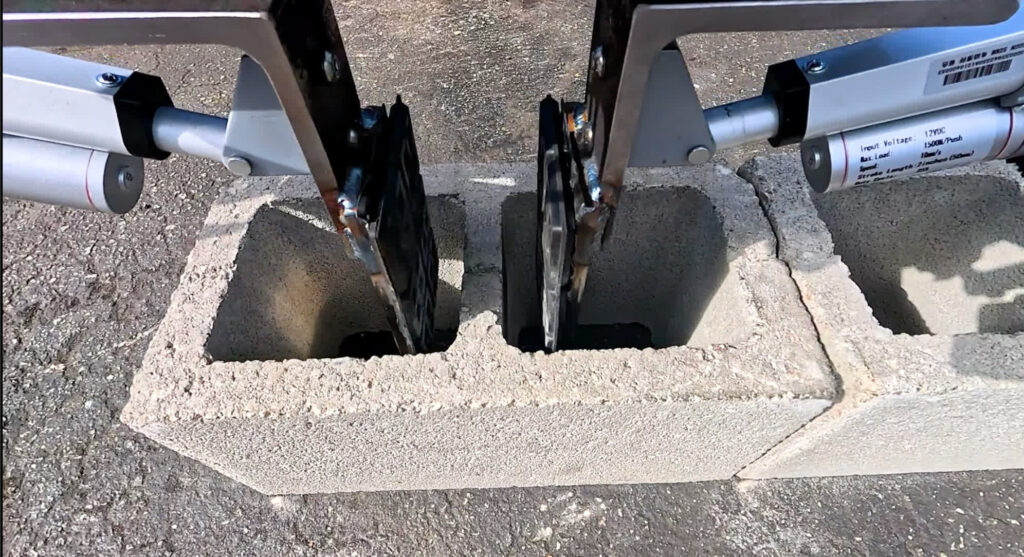
Gritt is building a system that combines robotic arms and AI with existing jobsite equipment, including skid steers and forklifts. The company said the system can pick and place, assemble and transport materials with millimeter precision in changing construction environments.
Founded by CEO Puneet Puri and CTO Vishal Dugar, two Carnegie Mellon-trained roboticists, the California startup points out that its system attaches to existing jobsite equipment, including skid steers and forklifts, rather than requiring customers to buy a proprietary fleet. Once installed, Gritt can pick and place materials, assemble components and move items with millimeter-level precision.
“Every industry has embraced automation, but outdoor construction sites are exposed, with unforgiving terrain and variable weather. You can’t tell a construction site to be less muddy or to stop snowing,” Puri noted in the announcement. “Gritt’s physical AI is designed to work in this unstructured, outdoor world. Infrastructure is what moves civilization forward, and now Gritt can help build it faster — including solar arrays, data centers, bridges, and roads.”
The company said its system learns from each deployment, shortening the time needed to train new tasks from months to days. Gritt also said its machines can collect and process data on completed work, material movement and site conditions to help supervisors make decisions on large construction projects.
The company indicated it is focused on construction because the sector has been hard to automate. Jobsites change constantly, with weather, terrain, deliveries, equipment and crews affecting work plans throughout the day. That makes construction different from factories or warehouses, where automation can be built around more controlled settings.
Gritt’s approach is to keep the hardware relatively simple and put more of the work into the AI system. The company said it uses modular systems built from proven, off-the-shelf components so its technology can be added to equipment firms already rent.
The AI stack is trained to form a general view of a construction site and support different physical tasks. According to Gritt, new capabilities can be sent to machines in the field through software updates, allowing the same system to take on more work over time.
The company noted that it has already installed tens of thousands of solar modules on live jobsites with no breakages and at four times the output of non-automated construction, without adding labor. Solar is the company’s first market because the work is repeatable and demand is high. Gritt said it plans to expand into data centers, energy and other large infrastructure projects.
The system is also designed to collect field data from each deployment. Over time, that data is intended to help Gritt improve its models and support new construction tasks.
Gritt said its machines could eventually act as both workers and a decision layer on jobsites, helping verify work, plan tasks and support site supervisors as projects change.
“Nobody is solving the repetitive, high-volume manual work that shapes the world’s infrastructure,” Dugar added. “We need an intelligence layer that can complete dexterous tasks and make decisions in an environment that changes every hour. This is one of the most challenging frontiers in physical AI.”
Image credit: Gritt