Tuesday · October 27, 2026

 ·  Daily  ·  Newsletters

Resonance network: Quantum InsiderSpace Insider

Transportation to be Safer, Cleaner and More Cost Efficient

self-driving cockpit
Researchers predict vehicle electrification, driverless cars and ride sharing could slash U.S. petroleum consumption by 50% and carbon dioxide emissions by 75% while simultaneously preventing 5,500 premature deaths and saving $58 billion annually. IMAGE: Public Domain Pictures

A Cornell University-led team has calculated that by the year 2050, vehicle electrification, driverless cars and ride sharing could slash U.S. petroleum consumption by 50% and carbon dioxide emissions by 75% while simultaneously preventing 5,500 premature deaths and saving $58 billion annually.

The researchers projected vehicle stocks, distance traveled, energy usage and carbon dioxide emissions in the continental U.S. through 2050 and quantified the impacts of changing emissions on concentrations of fine particulate matter in the atmosphere, as well as ensuing health and economic benefits of populations in 10 major metropolitan areas.

Their simulations show that reductions in emissions from passenger travel could prevent between 2,300 and 8,100 premature deaths annually in the U.S. in 2050.

The largest number of prevented deaths coincided with large metropolitan areas, such as Los Angeles and Chicago. At the state level, California, Texas, New York, Ohio and Florida would see the largest decreases in premature mortality. The associated economic benefits could range from $24 billion to $84 billion annually.

…Driverless cars and ride sharing could slash U.S. petroleum consumption by 50% and carbon dioxide emissions by 75% while simultaneously preventing 5,500 premature deaths and saving $58 billion annually.

Cornell University

The group’s paper, “Shared Use of Electric Autonomous Vehicles: Air Quality and Health Impacts of Future Mobility in the United States,” published in Renewable and Sustainable Energy Reviews. Oliver Gao, professor of civil and environmental engineering, led the project. The paper’s lead author is former postdoctoral researcher Shuai Pan.

“Another key finding is that for carbon mitigations and health benefits, vehicle electrification is by far the most important piece, followed by shared mobility (ride-sharing) and then automation,” Pan said. “The net energy impacts of self-driving vehicles are highly uncertain and automation alone may not dramatically affect energy use, emissions or vehicle-related pollution.”

The study concludes that policymakers can help encourage the transition to electric vehicles and boost ride sharing, for example, by issuing tighter fuel economy standards, creating economic incentives for shared mobility, and investing in charging infrastructure and technological developments.

The research was supported by the U.S. Department of Transportation’s Center for Transportation, Environment and Community Health, and by Nanjing University of Information Science and Technology.

Source: Cornell University

If you found this article to be informative, you can explore more current space news, exclusives, interviews and podcasts here.
Trending today

Business & Markets

The Week Ahead in AI: SpaceX Closes $40B AI Chip Debt Deal, Softbank $50B Malaysia Tech Investment, Plus Upcoming Alphabet, Microsoft & Amazon Earnings

Technology & Infrastructure · Applications & agents

Chinese Hackers Use AI Agents to Breach Thousands of Companies via ConnectWise

a purple and green background with intertwined circles
Business & Markets · Enterprise

OpenAI Expands Decisions API, Scales Enterprise Push With Uber and Cuts Frontier Training Off From the Live Internet

Business & Markets

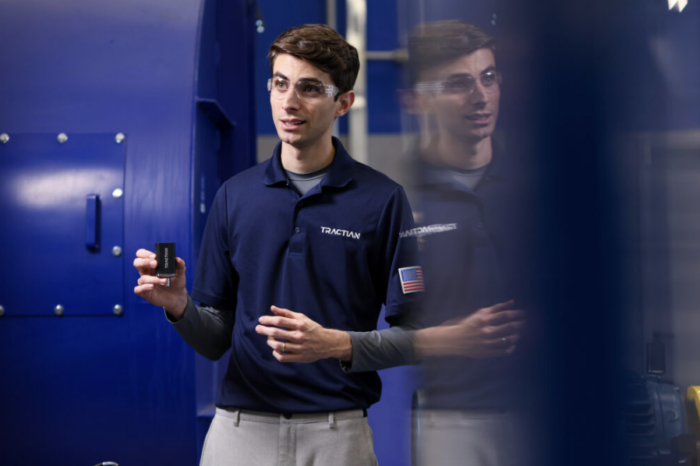
Tractian Closes $130M Series D to Expand AI for Industrial Asset Health

Business & Markets · Enterprise

Oracle Commits $1B to Partner Ecosystem to Meet Growing AI Demand

The AI economy, every weekday morning

The daily briefing on LinkedIn. Free, one tap to follow.

Exclusives

Exclusive

South Korea’s AI G3 Strategy: Decoded

Scale-ups to Watch

10 Switzerland-Based AI Scale-Ups You Need to Know in 2026

network, blockchain, digital, hand, web, community, artificial, intelligence, steering, interfaces, bokeh, future, digitization, transformation, change, blockchain, blockchain, blockchain, blockchain, blockchain, transformation
Exclusive

Why Crypto Could Be AI’s Payment Layer: BlackRock Sees Stablecoins Connecting Commerce and Compute

AI Predictions
Exclusive

Why AI Predictions Often Get The Technology Right But The Timeline Wrong

Scale-ups to Watch

10 CEE & Baltics-Based AI Scale-Ups You Need to Know in 2026

More in Business & Markets

Latest from the same section
Technology & Infrastructure · Models & LLMs

Jack Dorsey’s Block Introduces Dessa, an Emotionally Expressive Voice AI That Runs Locally

1 day ago
a purple and green background with intertwined circles
Business & Markets · Enterprise

OpenAI Expands Decisions API, Scales Enterprise Push With Uber and Cuts Frontier Training Off From the Live Internet

2 days ago
Business & Markets · Enterprise

Oracle Commits $1B to Partner Ecosystem to Meet Growing AI Demand

2 days ago
A glossy glass cube with the Microsoft logo on a dark surface
Technology & Infrastructure · Applications & agents

Microsoft’s AI Diagnostic System Outperforms Generalist Doctors on Complex Cases, Science Study Finds

3 days ago

The AI economy, every weekday morning

The daily briefing plus the weekly Scale-ups to watch edition. Free, no spam, unsubscribe any time.