Wednesday · October 21, 2026

 ·  Daily  ·  Newsletters

Resonance network: Quantum InsiderSpace Insider

New Multi-User Task Migration Model Enhances Mobile Edge Computing, Boosting Potential for AI Applications

Credit Yuya CUI, Degan ZHANG, Jie ZHANG, Ting ZHANG, Lixiang CAO, Lu CHEN

Insider Brief

  • A new multi-user task migration model, developed by Degan ZHANG’s team, addresses instability in Mobile Edge Computing by minimizing system delay and balancing migration costs and latency.
  • The research introduces a prioritized experience replay mechanism that assigns weights to optimize neural network learning efficiency.
  • The proposed AWDDPG framework shows promising results in real-world applications, demonstrating fast convergence, reduced migration costs, and improved task completion times.
  • Image: Credit — Yuya Cui, Degan Zhang, Jie Zhang, Ting Zhang, Lixiang Cao, Lu Chen

PRESS RELEASE — Dynamic service migration is a key technology in Mobile Edge Computing(MEC). In a multi-user service migration scenario, the states of all users are combined into a global state, which leads to the instability of the system and ignores the influence of multiple users. It is more and more challenging to design an effective migration strategy to balance migration costs and latency in a multi-user distributed environment.

To solve the problems, a research team led by Degan ZHANG published their new research on 15 August 2024 in Frontiers of Computer Science co-published by Higher Education Press and Springer Nature.

Considering the migration cost, quality of service(QoS), workload on the server, and spectrum resource allocation, a multi-user task migration model is proposed. Under the constraint of migration cost, the team describe the multi-user task migration problem as a minimization optimization problem to minimize the system delay.

DDPG adopts the experience replay mechanism. However, the sampling of samples in experience replay storage is random, and the different importance of each sample is ignored, which will lead to low sampling efficiency. Samples with low complexity are not conducive to the learning of neural networks, and in the early stages of learning, neural networks are difficult to understand high-complexity training samples. Therefore, they assign priority weights to each state sample in the experience replay storage, and set their sampling probabilities according to the priority weights.

Adopting an offline centralized training distributed execution framework ensures that each mobile user’s environment is fixed, and even in scenarios with frequent environmental changes, users do not need to interact frequently, which can effectively solve the impact of other mobile users’ behavior on the environment. And the team use the interaction between a single mobile user and a population to approximate the interaction between the mobile user and the environment.

From real application scenarios and simulation experiments, the experimental results show that AWDDPG (proposed)can achieve fast and stable convergence, and perform well in terms of migration cost and average completion time.

Matt Swayne
About the author
Matt Swayne

With a several-decades long background in journalism and communications, Matt Swayne has worked as a science communicator for an R1 university for more than 12 years, specializing in translating high tech and deep tech for the general audience. He has served as a writer, editor and analyst at The Space Impulse since its inception. In addition to his service as a science communicator, Matt also develops courses to improve the media and communications skills of scientists and has taught courses.

Trending today

Technology & Infrastructure · Models & LLMs

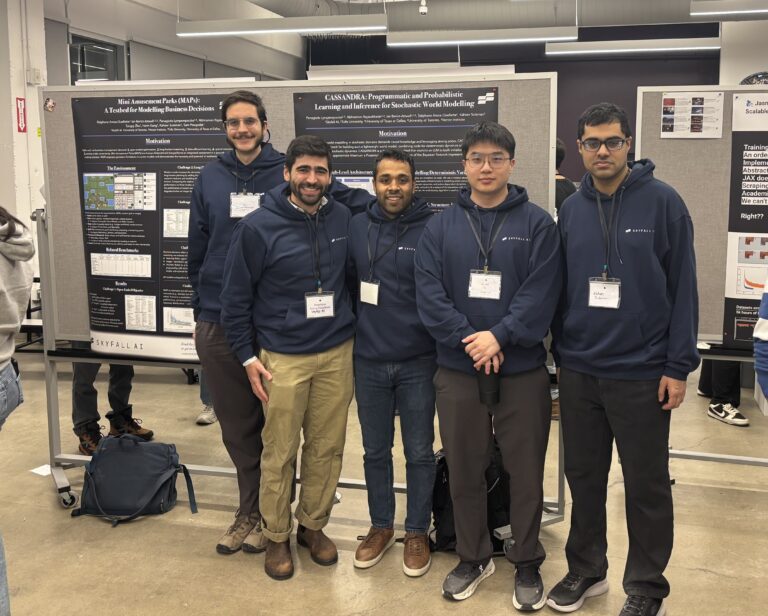
Skyfall AI Unveils Frontier Engineering World Model SKY-001

Business & Markets

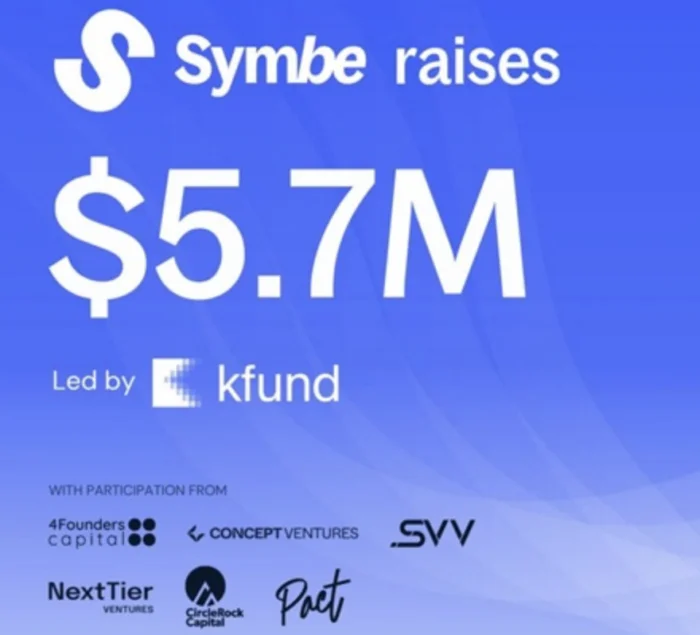
Symbe Closes $5.7M Seed Round to Automate B2B Business Cases With AI

Business & Markets

Inovia Capital Secures $200M First Close for AI-Focused Sixth Venture Fund

Business & Markets

AiMOGA to Open Global Pre-Orders for Mobo Home Humanoid Robot

Technology & Infrastructure · Data centres & compute

xMEMS Begins Mass Production of Solid-State Cooling Chips for Edge AI and Data Centers

The AI economy, every weekday morning

The daily briefing on LinkedIn. Free, one tap to follow.

Exclusives

Exclusive

South Korea’s AI G3 Strategy: Decoded

Scale-ups to Watch

10 Switzerland-Based AI Scale-Ups You Need to Know in 2026

network, blockchain, digital, hand, web, community, artificial, intelligence, steering, interfaces, bokeh, future, digitization, transformation, change, blockchain, blockchain, blockchain, blockchain, blockchain, transformation
Exclusive

Why Crypto Could Be AI’s Payment Layer: BlackRock Sees Stablecoins Connecting Commerce and Compute

AI Predictions
Exclusive

Why AI Predictions Often Get The Technology Right But The Timeline Wrong

Scale-ups to Watch

10 CEE & Baltics-Based AI Scale-Ups You Need to Know in 2026

More in Technology & Infrastructure

Latest from the same section
Technology & Infrastructure · Models & LLMs

AWS Takes Aim at Nvidia’s PyTorch Advantage While Nvidia Expands Open-Weight Nemotron Models for Agents

16 hours ago
Business & Markets · Startups

Neura Robotics, NXAI Partner to Build Memory System for Physical AI

21 hours ago
Technology & Infrastructure · Models & LLMs

Skyfall AI Unveils Frontier Engineering World Model SKY-001

1 day ago
a black square with a blue logo on it
Business & Markets · Enterprise

Meta Releases Muse Spark Open, an 816B-Parameter Open-Weight AI Model Built to Run on Macs

4 days ago

The AI economy, every weekday morning

The daily briefing plus the weekly Scale-ups to watch edition. Free, no spam, unsubscribe any time.