Insider Brief
- Lucid Genomics, a Berlin startup, raised €1.3 million in pre-seed funding to develop AI tools that analyze both coding and non-coding regions of DNA for better patient care and drug development.
- Their AI-based platform aims to detect harmful mutations early, focusing on rare genetic diseases and expanding to cancer diagnostics.
- The startup collaborates with leading research institutions and aims to offer its solutions to clinics, research organizations, and pharmaceutical companies.
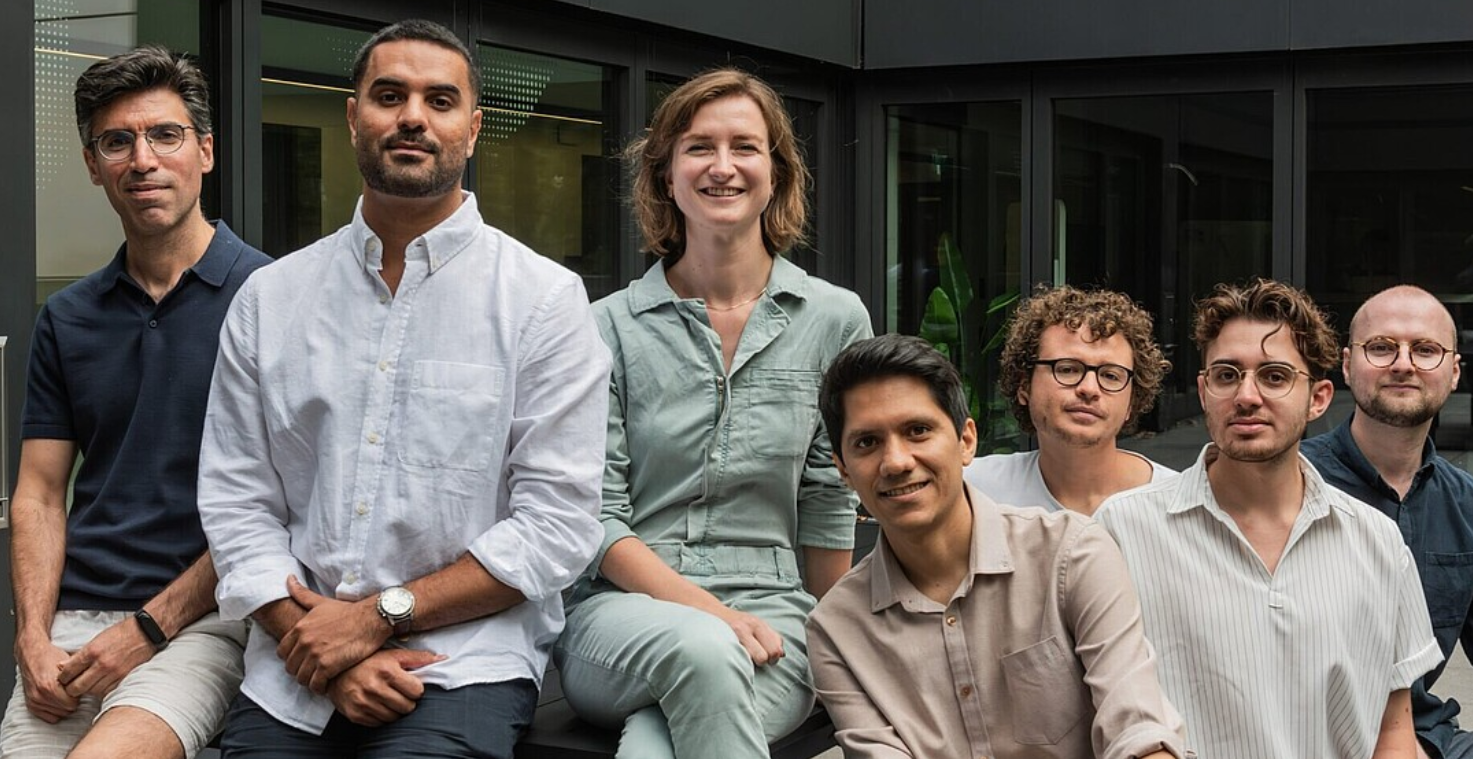
PRESS RELEASE — The Berlin startup Lucid Genomics, a spin-off of the Max Planck Institute for Molecular Genetics and Charité — Universitätsmedizin Berlin, uses AI-based tools to decode previously undiscovered parts of human DNA. Founders Uirá Souto Melo and Hossein Moeinzadeh have now received 1.3 million euros in pre-seed funding to further develop their innovative technology. Their aim is to revolutionize healthcare through AI-based solutions that convert 100% of genetic information into valuable knowledge for better patient care and accelerated drug development.
Mutations that can occur within genes can cause serious diseases. To detect these faster and more precisely, molecular geneticist Uirá Souto Melo and computational biologist Hossein Moeinzadeh have developed an AI-based algorithm for comprehensive DNA analysis. Previous analysis methods only consider two percent of the genomic information, the so-called coding parts of the DNA. However, the non-coding parts of DNA, also known as the dark genome, contain instructions for the production of proteins and therefore important information about a person’s health development.
With their SAAS platform, the founders now want to create a digital solution that can fully process DNA sequencing data. Using machine learning (ML) algorithms, the founders have trained their artificial intelligence (AI) to recognize variations in both coding and non-coding regions of DNA from a large number of genetic data sets. In addition to cleaning up data sets, the aim is to detect potentially harmful mutations in patients’ DNA at an early stage and thus make progress in the early detection of cancer, drug development and clinical trials.
Their technology will initially focus on rare genetic diseases, including heart, bone and retinal diseases. Later, the AI is to be extended to applications in cancer diagnostics and other medical fields. The start-up’s focus is now on building up the team and further developing the software. Algorithms are to be further optimized to make the identification of genetic variants even more precise. The researchers will be supported by human geneticist Stefan Mundlos, with whom Souto Melo worked at the Institute of Medical Genetics and Human Genetics atCharité, and bioinformatician Martin Vingron, who heads the Max Planck Institute for Molecular Genetics and is Moeinzadeh’s doctoral supervisor.
The invention is aimed at research institutions, clinics and pharmaceutical companies. Genetics researchers at Berlin’s Charité, the University Medical Center Schleswig-Holstein and University College London are currently testing the start-up’s solution free of charge. An exclusive license between Lucid Genomics and the originating institutes was agreed with joint support from Max Planck Innovation, Charité BIH Innovation and Ascenion, the Charité’s technology transfer partner.
Featured image: Credit: K.I.E.Z./Daniel Rodriguez