

Insider Brief
- Artificial intelligence and AI-enabled robots are evolving from tools into social entities, raising critical legal and ethical questions about their integration into human life.
- The Cambridge Handbook of the Law, Policy, and Regulation for Human-Robot Interaction addresses challenges such as privacy, regulation, and value alignment through insights from global experts across disciplines.
- The book explores pressing issues like anthropomorphism, legal personhood, and the AI pacing problem, emphasizing the need for global ethical standards and innovative governance mechanisms.
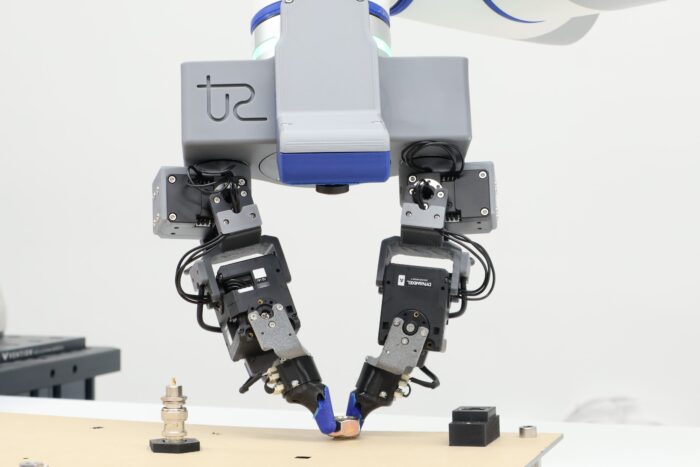
- Image: Pexels/Frank Rietsch
PRESS RELEASE — Artificial intelligence (AI) and AI-enabled robots are becoming a bigger part of our daily lives. Real-time, flexible interactions between humans and robots are no longer just science fiction. As robots become smarter and more human-like in both behavior and appearance, they are transforming from mere tools to potential partners and social entities.
This rapid evolution presents significant challenges to our legal and ethical frameworks, including concerns about privacy, safety, and regulation in the context of AI and robots. The Cambridge Handbook of the Law, Policy, and Regulation for Human-Robot Interaction, published by Cambridge University Press on November 21, 2024, explores and addresses these emerging issues. It is now available online as of December 2024.
Edited by Woodrow Barfield, Yueh-Hsuan Weng, and Ugo Pagallo, three experts in AI-related legal issues, the handbook gathers insights from social sciences, computer science, and engineering. It is the first book to specifically address issues of law, policy, and regulation focusing on human-robot interaction.
“Humanities are crucial to AI development,” says Yueh-Hsuan Weng, Associate Professor at the Institute for Advanced Study (IAS), Kyushu University, and the Frontier Research Institute for Interdisciplinary Sciences (FRIS), Tohoku University (Cross-appointment). He is also a co-editor of the book. “Tech professionals can create cutting-edge systems, but without input from legal and humanities perspectives, these systems may struggle to coexist with humans. We hope this book serves as a compass for developers, ensuring AI systems better benefit our society.”
Comprising 46 chapters, the handbook is organized into four parts. The opening section introduces the legal and ethical challenges arising from human-robot interaction, addressing issues such as trust for robots and anthropomorphism—where non-human entities are given human-like emotions or intentions. The second section explores the societal impacts of human-robot interaction, discussing questions about whether AI entities should be granted legal personhood and what steps are needed for the growing integration of robots into human life.
The third section looks deeper into ethical, cultural, and value-based issues in human-robot interaction. A key aspect of AI governance is aligning AI’s value judgments with human values, which can vary across regions, contexts, and cultural value systems. Through a range of scenarios, including the role of robots in long-term assistance, their potential function in religious settings, and intercultural challenges, this chapter reveals the complexities of value alignment. The book concludes by discussing the legal challenges posed by AI’s integration into society, offering insights into how consumer law, criminal law, and constitutional law may need to evolve to accommodate intelligent systems.
This handbook brings together authors from various countries and presents case studies from across the globe. By offering diverse perspectives, it provides valuable insights into the ethical dilemmas emerging from our personal interactions with robots, sparking a global dialogue on these issues.
“A major issue I addressed in the book is the AI pacing problem,” says Weng. This refers to the gap between rapid AI advancements and the slower pace of legislation. While many countries and organizations are working on regulations for AI-enabled robots, creating comprehensive laws often struggles to keep up with AI’s progress. “Governance mechanisms have been proposed, ranging from ‘hard’ legislation to ‘soft’ ethical guidelines. What’s needed now are solutions that balance enforceability and flexibility.”
One solution Weng proposed in his chapter is Global AI ethics standards developed by the Institute of Electrical and Electronics Engineers (IEEE), the world’s largest technical professional organization. Currently, Weng chairs a working group at the IEEE and is compiling a database of AI-related ethical cases from various countries, modularizing core issues and region-specific concerns, aiming to help developers navigate and apply them effectively.
The handbook also addresses critical topics like anthropomorphism, robots in healthcare, and privacy protection, all requiring continued focus and collaboration. As algorithms enable robots to perform human-like actions, such as robot dogs dancing jazz, these behaviors challenge traditional ethical expectations and may reshape how future generations perceive concepts like “dogs.” Meanwhile, when people, especially older adults, are unfamiliar with robots, they may view robotic caregivers as true companions, leading to emotional challenges. Ethical guidelines are needed to ensure responsible use in these sensitive contexts. Additionally, balancing high-quality services with data security remains an urgent task that demands innovative regulatory solutions.
Reflecting on these topics, Weng emphasizes, “As human-AI interactions become more common, I hope designers, manufacturers, and users of robots will engage with our book. Responsible research and innovation are crucial for the development of AI and robots, and this requires input from people across various societal sectors. We warmly invite everyone to explore this book and join us in creating IEEE’s global standards for AI ethics.”