XPeng Unveils Turing Physical AI Architecture, Iron Humanoid and Robotaxi Plans
 By Greg Bock · · 4 min read
Insider Brief
- Chinese electric vehicle and robotics company XPeng has introduced its Turing Physical AI Architecture, known as VLA 3.0, alongside its Iron humanoid robot and plans for a purpose-built robotaxi.
- The architecture combines AI models, computing and hardware controls to connect reasoning with physical action, while the Iron humanoid features 76 degrees of freedom, more than 1,500 tactile sensing points and three proprietary Turing AI chips.
- XPeng plans to begin training Iron as a retail store assistant in early 2027, introduce its YOYO-01 robotaxi later that year and continue developing autonomous driving and electric aircraft technologies.
Chinese electric vehicle and robotics company XPeng has introduced a new Physical AI architecture designed to connect artificial intelligence with physical movement across its humanoid robots and intelligent vehicles.
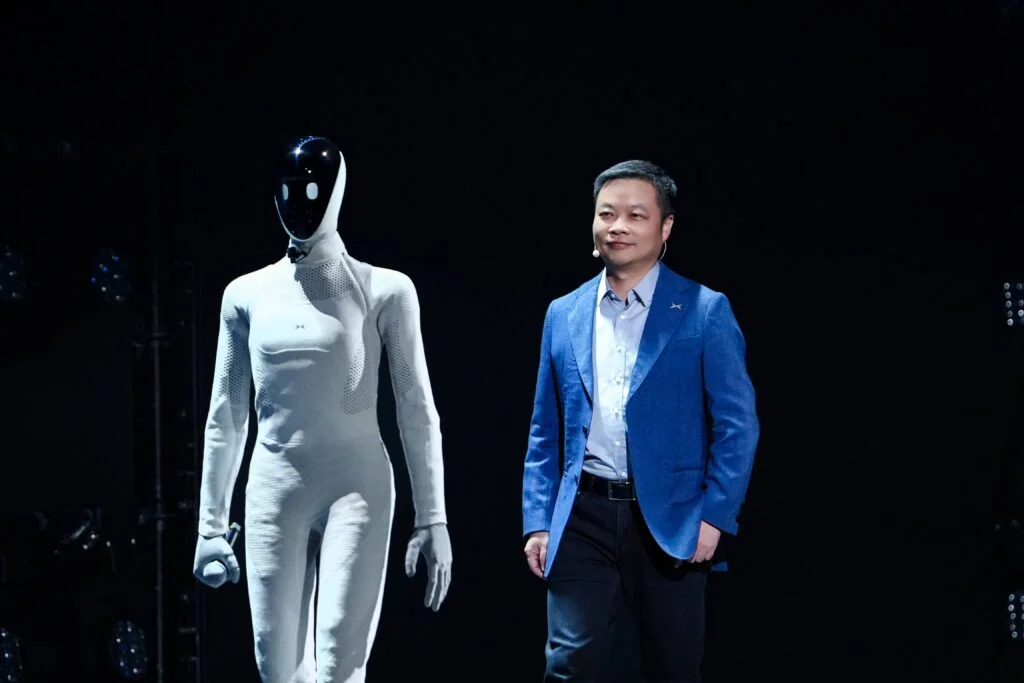
The company unveiled the Turing Physical AI Architecture, known as VLA 3.0, at its annual AI Day event in Guangzhou, alongside the public debut of its Iron humanoid robot and plans for a purpose-built robotaxi.
According to XPeng, the architecture combines AI models, computing, sensors and hardware controls to help machines understand their surroundings, make decisions and carry out physical actions. It’s a theme that XPeng has dubbed “Origin” as it provides a common technology foundation for the company’s vehicles and robots.
XPeng Chairman and CEO He Xiaopeng said AI development has largely focused on making machines more intelligent, but human learning also depends on physical interaction, movement, trial and error.
“I believe Physical AI must evolve in the same way,” He said. “Origin is about returning to that fundamental truth. The brain and body must evolve together. By connecting intelligence all the way through to physical action, we want to build AI that does not simply understand our world, but can work alongside us and grow through real-world experience.”
The architecture consists of three interconnected systems:
- System 0: Coordinates physical hardware, including power, communication and movement, while monitoring the machine’s condition.
- System 1: Uses XPeng’s VLA 2.0 model to interpret surroundings and generate rapid physical responses.
- System 2: Handles higher-level reasoning, breaking complex instructions into tasks and coordinating their execution.
Information about each action feeds back into the system, allowing it to adjust subsequent movements.
XPeng also reported that version 6.4.0 of its VLA 2.0 model increased AI training speed by 10 to 12 times through automated training and model improvement techniques.
Iron Humanoid Robot
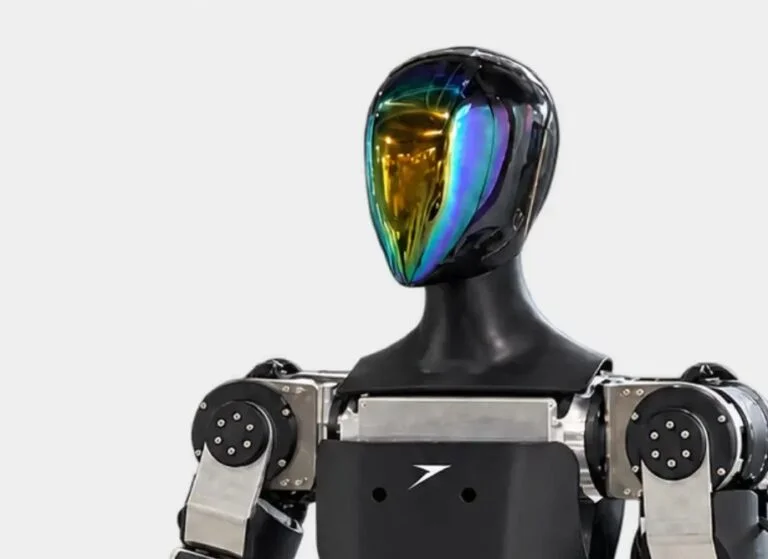
XPeng’s Iron humanoid uses the same integrated approach to developing AI software and physical hardware.
The robot has 76 degrees of freedom, allowing movement across multiple joints, and more than 1,500 tactile sensing points. Its touch sensors cover more than 80% of key body areas, according to the company.
Three proprietary Turing AI chips support its onboard AI models and whole-body movement controls.
Iron’s capabilities include autonomous navigation, receiving tasks through voice or app instructions, self-charging and monitoring its operating condition.
The humanoid is scheduled to begin training as a store assistant at XPeng retail locations in the first quarter of 2027, with a public release targeted for the second quarter.
To support development, XPeng has established a Robot Data Factory covering more than 250 scenarios and 15 job categories. Its automated assembly line includes more than 600 AI-based quality inspection items and over 1,000 tests for complete robots and their components.
XPeng is also developing an open robotics platform that would allow partners to customize functions and create applications for different business environments.
Autonomous Vehicles and Robotaxis
XPeng plans to introduce YOYO-01, its first purpose-built robotaxi for commercial deployment, in 2027.
The company said its robotaxi program has progressed to driverless road testing and received Level 4 demonstration operation authorization in Guangzhou. Driverless passenger testing has begun, with demonstration operations in selected areas planned by the end of 2026.
For its passenger vehicles, XPeng introduced Turing AI Co-driving, including a feature that adjusts deceleration and energy recovery when drivers release the accelerator. The company reports that in testing under urban congestion conditions, the feature increased usable driving range by 12.4% compared with energy recovery switched off. Its first software rollout is scheduled for December.
XPeng also introduced an updated vehicle motion control system that coordinates propulsion, braking, steering and suspension.
The company is testing its NGP assisted-driving technology in Europe and plans an initial international rollout in the first half of 2027.
Beyond road transportation, XPeng’s ARIDGE unit is developing a piloted electric vertical takeoff and landing (eVTOL) aircraft, designed to take off and land without a conventional runway. According to XPeng, the company has received Type Inspection Authorization documentation and completed certification flight testing as it works toward airworthiness approval. ARIDGE is also working with partners in the United Arab Emirates to establish a regulatory testing environment for low-altitude flights and explore international cooperation.