Insider Brief
- Tangent Robotics raised $4.5 million in pre-seed funding led by Fly Ventures and Toyota Ventures to develop robotic manipulation systems for high-precision industrial tasks.
- The Columbia Engineering spinout combines robot hands, light-based touch sensing and motor learning to target tasks including assembly, threading, connector mating, gasket seating, snap fitting and gear meshing.
- Tangent is working to cut the time needed to teach robots fine motor skills from days to hours using data-collection and machine-learning methods designed for autonomous dexterity.
Tangent Robotics raised $4.5 million in pre-seed funding to develop robotic manipulation systems that combine hand hardware, touch sensing and motor learning for high-precision industrial tasks.
Fly Ventures and Toyota Ventures led the round, with participation from Logos Fund and Sparked Ventures, the company said in the funding announcement. Tangent plans to use the funding to advance its technology and deploy it in demanding manufacturing environments. The New York-based company was spun out of Columbia Engineering’s Robotic Manipulation and Mobility Lab.
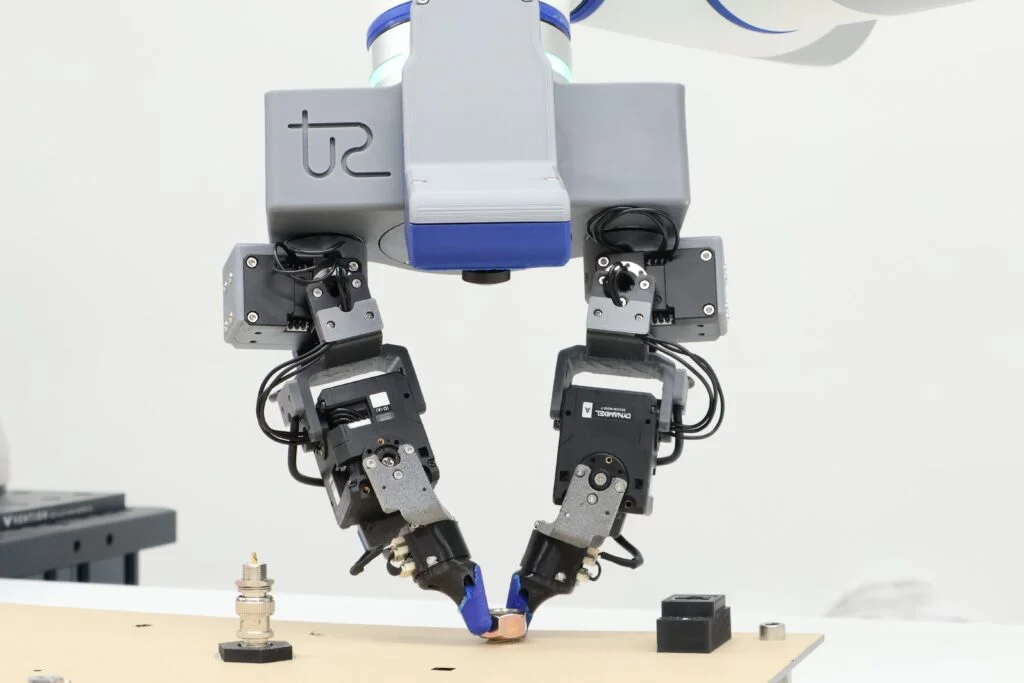
Tangent is developing robot hands, light-based touch sensors and machine-learning methods designed to let robots perform delicate manipulation tasks, such as assembly, threading, connector mating, gasket seating, snap fitting and gear meshing. The focus is fine motor control, an area Tangent Pedro Piacenza said remains difficult for robots but is required for many manufacturing processes.
“They unlock the ability to perform delicate, intricate manipulation,” Piacenza pointed out. “Tasks like assembly, threading, connector mating, gasket seating, snap fitting, gear meshing — these are critical steps for most of what we want our economy to build locally, fast and at scale and they all require a level of fine motor skill that today’s robots don’t have.”
Tangent’s Approach
Tangent said its goal is to reduce the time required to teach fine motor skills from days to eventually hours and its approach combines several technologies. Its touch sensors use light to detect contact at robot fingers, while its hand systems are designed to track human fingertip movements during training. The company is also developing data-collection and learning methods aimed at reducing the amount of practice robots need before performing skilled tasks autonomously.
The company stressed it is not attempting to reproduce the human hand directly. Co-founder Matei Ciocarlie, a Columbia Engineering robotics professor, said robotic dexterity can be achieved using components and joints that do not necessarily mimic human anatomy.
“Trying to copy the human hand is a mistake akin to building flying machines with flapping wings,” noted Ciocarlie, whos is also a Columbia Engineering robotics professor. “What we can do is build robot hands that are capable of dexterity even with non-human-like components or articulation.”
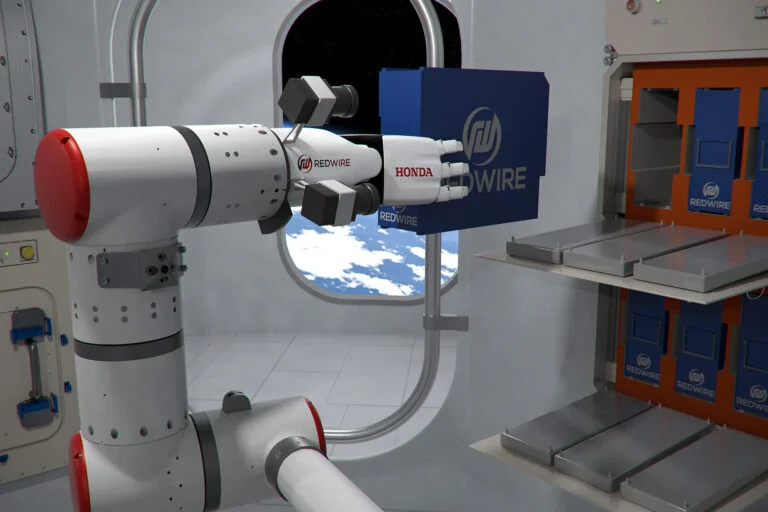
The founding team includes Piacenza, Ciocarlie and Columbia Engineering professor Ioannis Kymissis. Their prior work at Columbia included the DISCO robot finger, which senses touch using light; robotic hands developed for NASA’s Assistive Free Flyer robots aboard the International Space Station, as well as a robot hand capable of in-hand manipulation without relying on vision.