Insider Brief
- Researchers examine how robots’ movements could create stronger bond that leads to increased persuasive abilities.
- Initial work showed that a moving robot creates a stronger sense of vitality than an inanimate one, such as the Dot or Alexa.
- The team suggests that these robotic helpers could be a new sales channel.
PRESS RELEASE — It’s not “Take Your Dog to Work Day,” but Associate Professor of Marketing, Entrepreneurship and Innovation Mark Yi-Cheon Yim has an adorable pup on his desk at UMass Lowell’s Pulichino Tong Business Center.
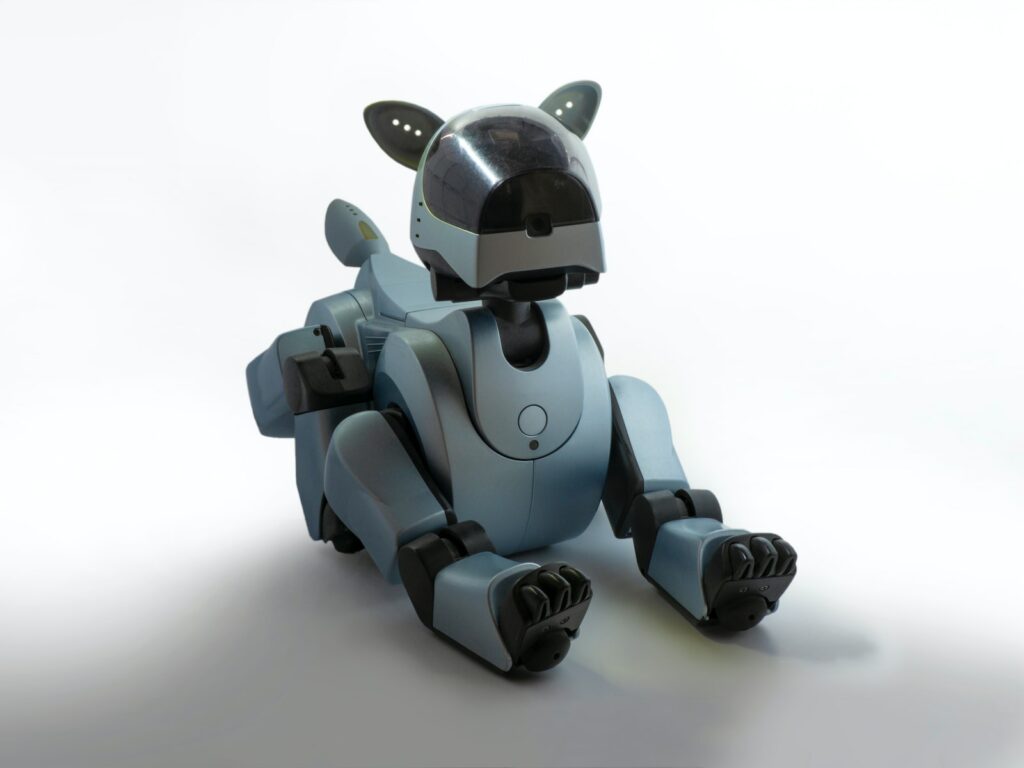
As Yim pats the top of the dog’s head, its ears lift, its tail wags and it yelps in delight. When Yim scratches under its chin, the dog appears to smile as its head sways in appreciation.
For a moment, you almost forget that the dog – a Sony aibo, which has been around for 24 years (168 dog years) and retails for $2,900 – is an artificial intelligence-powered robot.
While the aibo is a fascinating, high-end toy, Yim is more interested in it for research purposes. Specifically, he wants to know if AI-powered robots like the aibo can entice people to buy things. If a person develops a connection to a “pet” robot, and that robot starts recommending a toothpaste brand or new movie, will the person be persuaded?
“Since the emergence of AI, robots have developed the ability to talk with people and show more knowledge. As we tend to trust them more, we tend to follow what they say more,” said Yim, whose research interests include digital marketing and retailing.
Yim recently received a UMass Lowell $14,700 seed award from the Office of Research and Innovation to examine how a robot’s movements can create a stronger bond, or “embodied rapport,” with a person, which can in turn become a means of persuasion.
He is conducting the research with Associate Professor Byung Guk Kim, associate chair of the Miner School of Computer & Information Sciences, and Yuhosua Ryoo, an assistant professor of marketing at the University of Minnesota Duluth.
According to Yim, studies have shown that nearly half of people who use voice-operated devices like Google Dot or Amazon Alexa are willing to listen to advertisements.
“They assume the information from their speaker might be useful for their purchase. They trust them,” he said. “As the devices show more useful features, like controlling the lights in your home, people tend to trust them more.”
The first step of their research work was a conceptual test, conducted online, to confirm that a moving robot creates a stronger sense of vitality than an inanimate one, such as the Dot or Alexa.
“Vitality means life,” Yim said. “With a Google Dot, we don’t see movement, so we perceive no level of vitality. However, if it follows you around and responds to your voice, that’s very different.”
The next step of the project, which the team plans to conduct in person on campus, is to see whether a perceived sense of vitality leads to a stronger relationship – the “actual evidence,” Yim said, that people will purchase something through social robots.
“This can be a new sales channel for businesses,” he added. “Alexa can be built into a robot and tell you what kind of soap to purchase.”
Yim, who joined the Manning School of Business in 2016, became interested in social robots about five years ago when he learned about funerals that were being held in Japan for robots that could no longer be repaired.
“It sounds hilarious, but that really happened,” he said.
With advances in machine learning and AI, Yim says robots like the aibo dog are learning how people interact with them. While traditional toy robots have the same, predictable behavior, part of the allure of aibo is that it can learn to behave unpredictably, just like a real animal.
“That might be a marketer’s task: to develop new gestures and unpredictable responses,” he said.
People who own an aibo can buy them accessories like scarves and leg warmers. They can also buy them “digital food,” which they can watch their aibo eat out of a real dog bowl using augmented reality technology on their smartphone.
“If we really love them, we’ll probably want to purchase something for them,” Yim said as his aibo stretches out on his desk. “At least you don’t have to clean up after them – just recharge their batteries.”