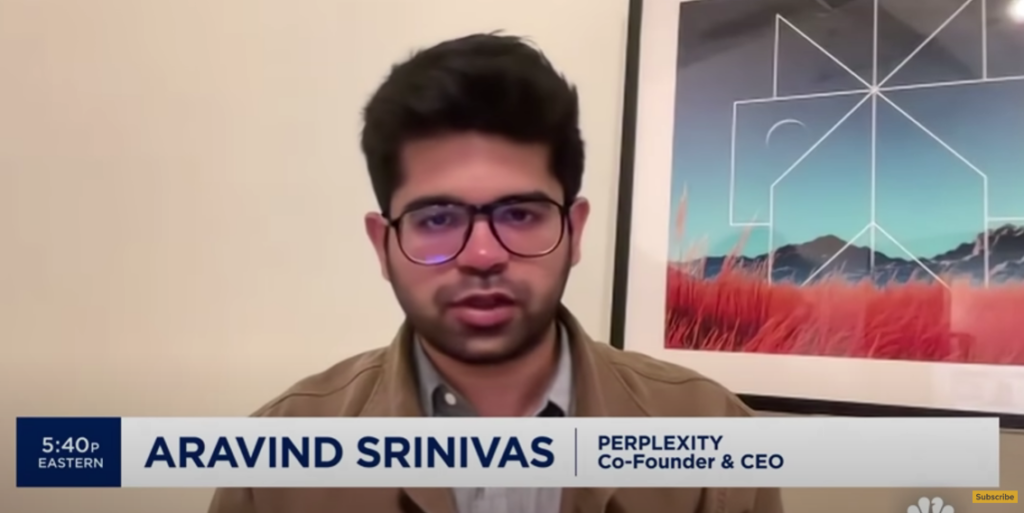
Aravind Srinivas, the co-founder and CEO of Perplexity, is arousing interest in the AI industry with his company’s innovative AI answer engine. Perplexity positions itself as the world’s first of its kind, directly challenging the status quo established by tech giants. Srinivas’s venture into the AI space with Perplexity comes at a time when smaller companies are starting to carve out significant progress against established players, demonstrating that innovation and agility can level the playing field.
In a revealing interview on ‘Closing Bell Overtime,’ Srinivas discussed the current AI landscape, highlighting the competitive dynamics and how Perplexity is differentiating itself from the incumbents. He shared insights into the industry’s giants.
“Microsoft is obviously doing tremendously well,” he said, praising their integration efforts across various sectors.
On the topic of Google, however, Srinivas had something interesting to say.
“Google seems to be the one that has the most difficulty in executing,” he said. He attributes this to their business model and public perception challenges in the age of AI.
Srinivas explained the genesis of Perplexity stemmed from a personal need for straightforward answers amidst a sea of advertisements and irrelevant links.
“I didn’t even know, like, what many of the terms, like co-insurance or deductibles, any of these things meant,” he recalled. This frustration led to the creation of Perplexity’s AI tool, designed to “directly answer your question and not, like, waste your time through links and spam and ads.” He envisions this approach as the future of search, shifting from traditional link-based results to direct, concise answers that cater to the user’s immediate needs.
Perplexity is already gaining traction among knowledge workers seeking efficiency and accuracy. Srinivas’s vision for AI’s role in enhancing productivity and decision-making underscores the broader implications for the industry. As AI continues to evolve, Perplexity and similar innovators are not just changing how we search for information but are also reshaping the competitive landscape, challenging established norms and setting new standards for user experience.
Featured image: Credit: CNBC